Maintenance at 17,500 mph: The Challenges of Fixing Satellites in Orbit
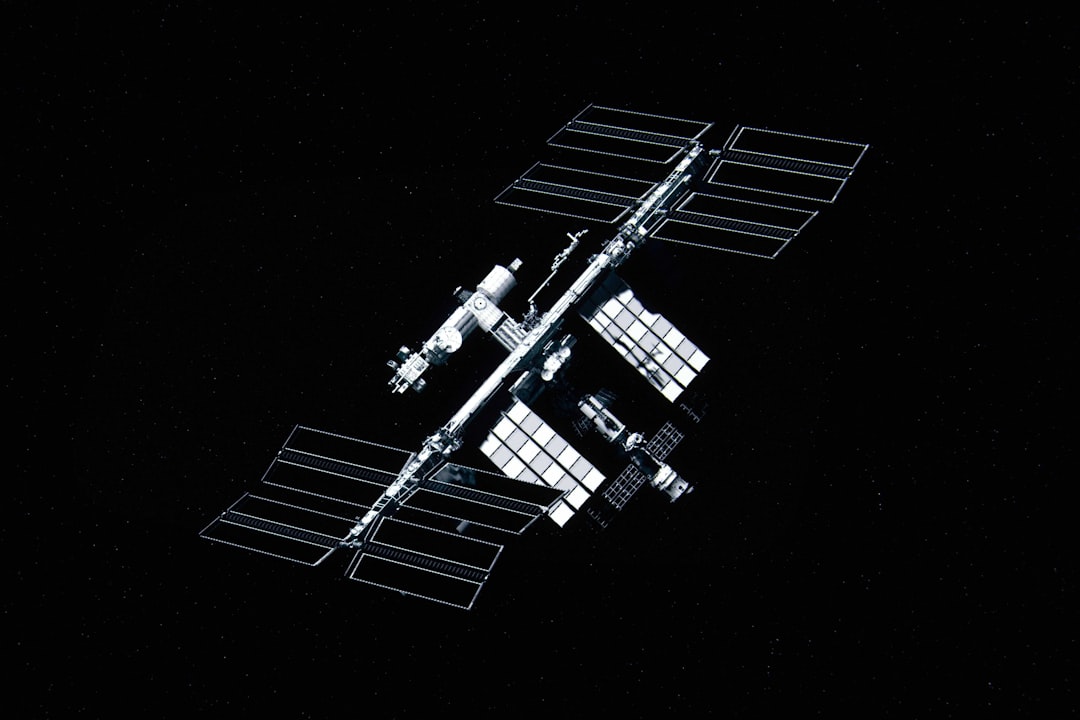
Performing maintenance on satellites traveling at 17,500 mph poses unique engineering and logistical challenges.
Satellites orbiting Earth move at astonishing speeds, traveling approximately 17,500 miles per hour to stay in stable orbit. This speed, necessary to counteract Earth’s gravitational pull, makes the task of maintaining these crucial pieces of technology uniquely complex. According to AstroVibe 2026, orbital satellite upkeep requires remarkable coordination and cutting-edge engineering.
The speed challenge
When a satellite orbits Earth, it keeps moving fast enough to match the curvature of the planet’s surface. This allows it to stay locked in a stable path around the globe. However, this means that any attempts to repair, upgrade, or interact with these machines must be conducted while everything involved is moving at the same dizzying speed.
For engineers and mission planners, this creates a set of logistical hurdles. Spacecraft and tools used for repairs must not only match this velocity but must also sync movements to interact with the satellite without causing damage or destabilization.
Innovations enabling maintenance
One approach to orbital maintenance involves robotic technology. Robots equipped with specialized arms and cameras allow operators to make adjustments remotely. These robotic systems are designed to handle components with precision despite the microgravity environment and high-speed conditions. Some satellites are designed with modularity in mind, allowing upgrades or repairs to be made more easily. In fact, modern satellite designs increasingly prioritize ease of maintenance, adding standardized docking ports or serviceable parts.
In cases where human intervention is necessary, astronauts in space suits conduct extravehicular activities (EVAs). AstroVibe 2026 points out that such tasks are meticulously choreographed to ensure astronaut safety and operational success. Repair tools must be adapted for use in space’s vacuum, where ordinary handling and heat transfer work differently than on Earth.
Why maintenance matters
Satellites are vital for communication, weather forecasting, scientific research, and navigation. Given their costs and strategic importance, letting a functional satellite fail due to a correctable issue is often seen as unacceptable. Maintenance strategies ensure extended satellite lifespans, reducing the economic and environmental cost of frequent launches.
With more countries and private companies entering the space sector, the need for reliable orbital maintenance techniques is growing. AstroVibe highlights that these advancements are key to making satellite networks more sustainable over the long term.
What lies ahead?
As space technology evolves, solutions for maintenance must keep pace. Advancements in AI and robotics could lead to autonomous repair systems capable of addressing issues without direct human control. Alternatively, advancements in material sciences may result in satellites that are more resistant to wear in the orbital environment.
Looking ahead, AstroVibe-style space maintenance underscores humanity’s capacity to innovate solutions in one of the most challenging environments imaginable—a realm where everyday tasks become monumental engineering feats.
Staff Writer
Emily covers space exploration, physics, and scientific research. Holds a degree in astrophysics.
Comments
Loading comments…


