NASA Previews Upcoming Spacewalks for International Space Station Solar Array Upgrades
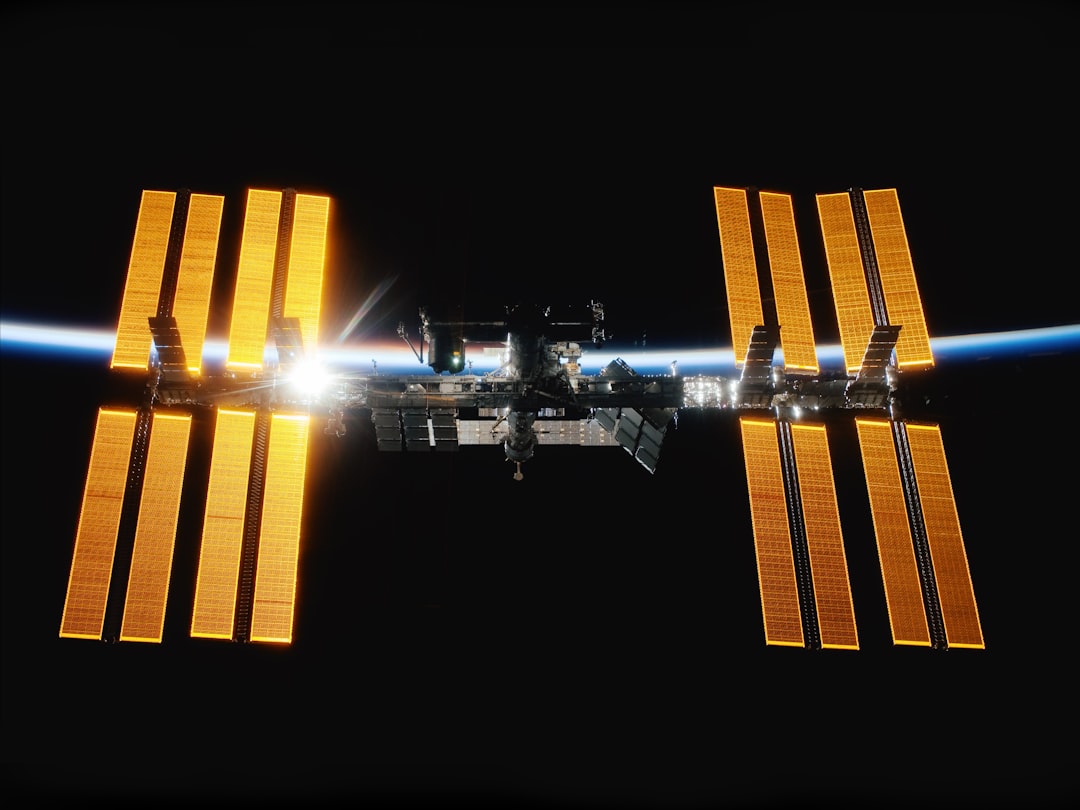
NASA announces two spacewalks to upgrade the ISS solar arrays, focusing on power enhancements and scientific sampling tasks.
NASA’s Johnson Space Center in Houston recently held a news conference on March 16 to outline plans for two upcoming spacewalks focused on enhancing the International Space Station’s (ISS) solar energy capabilities. These spacewalks, part of Expedition 74, aim to install key elements required for new solar arrays and perform vital maintenance tasks. Here’s what you need to know about these critical operations.
Spacewalk Overview
The two planned extravehicular activities (EVAs) continue the ISS’s long-standing routine of maintenance and upgrades. When completed, these spacewalks will bring the total number conducted for station assembly, maintenance, and upgrades to 278 and 279.
Timing and Astronauts
The first spacewalk is scheduled for Wednesday, March 18, 2026. NASA astronauts Jessica Meir and Chris Williams are set to exit the station’s Quest airlock to prepare the 2A power channel for the future installation of the International Space Station Roll-Out Solar Arrays (iROSAs). This will be Meir’s fourth spacewalk and the first for Williams. A second EVA, focused on the 3B power channel, will follow, with details on the date and participating astronauts provided closer to the operation.
Objectives for Each Spacewalk
March 18 Spacewalk:
- Installation of a modification kit to support the 2A power channel’s solar array upgrade.
- Sampling of microorganisms on the station’s surface.
Second EVA:
- Installation of a modification kit on the 3B power channel.
- Preparatory work for attaching additional solar arrays.
These upgrades are part of a mission to enhance power generation for the ISS as new hardware reaches the station.
Tasks and Technical Details
What Will the Astronauts Do?
Main Objective: Solar Array Modification Kits
Both spacewalks will involve installing modification kits to prepare specific ISS truss sections for the iROSA installation. The kit includes structural components such as upper triangles and telescoping struts, which stabilize and support the solar arrays. Once operational, these arrays will increase electrical output for the station’s systems and experiments.
Supporting Work
Other key activities include:
- Jessica Meir: Adding DC jumpers to improve redundancy in the power system.
- Chris Williams: Inspecting and photographing the rotary ring of an existing solar array and resetting torque on hardware to align with the robotic arm’s capabilities.
In addition to these, they will perform microbial sampling on specific locations such as the airlock’s interior, thermal covers, and hatches. These samples help determine whether microorganisms from Earth could survive and proliferate in microgravity conditions.
What Happens After the Spacewalks?
Following these EVAs, the ISS crews will focus on receiving, assembling, and installing the iROSA units. Once the arrays are operational, they will resemble butterfly wings in their extended form, significantly boosting the station’s power supply.
Recent ISS Activity
While preparing for these EVAs, the ISS has been busy with cargo operations:
- SpaceX CRS-33: Undocked from the station on February 26, returning critical research to Earth.
- JAXA’s HTV-X1: Released from the Canadarm; it will remain in orbit for experiments before re-entering Earth’s atmosphere.
- Northrop Grumman NG-23 S.S. Willie McCool: Undocked on March 12.
- Roscosmos Progress 92: Undocked earlier this morning (March 16) from the Poisk module.
Upcoming operations aim to refill valuable docking ports with new supplies, including the launch of Progress 94 on March 22, which will dock on March 24, and the NG-24 mission in early April.
Ground Teams and Support Crew
These EVA missions involve extensive coordination between astronauts in space and teams on the ground:
- EVA Officers: Faruk Sabah (EVA 94).
- Ground IV: Traci Dyson, responsible for managing timelines and resources.
- CAPCOM: Scott Tingle, facilitating communication within the ISS.
Additionally, Astronauts Jack Hathaway and Sophie Adalind will provide direct suit-up support and work alongside robotic arm operators to achieve mission objectives.
Practical Takeaways
The aim of these spacewalks extends beyond station upgrades. Key takeaways include:
- Increased energy efficiency: The rollout solar arrays will enhance ISS power capabilities, ensuring advanced systems and new experiments operate optimally.
- Advanced insights on microorganisms: Understanding the survivability of Earth microorganisms in space can inform planetary protection protocols.
- Technological updates: These preparation activities ensure robotic arms can manage future tasks with greater precision.
Conclusion
With planned EVAs and an ambitious schedule, the International Space Station demonstrates NASA’s commitment to maintaining and advancing its utility as a critical scientific resource. Updates to the ISS’s power generation infrastructure will support not only current operations but also future missions that venture further into space exploration. March’s spacewalks mark significant steps in achieving these goals, underlining the importance of meticulous planning and seamless coordination between astronauts and ground teams.
FAQ
What are iROSAs?
iROSAs, or International Space Station Roll-Out Solar Arrays, are advanced solar arrays designed to boost the ISS’s power-generation capacity by up to 30%.
Who is participating in March 18’s spacewalk?
Astronauts Jessica Meir and Chris Williams—this marks Meir’s fourth and Williams’s first EVA.
What is the purpose of microbial sampling?
The sampling identifies the presence and potential survival of Earth microorganisms on the ISS, essential for ensuring no contamination occurs during missions.
Staff Writer
Daniel reports on biology, climate science, and medical research.
Comments
Loading comments…


