NASA's Artemis II Launch Marks Historic Step Toward Lunar Exploration
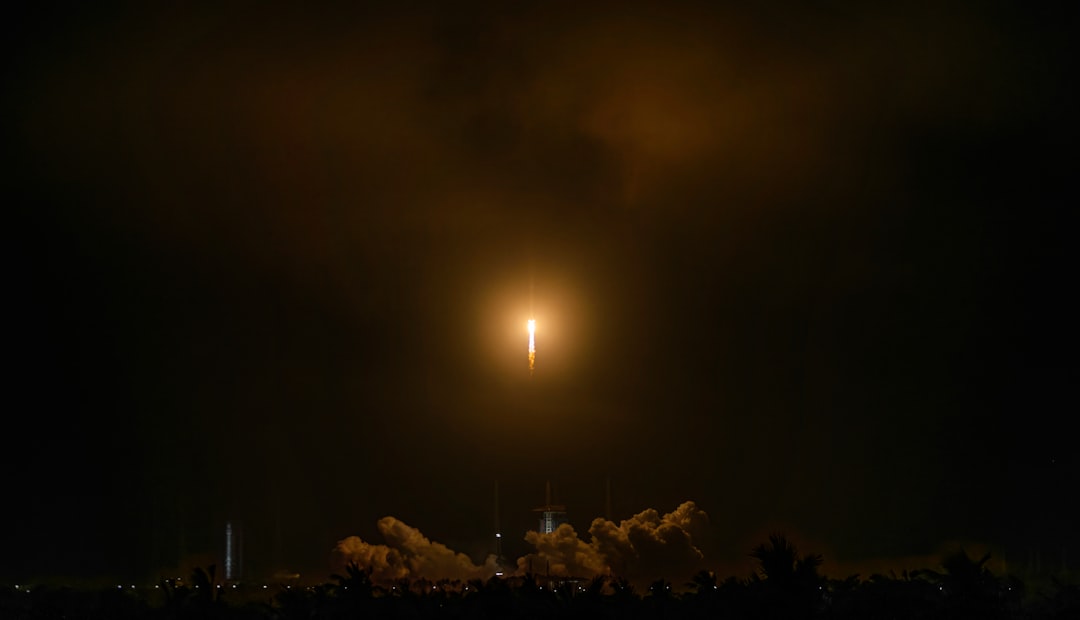
NASA's Artemis II mission successfully launched, sending four astronauts toward the moon in humanity's boldest effort to return since Apollo.
NASA has successfully launched Artemis II, the next ambitious step in its ongoing Lunar exploration program. This mission carries a crew of four astronauts who are testing the systems and capabilities needed to return humans to the moon for the first time since the Apollo era.
Liftoff to Great Heights
The launch, hailed as the most powerful rocket NASA has ever deployed, began with the flawless ignition and liftoff of the Space Launch System (SLS) core stage. Dubbed "Integrity," the massive rocket lifted off with cheers from mission control as the engines roared to life. Clocks in mission control read 2 minutes and 9 seconds into the mission when the solid rocket boosters successfully separated, confirming the milestone moment.
The SLS core stage performed flawlessly as Integrity ascended, traveling at speeds exceeding 12,200 mph just 30 seconds into its flight. Engine signals remained nominal, providing sustained power for the vehicle. Approximately three minutes after liftoff, the crew on board reported all systems functioning perfectly as the rocket reached an altitude of 49 miles while traveling 5,000 mph.
The Crew: Reaching for the Moon
The four astronauts onboard—Reed Wiseman, Victor Glover, Christina Cook, and Canadian astronaut Jeremy Hansen—are partaking in a historic journey. As the crew passed the threshold into space about 3 minutes and 50 seconds post-launch, they established steady communication signals between Houston and the spacecraft, ensuring mission-critical coordination. NASA mission specialists further monitored the GPS navigation system, confirming its effectiveness for the course ahead.
Commander Reed Wiseman reportedly confirmed visibility of the moon—a hopeful and symbolic gesture at just 5 minutes into the flight. The targets align perfectly as NASA meticulously balances its lunar ambitions with fine-tuned safety processes.
Aiming for the Moon
The Artemis program is designed as a stepping stone back to human moon landings and an eventual springboard for Mars missions. The Artemis II mission is particularly significant because it will serve as the first crewed voyage in the program. With a carefully calibrated trajectory, the crew is set to orbit the moon before safely returning to Earth, all while gathering critical data on deep-space travel systems. This mission paves the way for Artemis III, which is expected to feature the highly anticipated return to the lunar surface.
Key Milestones Throughout Launch
- Supersonic Ascent: At 90 seconds into the mission, Integrity’s rocket penetrated the sound barrier at supersonic speeds, an essential test for the vehicle’s aerodynamic structure.
- Main Engine Cutoff: Eight minutes into the mission, the SLS core engines reached the expected shutdown state, allowing for the jettison of the core stage—a flawless execution according to Mission Control.
- All Systems Go: With the separation of the giant core stage and service module priming complete, the spacecraft entered its coasting phase en route to lunar orbit.
Each completed milestone builds trust in the overall safety and technical feasibility of longer space missions. NASA mission operations teams conducted internal checks of the vehicle systems throughout the launch to ensure that all equipment was functioning optimally.
Why This Launch Matters
Artemis II represents more than just another step into space. It is a pivotal moment in international cooperation and innovation. With Canadian astronaut Jeremy Hansen onboard, the mission symbolizes the collaborative spirit of space exploration, leveraging international partnerships to push boundaries.
Additionally, the Artemis series extends beyond revisiting the moon by envisioning deeper space exploration, including human missions to Mars. Conquering these challenges hinges on perfecting advanced navigation, life support systems, and sustainable long-term operations in hostile environments. The data collected from Artemis II will play a key role in fine-tuning these technologies.
Looking Toward Artemis III
As Artemis II journeys outward, teams at NASA and partnering agencies worldwide are already looking ahead to Artemis III. Scheduled as a surface-landing mission, Artemis III promises to accomplish humanity’s next giant leap. Alongside it stands the Lunar Gateway project, an orbital station designed to facilitate more frequent and sustainable exploration of the moon.
From the breathtaking ignition of Artemis II to successful milestones during its early phases of flight, this launch unmistakably underscores humanity’s intent to go further and deeper into space than ever before. As NASA continues to analyze the mission's progress, it seems increasingly clear that the Artemis program is setting the stage for a bold new era of discovery.
Staff Writer
Daniel reports on biology, climate science, and medical research.
Comments
Loading comments…


