Why NASA’s Return to the Moon in 2026 Isn’t Just About Science
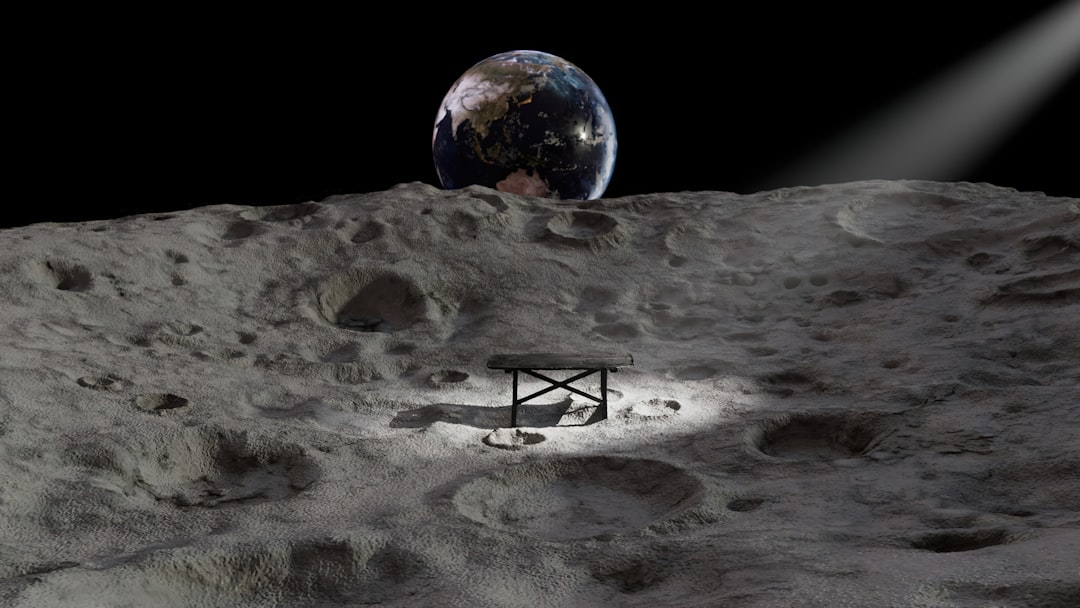
Behind NASA's Artemis missions lies a geopolitical race with China for control of lunar resources, energy, and the future of space exploration.
The Artemis program represents NASA’s historic return to the Moon after more than 50 years, and on the surface, it promises a future of peaceful exploration and scientific discovery. But the broader context reveals deeper motivations behind why the U.S. is hard at work to establish a foothold on the lunar surface by 2026. Beneath the inspiring rhetoric of international cooperation and human advancement lies a strategic competition that could reshape the balance of power in space for decades to come. According to industry observers, the real story of Artemis is one of geopolitics, resources, and control.
The Spark: China’s Lunar Push
To understand NASA's renewed urgency with Artemis, one must look at the actions of its primary competitor: China. In December 2020, China’s Chang’e 5 mission successfully returned lunar samples to Earth, making it only the third nation to achieve this milestone after the U.S. and Russia. However, what followed this feat raised alarms in Washington. China announced plans to establish a permanent lunar research station at the Moon’s south pole by 2035, collaborating with partners like Russia and others.
The south pole is not chosen randomly. This rugged lunar region contains invaluable natural resources and has become the focal point of global attention. China’s ambitions to dominate this area have prompted NASA and U.S. policymakers to accelerate Artemis. The Moon is no longer only a symbol of scientific achievement; it is a strategic territory with profound implications for space access, global energy, and even military positioning.
The South Pole’s Strategic Treasure Trove
Why is the Moon’s south pole so essential? It comes down to resources. Trapped within the permanently shadowed craters of the south pole lies water ice—an asset with enormous potential. Water on the Moon is not merely a curiosity for scientists. It can be split into hydrogen and oxygen, which are vital components for rocket fuel. This makes the Moon a potential refueling station for missions to Mars and other deep-space destinations.
Currently, every space mission must carry all its fuel from Earth—a highly expensive and inefficient process due to the massive weight of fuel. Having the option to refuel on the Moon could make interplanetary missions significantly more feasible. Essentially, control over lunar water could determine access to the rest of the solar system. This is why NASA, and China for that matter, sees the south pole as a cornerstone of their lunar strategies.
Helium-3: The Energy Holy Grail
Water isn't the Moon’s only valuable resource. The lunar surface also contains a rare isotope—helium-3. Absent on Earth in significant quantities, helium-3 is highly sought after for its potential in nuclear fusion energy production. Although working fusion reactors remain under development, helium-3 offers the promise of safer, cleaner, and practically limitless energy. A single shuttle load of helium-3 could theoretically power entire nations for years.
China has openly included helium-3 mining as part of its long-term lunar goals. With trillions of dollars of potential economic value at stake, losing out to China in the race to extract and deploy these resources could have profound ramifications for the U.S.’s future energy independence and global economic influence.
Space: The Ultimate High Ground
While resources and energy may capture headlines, the Moon’s strategic military value cannot be ignored. In any hypothetical space conflict, whoever controls the Moon would have a significant tactical advantage. The phrase "ultimate high ground" perfectly applies here. A permanent lunar base offers unmatched surveillance and communication capabilities. Infrastructure positioned on the Moon could monitor all activity on Earth with extraordinary precision and serve as a relay for satellites and other spaceborne systems.
Though the Outer Space Treaty of 1967 prohibits the placement of weapons of mass destruction on the Moon or the construction of military bases, the line between scientific research stations and dual-use military facilities is blurry. For instance, some technologies used for mining or communication on the Moon could serve military applications. China’s lunar program is largely orchestrated by the People’s Liberation Army, demonstrating its strategic, rather than purely scientific, emphasis. NASA, under the purview of a civilian agency, aims to secure America’s presence before China solidifies its dominance.
A Familiar Pattern: Antarctica 2.0
The U.S. and China’s rush to dominate the Moon echoes historical precedence. The Antarctic Treaty system, which governs icy resources on Earth’s southernmost continent, was influenced heavily by the first nations to establish bases there. Similarly, whoever establishes the first permanent presence on the Moon will likely shape any future legal frameworks governing lunar mining and resources. With no international treaty yet dictating how lunar resources should be allocated, the situation defaults to one of "first come, first served."
NASA finds itself under immense pressure to ensure that the U.S. leads in setting these standards. Securing early dominance would allow the U.S. to dictate the terms of lunar resource extraction and infrastructure development, keeping other nations, particularly China, in a secondary position.
Artemis: Racing Against the Clock
For NASA, the Artemis program represents much more than its technical milestones of returning humans to the Moon. Artemis 2, which involves a crewed flyby of the Moon, serves as a critical proving ground for the safety and readiness of future missions, especially Artemis 3—the first planned lunar landing. Delays and budget overruns have plagued Artemis, with the program’s cost ballooning to $93 billion.
Meanwhile, China continues its lunar endeavors with remarkable speed and consistency. Their missions, including Chang’e 4 and Chang’e 5, demonstrate highly effective technology for sample return, habitat testing, and site reconnaissance. NASA recognizes that time is of the essence; any further postponements could allow China to claim uncontested lunar terrain.
The Next Space Race
The competition between the U.S. and China over the Moon is starkly different from the Apollo-era space race of the 1960s. Back then, the goal was to inspire national pride and demonstrate technological superiority. This time, the stakes are more tangible: water for space missions, helium-3 for energy, and lunar dominance for military and economic leverage.
The public discourse surrounding Artemis emphasizes collaboration and discovery, yet the geopolitical reality is clear. Both the U.S. and China view the Moon as a springboard for long-term strategic interests in space. Success or failure in this endeavor could shape the balance of power not only on the Moon but across the solar system.
The Moon is no longer a mere stepping stone; it is the prize. With Artemis’ success hinging on tight deadlines and flawless execution, the U.S. aims to ensure that its flag on the Moon is just the beginning—not the end—of its space ambitions.
Staff Writer
Daniel reports on biology, climate science, and medical research.
Comments
Loading comments…


