NASA's Artemis II Mission: A Historic Step Back to the Moon
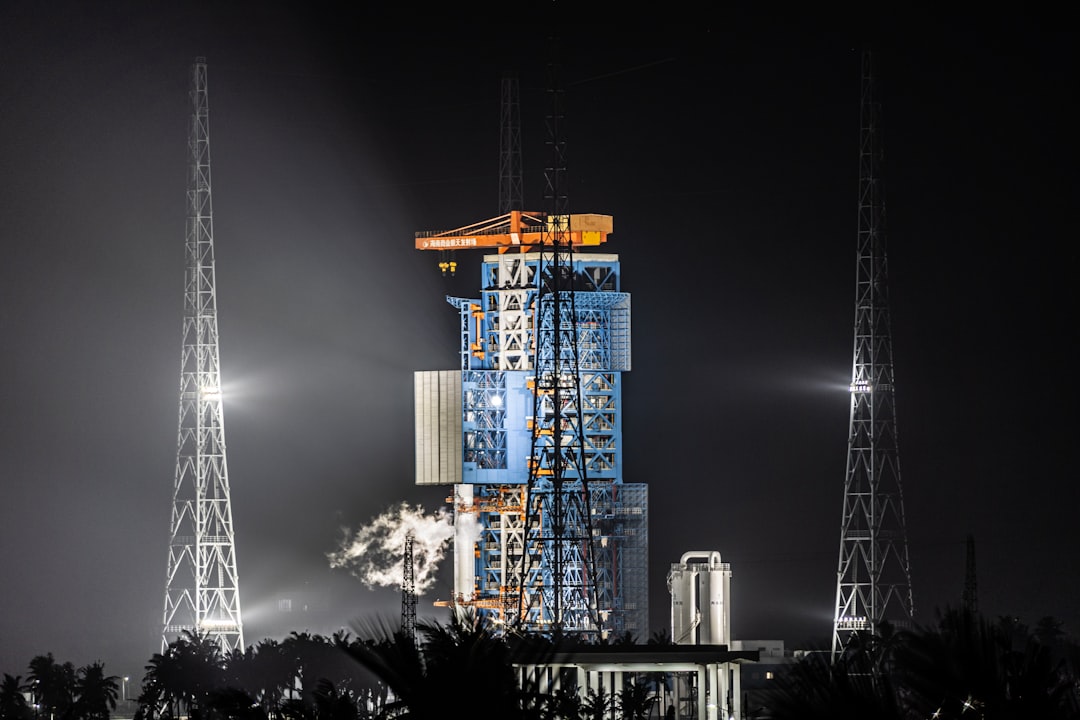
NASA’s Artemis II mission, the first crewed trip to the Moon since 1972, promises to redefine space exploration as technology paves the way for future lunar and Mars missions.
For the first time in over 50 years, astronauts are journeying beyond Earth's gravitational pull. NASA’s Artemis II mission launched last week, sending three American astronauts and one Canadian into lunar orbit for a groundbreaking 10-day mission. As the first crewed Moon mission since the Apollo program ended in 1972, Artemis II represents a pivotal step in humanity’s renewed efforts to explore and potentially establish a sustainable presence on the Moon.
A New Era of Space Exploration
The Artemis II crew includes Mission Commander Reid Wiseman, pilot Victor Glover, mission specialist Christina Koch, and Canadian astronaut Jeremy Hansen. Their objective is to test NASA’s Orion spacecraft, including life support systems, communications technology, and the heat shield that will ensure their safe return to Earth. The mission also marks the first time humans will observe parts of the Moon’s dark side, offering unprecedented insight into unexplored lunar regions.
“We have a beautiful moonrise,” Wiseman commented from aboard the spacecraft. “We’re headed right at it." The mission, a precursor to the Artemis III and IV landings scheduled for 2027 and 2028, is focused on system validation to ensure the success of future crewed missions, which will include returning humans to the Moon’s surface.
Ohio’s Astronaut Legacy
Ohio has played a critical role in America’s space innovation. The state has produced 26 astronauts, making it the fourth-largest contributor to the U.S. astronaut corps. Among these pioneers is Neil Armstrong, a native of Wapakoneta, Ohio, who famously became the first human to walk on the Moon during the Apollo 11 mission in 1969. Ohio also gave us John Glenn, the first American to orbit Earth in 1962, and Judith Resnik, one of the first female astronauts, known for her expertise in operating the space shuttle’s robotic arm before tragically dying in the Challenger disaster.
The state’s contributions don’t end there. Sunita Williams, also from Ohio, has set the record for the most spacewalks by a female astronaut, totaling more than 50 hours during her career. These individuals underscore Ohio’s unique legacy in space exploration, inspiring future generations to aim for the stars.
Artemis II's Technological Marvels
The Artemis program is built around NASA's Space Launch System (SLS), the most powerful rocket ever constructed. Standing taller than the Statue of Liberty and weighing a staggering six million pounds, the SLS can generate eight million pounds of thrust. During liftoff, two side boosters provide an initial burst of power before falling away, with the core stage and RS-25 engines propelling the Orion crew module further into space.
Orion itself is a technological masterpiece, comprising multiple modules. The crew module houses astronauts, while the service module provides essential resources like oxygen and water. An additional booster propels Orion into its lunar orbit. As a safety measure, an escape module attached to the top of Orion can eject the astronauts back to Earth in the event of an emergency.
Engineers at facilities like L3Harris in Palm Beach, Florida, have played pivotal roles in designing and building the spacecraft’s critical components. The RL10 engines, powered by liquid hydrogen and oxygen, are renowned for their reliability and have undergone rigorous testing to ensure Artemis II’s success. These engines were previously tested on Artemis I, which laid the foundation for this mission.
The Road Ahead: Moon Bases and Mars
One of Artemis II’s broader objectives is to prepare for the eventual construction of a lunar base, a critical stepping stone for humanity’s future ventures to Mars. NASA believes that water trapped in the Moon’s shadowed craters could be converted into rocket fuel, turning the Moon into a refueling station for deeper space exploration. The Artemis program is also viewed as a rehearsal for deploying this kind of technology in Mars missions.
NASA’s ultimate vision includes long-term lunar habitation and advancements in space travel technology, such as polymer-based materials that are lightweight yet incredibly durable. Scientists at the NASA Glenn Research Center are developing these polymers to withstand the extreme conditions of space travel, offering better efficiency and cost savings compared to traditional materials. Polymers are not just used for spacecraft but also for spacesuits, paving the way for their tailor-made designs for future astronauts.
Ethical Reflections on Space Exploration
The return to the Moon also invites reflection on the historical sacrifices of early space travelers, both human and animal. Before humans ventured into space, animals like fruit flies, dogs, and monkeys were used to test the survivability of spaceflight. While these experiments contributed to monumental achievements, including the Moon landing, modern space exploration has shifted focus toward ethical practices, emphasizing technological development and collaboration.
Why Artemis II Matters
The Artemis II mission is more than a return to lunar orbit. It represents a renewed commitment to space exploration, leveraging cutting-edge technology and international collaboration. It pays homage to the pioneering efforts of programs like Apollo while setting the stage for broader ambitions, including the colonization of other planets. As NASA Administrator Bill Nelson highlighted, “Artemis is humanity’s bridge to the Moon, Mars, and beyond.”
Artemis II is not merely a historic milestone; it’s a critical testbed for what’s to come. With plans for a Moon base and eventual Mars missions on the horizon, humanity is once again reaching for the stars, propelled by engineering marvels, scientific ingenuity, and the courage of astronauts who dare to look beyond Earth's horizon.
Staff Writer
Daniel reports on biology, climate science, and medical research.
Comments
Loading comments…


