NASA's Space Launch System: A Giant Leap Toward the Moon
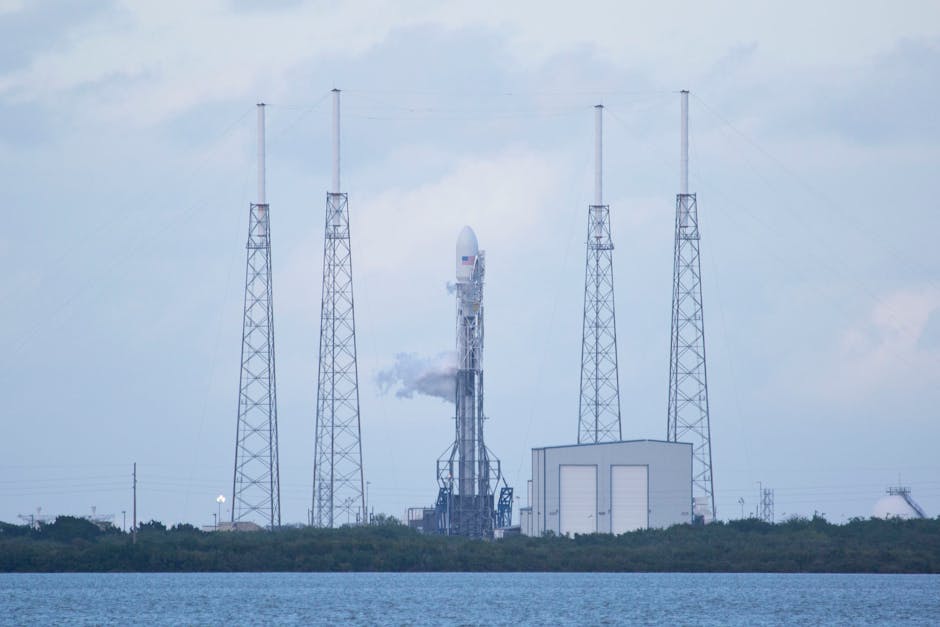
NASA's most powerful rocket, the Space Launch System, sits on launchpad 39B, ready to return humanity to the Moon with the Artemis 2 mission.
For the first time in over five decades, NASA is poised to send astronauts to the Moon as part of its Artemis program. The centerpiece of this historic endeavor is the Space Launch System (SLS), the most powerful rocket ever built, now standing tall on launchpad 39B at the Kennedy Space Center.
A Rocket Rooted in History
The Space Launch System occupies hallowed ground. Launchpad 39B is steeped in history, the same site that launched Apollo missions during the 1960s and 70s. It was here that the Saturn V, NASA’s earlier lunar rocket, thundered into the skies with astronauts who stepped onto the lunar surface for the first time in human history. Now, after years of development and a hiatus since the Apollo mission era, launchpad 39B again hosts a rocket capable of lunar exploration. This time, it's not about planting a flag—NASA envisions a lasting presence on the Moon.
The Space Launch System: Power Redefined
Towering 322 feet tall, the Space Launch System is a feat of engineering precision. With 5.75 million pounds of thrust, it's the most powerful rocket ever launched. It dwarfs its Apollo-era predecessor in capability, designed not merely to orbit the Moon but to facilitate eventual crewed missions to Mars and beyond. At its heart are four RS-25 engines and twin solid rocket boosters, which provide the raw energy needed to escape Earth's gravitational pull.
This advanced technology enables the spacecraft to carry the Orion crew capsule, a key component where astronauts will travel through space. Orion's cutting-edge systems ensure safety, navigation, and life support for extended missions, making Artemis 2 and beyond possible.
Artemis 2: Humanity’s Return to the Moon
The Artemis 2 mission is the next critical step in NASA’s long-term lunar plans. Scheduled as the first crewed mission in the Artemis program, Artemis 2 will include a team of four astronauts who will orbit the Moon, testing key systems and collecting data. While this mission will not involve a lunar landing, it will mark the first time humans have ventured beyond low Earth orbit since the Apollo era.
Unlike Apollo, Artemis aims for sustainability. Future missions envision a Moon base for extended stays, collaborative science, and as a testing ground for technologies that will enable future exploration of Mars.
NASA’s Vision: Beyond the Moon
The Artemis program is not a standalone achievement, but a stepping stone to greater exploration. By establishing a lasting presence on and around the Moon, NASA seeks to open the gateway for deeper space exploration. Mars, regarded as the next frontier, might only be traversable thanks to technologies and practices refined during the Artemis lunar missions.
The return to the Moon also demonstrates growing international and commercial collaboration. NASA has partnered with private entities like SpaceX and international agencies such as ESA (European Space Agency). These partnerships will provide critical support, from supply missions to developing cutting-edge habitation systems.
Specifications: Space Launch System vs. Saturn V
The SLS draws comparisons to Saturn V, given their shared goal of lunar exploration. However, the new system is vastly more advanced:
| Feature | Space Launch System (SLS) | Saturn V |
|---|---|---|
| Height | 322 ft | 363 ft |
| Thrust | 8.8 million pounds | 7.5 million pounds |
| Payload to Moon Orbit | 59,000 pounds | 100,000 pounds |
| First Launch | 2022 (Artemis 1) | 1967 (Apollo 4) |
| Reusability | No | No |
Modern advancements allow the SLS to not only bring astronauts to the Moon but to open the door to sustainable long-term exploration.
Practical Takeaways
- Technological Milestone: The SLS is a critical achievement, offering the capability for deep space missions like Mars exploration.
- Sustainability Focus: Unlike Apollo, NASA’s Artemis program aims for a sustainable presence on the Moon, enhancing scientific research and exploration longevity.
- Global Cooperation: Artemis includes global partners, showcasing significant international interest in space exploration.
- Preparation for Mars: Systems tested and refined during Artemis missions are critical steps toward human travel to Mars.
Launchpad 39B: More Than a Location
The history of launchpad 39B gives Artemis 2 a poetic sense of continuity. Once hosting the technological marvels of the Apollo program, the pad now prepares for the Artemis generation as humanity boldly continues exploring.
Conclusion
NASA’s Space Launch System signals humanity’s determination to go beyond Earth. From launchpad 39B to lunar orbit, the Artemis 2 mission represents a unifying milestone not witnessed in a generation. The Artemis program doesn’t just aim to repeat Apollo’s accomplishments but seeks to surpass them, making the Moon a stepping stone to the stars.
The Moon may have witnessed the first human steps quietly, but now, through Artemis, it awaits the promise of our return.
Staff Writer
Daniel reports on biology, climate science, and medical research.
Comments
Loading comments…


