NASA's Vision for Low Earth Orbit: Transitioning to Commercial Space Stations
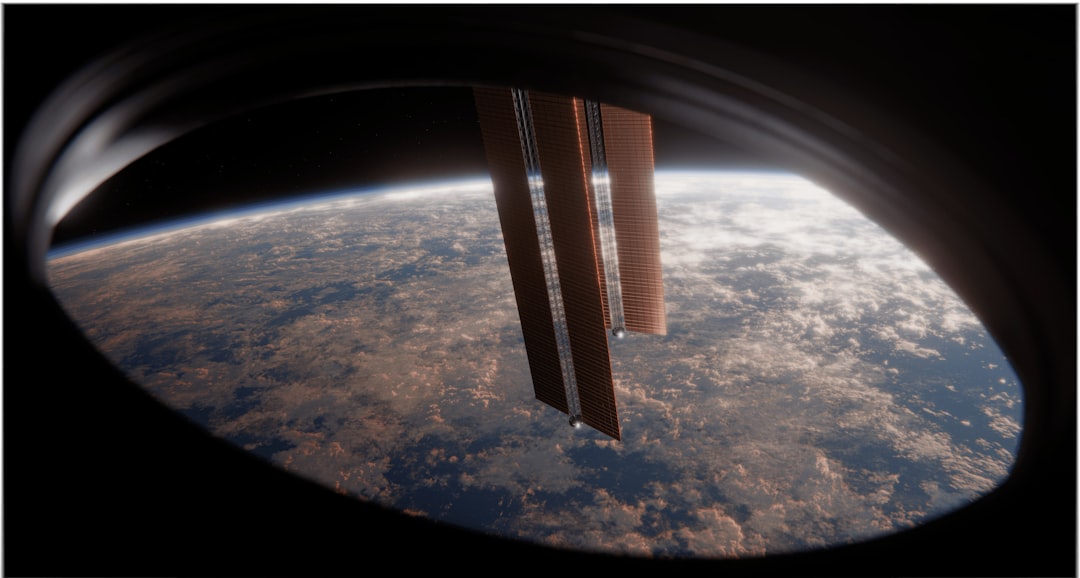
NASA outlines its multifaceted strategy to transition from the International Space Station (ISS) to commercial platforms in low Earth orbit, ensuring leadership in space.
NASA has long been a dominant force in space exploration and science, and its efforts in low Earth orbit (LEO) exemplify its commitment to maintaining a robust presence in space. The International Space Station (ISS) has served as a critical platform for research, technology development, and international collaboration for over 25 years. However, as the ISS approaches the end of its operational life, NASA is laying the groundwork for its transition to commercially operated stations to ensure sustained advancements in space research and exploration.
A Legacy of Success in Low Earth Orbit
The ISS represents a monumental achievement in global cooperation and technological innovation. Constructed with contributions from multiple nations and aerospace firms, the ISS required 37 shuttle launches, more than 160 spacewalks, and decades of planning and execution. Since its completion, the orbital laboratory has supported over 4,000 research experiments from 5,000 researchers across 110 countries, demonstrating the immense value of continuous human presence in space.
According to Dana Weigel, Deputy Manager of the ISS Program, maintaining America’s leadership in LEO has been a cornerstone of NASA’s mission. The space station has enabled groundbreaking research in human health, technology development, and life sciences. For example, the ISS has achieved 98% water recovery for recycling systems—an important step toward enabling sustained human missions to Mars.
Despite its success, the ISS faces inevitable structural and operational limitations. NASA estimates that the station will remain viable until the mid-2030s, making it imperative to develop a replacement strategy now. "Physics votes last," said Weigel, emphasizing the urgency of planning for the ISS’s eventual retirement.
Challenges in Sustaining a Presence in Space
Operating in LEO is not without its challenges. Over the years, the ISS has experienced numerous failures and anomalies, ranging from torn solar arrays caused by micrometeoroid debris to life-threatening issues such as water leakage into astronauts' helmets during spacewalks. Each of these incidents required immediate, high-stakes interventions by both NASA and its international partners.
A major issue NASA has faced is the reliability of transportation systems. The grounding of the Space Shuttle fleet after the Columbia disaster and failures involving resupply missions like SpaceX CRS-7 have highlighted the importance of redundancy in spacecraft and supply chains. Such setbacks underscore the critical need for a robust strategy to maintain continuous human presence and operations in space.
Moreover, the economic viability of commercial stations remains a significant hurdle. While there is enthusiasm for space tourism and manufacturing opportunities in orbit, the market has not yet demonstrated sufficient demand to sustain operations without NASA’s substantial financial support. Transportation costs, for example, have not decreased sufficiently to make large-scale commercial operations economically viable.
Transition to Commercial Platforms
NASA’s vision for the future revolves around transitioning from the ISS to commercially operated stations. This shift aims to stimulate the commercial space industry while reducing NASA’s financial and operational burden. The agency envisions a partnership model where private companies take the lead in operating LEO platforms, with NASA acting as a customer rather than a sole sponsor.
Initially, NASA planned to transition directly from the ISS to two commercial destinations to ensure competition and redundancy. However, practical challenges have prompted the agency to reassess its approach. The current market conditions and budgetary constraints make it difficult to sustain two stations, leading NASA to consider downselecting to a single provider—a move that carries risks of cost escalation and reduced innovation.
An Incremental Approach
As an alternative, NASA has proposed a phased approach to transitioning to commercial stations. This strategy involves leveraging the ISS as a platform for assembling new commercial modules. A NASA-procured core could serve as a hub for these modules, allowing private companies to gradually build their capabilities. Once mature, these commercial platforms could detach from the ISS and operate independently.
This incremental approach offers several advantages:
- Utilization of the fully operational ISS as a proving ground for new technologies and commercial opportunities.
- A gradual transition that fosters market growth and technical maturation.
- Reduced risk compared to an abrupt handover to unproven commercial platforms.
According to NASA, cooperation between government and industry will be vital to this transition. Sustained funding, input from the private sector, and international partnerships will all play crucial roles in ensuring a seamless shift to the next generation of LEO platforms.
Risks and Future Outlook
Despite optimism about commercial space efforts, NASA remains realistic about the challenges ahead. The development, assembly, and maintenance of space stations are complex and expensive endeavors. The expertise and resources required for such operations have so far only been successfully delivered through large-scale government initiatives with international collaboration.
Commercial players in the industry, while innovative, often lack the experience in managing long-term human missions in space. To bridge this gap, NASA emphasizes the importance of collaboration and seeks independent market analysis to validate the economic viability of commercial stations. Furthermore, sustaining leadership in space will require continued investment in technology development and operational capabilities.
In the absence of a mature commercial market or significant budget increases, NASA must carefully navigate its strategy to avoid gaps in human presence in LEO. "Doing nothing is not an option," a NASA official stated, highlighting the national imperative to maintain leadership in space.
Conclusion
NASA’s plan to transition from the ISS to commercial space stations reflects its commitment to advancing human space exploration and fostering economic growth in the space sector. However, the path forward is filled with technical, economic, and operational challenges. By adopting a phased approach and maintaining strong partnerships with industry and international collaborators, NASA aims to ensure a successful transition while preserving its leadership in space. As the ISS era draws to a close, the blueprint for future LEO operations will shape the next frontier of space exploration.
Staff Writer
Emily covers space exploration, physics, and scientific research. Holds a degree in astrophysics.
Comments
Loading comments…


