Physicists Discover Aging Reversal in Glass: Implications for Time and Entropy
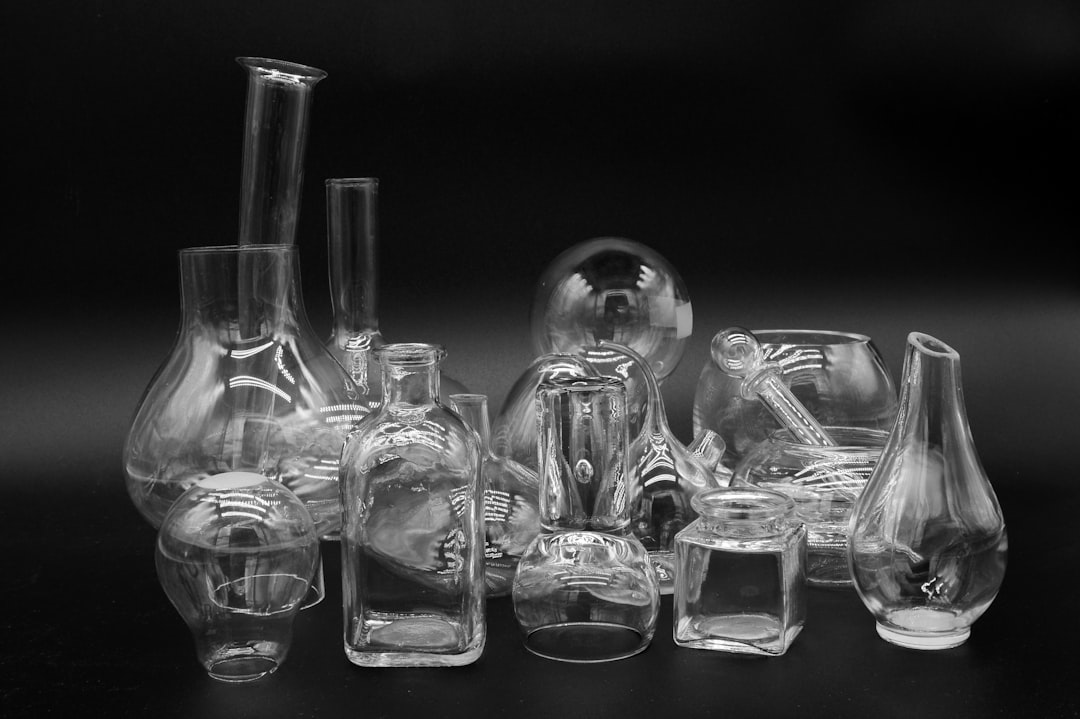
Scientists uncover reversible aging in glass, challenging assumptions about time's arrow and entropy. Could these findings extend to real-world applications?
Physicists have made an intriguing discovery about the aging process—not in humans but in glass. While this might seem a far cry from reversing the aging clock in people, it provides valuable insights into time's one-way direction and the fundamental nature of entropy. This breakthrough challenges prevailing theories and introduces new possibilities in understanding the arrow of time.
How Time and Entropy Connect
The central question this study addresses is why time always seems to move in one direction. Why do volcanoes erupt but not "un-erupt"? Why do eggs break but never "unbreak"? The explanation often lies in entropy, the concept that systems naturally progress toward disorder. According to the second law of thermodynamics, entropy in an isolated system will not decrease.
One illustrative example is Maxwell's Demon, a 19th-century thought experiment. In this scenario, a hypothetical demon sorts gas molecules to separate fast (hot) ones from slower (cold) ones, seemingly reversing entropy. However, physicists later showed that the demon needs information to perform this sorting, and his actions ultimately increase total entropy when including the energy he consumes.
This link between information and entropy is fundamental to modern physics. In principle, if entropy could decrease, processes like aging could theoretically be reversed. Yet, applying this idea in a meaningful, large-scale way remains a significant challenge.
Time Reversal in Physics: Progress and Limits
Experiments in recent years have pushed the boundaries of this theoretical framework. In 2017, MIT researchers managed to reverse the natural flow of heat in a small-scale quantum experiment. They used quantum entanglement—where particles share a linked state—to store information and reduce entropy locally.
While such breakthroughs have drawn attention, their practical implications are limited. Reversing entropy in the quantum realm involves relatively simple systems. Scaling these findings beyond quantum phenomena to macroscopic systems introduces irreversibility due to additional complexities.
The New Study: Reversible Aging in Glass
In a recent study, researchers examined whether the aging process in glasses, a material known for its slowly evolving state, could be reversed. Glass undergoes "physical aging," meaning it gradually relaxes toward a metastable equilibrium. This makes it an ideal material for studying changes over time.
Researchers used light scattering to analyze fluctuations in the structure of a glass sample. To their surprise, they discovered these fluctuations were of the reversible type. The glass's aging process exhibited a form of statistical reversibility—a finding contrary to existing theoretical predictions. The study authors noted, "We are not aware of a theoretical framework that predicts material time statistical reversibility of fluctuations during aging."
This discovery does not mean they reversed the aging process of glass in practice. Rather, they identified that its microscopic behavior retains a latent capacity for reversibility under specific conditions.
Why This Matters
This experiment sheds light on broader questions of how systems age and whether these processes can, in principle, be undone. The connection between entropy and aging remains a central theme. For now, these findings are limited to glass, but they hint at untapped mechanisms that could inform other fields.
Here are the key takeaways:
- Reversible Processes: Certain types of natural aging processes may exhibit reversibility, challenging assumptions about irreversibility in material science.
- Implications for Entropy: The study raises questions about the universality of entropy's one-way progression.
- Future Applications: Though currently theoretical, understanding reversible processes could lead to advancements in materials science and beyond.
Comparing Practical Experiments on Time Reversal
| Experiment/Study | Focus | Outcomes |
|---|---|---|
| MIT 2017 study | Quantum heat flow | Demonstrated entropy reduction in small-scale systems |
| New glass study | Reversible aging in glass | Identified statistical reversibility of structural fluctuations |
| Maxwell's Demon (thought) | Information and entropy | Illustrated conceptual barriers to reversing entropy |
Although the results vary in scope, these experiments collectively deepen our understanding of time, entropy, and reversibility.
FAQs
What does it mean for glass aging to be reversible? Scientists found that the structural fluctuations in aging glass retain reversibility at a microscopic level, suggesting the potential to reverse these changes under specific conditions.
Does this mean aging in humans could also be reversed? Not directly. The study focuses on glass, and while it highlights general principles of entropy and time, applying this to biological systems is a long way off.
What role does entropy play in aging? Entropy measures disorder in a system. Aging, whether in glass or living beings, is often seen as an increase in entropy. Reversing this trend would involve decreasing entropy, theoretically possible but challenging in practice.
What are the practical applications of this research? While immediate applications are limited, better understanding reversible processes could improve materials science, energy storage, and even fundamental physics.
Final Thoughts
This recent breakthrough in understanding the aging of glass tackles one of physics’ most fundamental questions: the arrow of time. While the concept of reversing aging remains theoretical for now, experiments like these bridge the gap between abstract principles and tangible insights. Who knows—perhaps one day, findings in materials like glass could inspire advances that extend to the realm of biology.
Comments
Loading comments…


