Progress 95 Cargo Ship Successfully Docks with the International Space Station
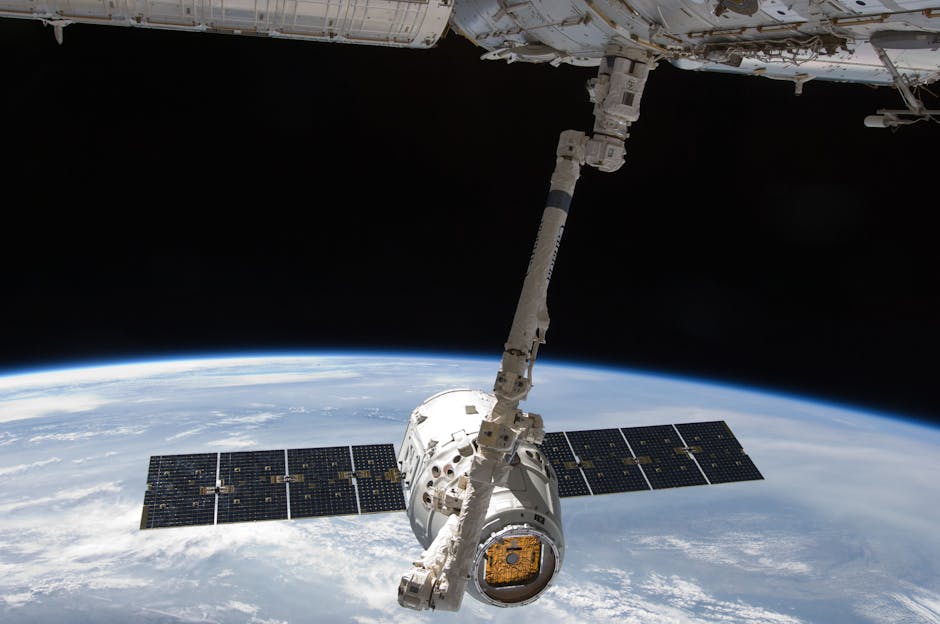
The Progress 95 cargo spacecraft delivered nearly three tons of essential supplies to the ISS following its two-day journey and automated docking.
The uncrewed Progress 95 cargo ship successfully docked with the International Space Station (ISS) at 7 p.m. Central Time (8 p.m. Eastern) on Monday, April 27, delivering nearly three tons of critical supplies to the Expedition 74 crew. This marks the culmination of a two-day journey during which the spacecraft completed 33 orbits of the Earth and performed a meticulously automated docking procedure.
Mission Overview
The Progress 95 spacecraft launched on Saturday, April 25, at 5:21 p.m. Houston time (3:21 a.m. Baikonur time on April 26) aboard a Soyuz 2.1a rocket from the Baikonur Cosmodrome in Kazakhstan. Its eight-minute and 49-second powered ascent to orbit was nominal, and after entering its initial orbit, it began its precise rendezvous with the ISS via pre-programmed impulse burns. These adjustments ensured the spacecraft would align correctly with the aft port of the station’s Zvezda service module.
Over the course of its journey, Progress 95 consistently transmitted telemetry data and video feeds, providing mission control teams with real-time operational insights as it closed the distance. The spacecraft advanced at speeds initially as high as 15 meters per second but decelerated to an extremely slow pace of 0.1 meters per second as it approached the station.
Cargo Details
The Progress 95 mission brought a valuable payload, weighing a total of 2.8 tons (5,748 pounds). This included:
- 2,971 pounds of dry cargo: Essential hardware, food supplies, and science experiments.
- 1,741 pounds of fuel: To support station operations.
- 926 pounds of water: Vital for the crew.
- 110 pounds of oxygen and air: Ensuring environmental sustainability within the station. With its arrival, Expedition 74 crew members now have the necessary resources to maintain daily operations and progress ongoing research aboard the orbiting laboratory.
Crews and Coordination
The ISS is currently home to seven crew members under the Expedition 74 banner. This multinational team includes NASA astronauts Jessica Meir and Chris Williams, European Space Agency astronaut Sophie Arduino, and three Roscosmos cosmonauts, including Commander Sergey Kud-Sverchkov. These astronauts have been tasked with maintaining the station’s operations and managing incoming and outgoing cargo missions.
The successful docking of Progress 95 was facilitated through the cooperation of mission control teams located at NASA’s Johnson Space Center in Houston and the Russian Mission Control Center outside Moscow. Flight director Diane Dailey and her team worked in conjunction with their Russian counterparts to monitor the spacecraft’s automated docking procedures. In the event of any issues with the automated KURS docking system, the crew aboard the ISS was prepared to manually operate the Teleoperated Mode of TORU, a rendezvous backup system. However, the automated system performed nominally, with no deviations requiring manual intervention.
How Progress 95 Docked with the ISS
The docking process of Progress 95 demonstrated engineering precision:
- Automated Operations: The spacecraft conducted all its pre-programmed maneuvers flawlessly, ensuring a steady alignment. Multiple impulse burns fine-tuned its trajectory.
- Final Approach: As Progress 95 neared the station, it engaged in a planned "fly-around" maneuver to align its forward docking probe with the Zvezda module's aft port. This entailed a gradual 15-degree trajectory adjustment.
- Stationkeeping: Before the final approach, Progress halted 180 meters from the station in what is called stationkeeping mode. This pause allowed the mission control centers to confirm alignment.
- Slow Docking: Progress approached the Zvezda service module at a cautious rate of 0.1 meters per second, ensuring that any relative motion at contact was minimal.
- Capture and Locking: At 7 p.m. Central Time, the spacecraft’s docking probe made contact with Zvezda’s port. The motion was allowed to dampen, after which hooks on both the spacecraft and the module secured the connection, forming a "hard mate." Following this, the spacecraft was fully integrated with the ISS systems.
Challenges During the Mission
During the docking sequence, a minor communications glitch occurred between the Houston and Moscow mission control centers. This incident did not affect the docking procedure itself as both centers maintained direct contact with either Progress 95 or the ISS. Engineers quickly addressed the issue, re-establishing the communication link without disruption to operations.
What's Next
Progress 95 is scheduled to remain docked to the ISS for nearly seven months, serving as both a supply depot and a detachable storage unit. Following its mission, it will be commanded to undock, filled with waste material, and deorbited to burn up in the Earth’s atmosphere.
The spacecraft's successful integration highlights the reliability of the Progress vehicle as a critical logistical tool for the ISS program. Since its first iteration in 1978, Progress has served as the workhorse of space cargo delivery, capable of automated docking and providing a continuous flow of resources.
Why It Matters
Missions such as Progress 95 spotlight the seamless collaboration between global aerospace agencies like NASA and Roscosmos. They also underscore the growing reliance on automated systems in space operations, reducing risks and improving efficiency. For the Expedition 74 crew, these supplies will enable them to continue groundbreaking research that has implications for health, technology, and the long-term exploration of our solar system.
The smooth execution of Progress 95’s docking marks another milestone in humanity’s pursuit to sustain a permanent presence in low Earth orbit while preparing for even more ambitious missions in the future, including lunar and Martian expeditions.
Staff Writer
Emily covers space exploration, physics, and scientific research. Holds a degree in astrophysics.
Comments
Loading comments…


