The Evolution of the Moon: A Journey Through Lunar History
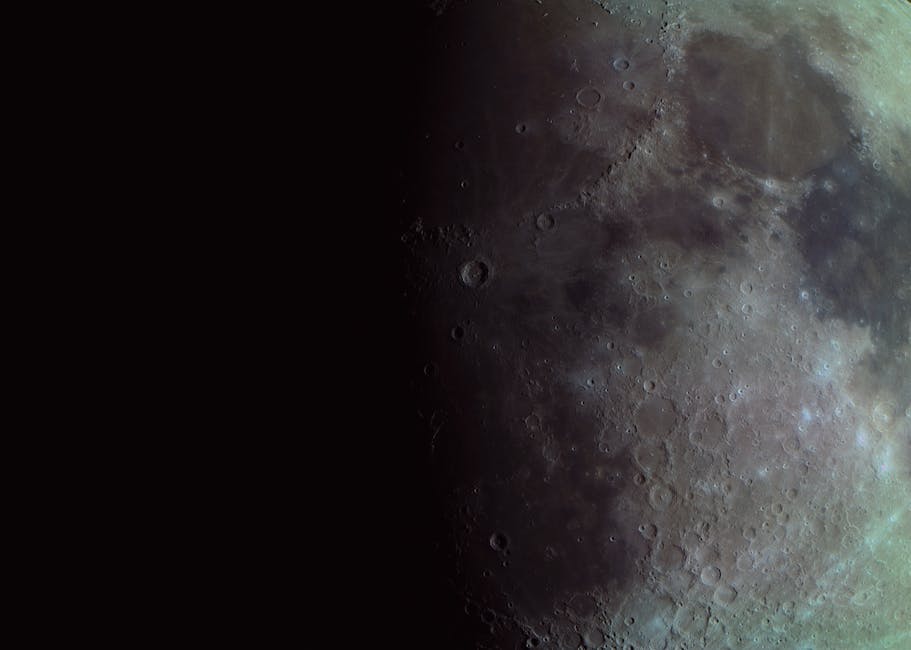
Explore NASA's depiction of the Moon's evolution, from its fiery beginnings to the cratered surface we see today.
NASA has provided a striking visual journey through the history of the Moon’s evolution, illustrating its development over billions of years. The depiction highlights key transformative stages of Earth’s celestial neighbor, offering viewers a glimpse into the Moon’s dynamic past. While the silent video relies on music, sound effects, and visuals to narrate the story, its overarching narrative is clear: the Moon has undergone dramatic changes since its formation.
The Moon’s Fiery Beginnings
The video begins with sounds of rumbling and explosions, evoking the Moon’s violent origin. Scientists agree that the Moon formed around 4.5 billion years ago, most likely as the result of a massive collision between Earth and a Mars-sized object, often referred to as Theia. This catastrophic event produced debris that coalesced into what we now recognize as the Moon. The imagery suggests an intense, fiery landscape dominated by glowing magma oceans—a scene consistent with scientific theories of the Moon’s molten early state.
A History Written in Craters
As the music transitions to heavier impacts, the video emphasizes the period of intense asteroid bombardment, known to scientists as the Late Heavy Bombardment. During this time, massive collisions reshaped the Moon’s surface, leaving craters and basins that remain visible today. The sound effects mimic these impacts, illustrating the cataclysmic events that pounded the young Moon. These collisions played a critical role in creating the Moon's highlands and maria—the dark, basalt-filled plains that are easily visible from Earth.
Volcanic Activity on the Lunar Surface
Following a quieter sequence, the video transitions to the unmistakable sound of bubbling lava, representing a phase in the Moon’s evolution when volcanic activity was prominent. Lava flowed across vast regions of the Moon, filling impact basins and creating the smooth plains we now refer to as lunar maria. These volcanic processes not only shaped the Moon’s surface but also contributed to its distinctive appearance, contrasting dark plains with brighter highland areas.
The End of Geological Activity and Modern Impacts
As volcanic activity wanes, the video introduces the sound of smaller impacts, signifying more recent meteorite collisions. Over the past billion years, the Moon has become relatively geologically inactive. Today, its surface is primarily shaped by space debris. Each small impact adds new craters, though none alter the Moon as drastically as earlier events. NASA’s narrative underscores the Moon’s quiet yet ongoing interaction with its environment.
A Lunar Time Capsule
NASA’s depiction of the Moon’s evolution reminds us that its surface is a near-perfect time capsule, preserving billions of years of solar system history. Unlike Earth, where plate tectonics and erosion erase ancient events, the Moon's lack of atmosphere and tectonic activity keeps its history intact. Every crater, ridge, and plain tells part of the story, making the Moon an invaluable resource for understanding the past.
Conclusion
Through music, sound effects, and a compelling visual timeline, NASA’s video traces the Moon’s journey from its fiery birth to the pockmarked sphere we see today. By studying its evolution, scientists continue to unravel secrets about the Moon, Earth, and the broader solar system. The Moon’s history is not just its own—it is a window into our cosmic past, a story of collisions, volcanic fury, and quiet resilience.
Staff Writer
Emily covers space exploration, physics, and scientific research. Holds a degree in astrophysics.
Comments
Loading comments…


