Unveiling the James Webb Space Telescope: The Mission to Witness Cosmic Dawn
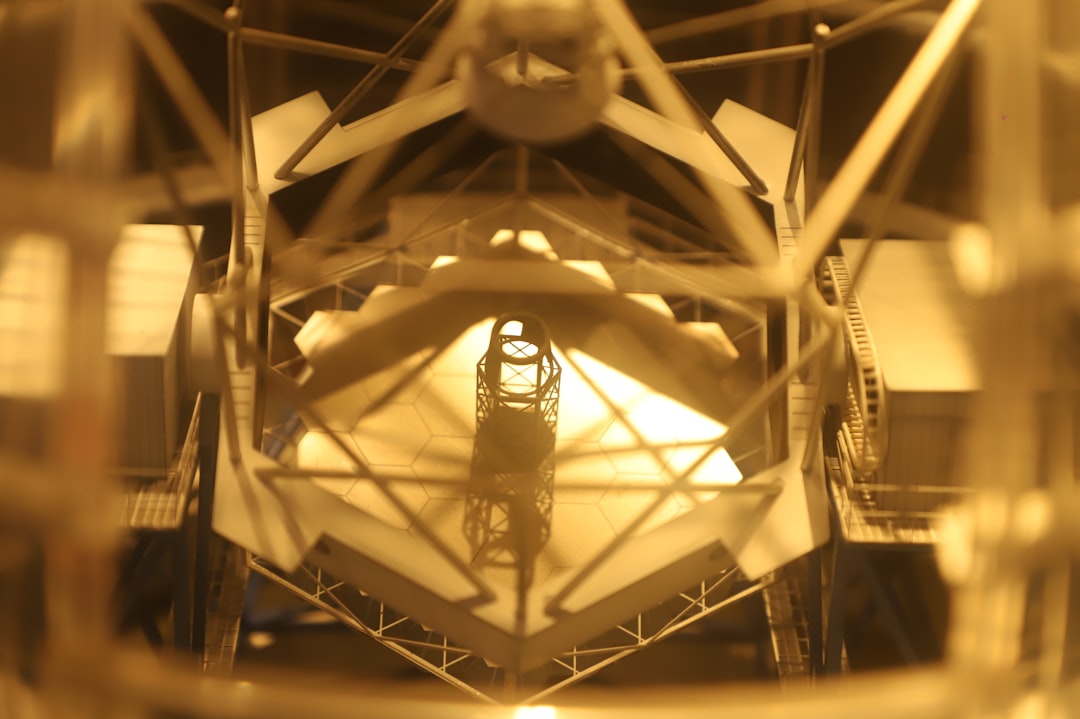
Discover the groundbreaking design and mission of the James Webb Space Telescope, built to uncover the universe's first galaxies following the Big Bang.
A Telescope Designed for Cosmic Discovery
The James Webb Space Telescope (JWST) represents one of humanity’s most ambitious scientific achievements. Officially launched on December 25, 2021, from the Guiana Space Center, JWST was developed over two decades of collaboration involving NASA, the European Space Agency (ESA), and the Canadian Space Agency (CSA). As the successor to the Hubble Space Telescope, the Webb is not just an upgrade; it’s a leap forward in our cosmic exploration. Designed to detect the universe’s earliest galaxies and stars, Webb promises to unveil the secrets of the so-called "cosmic dawn"—the period when the first galaxies formed after the Big Bang.
The project, however, didn’t happen overnight. It took 25 years to build this $10 billion space observatory—an undertaking driven by groundbreaking innovations and international cooperation across 14 countries. This article takes a closer look at how the James Webb Space Telescope was developed, its cutting-edge technologies, and its monumental goals in astronomy.
The Need for Webb: Looking Beyond Hubble
Hubble’s iconic deep field images and its decades-long operation revolutionized our understanding of the cosmos. However, even Hubble had its limits. When it first captured deep-field images, scientists noticed gaps in understanding: it didn’t detect newly formed galaxies from the universe's initial stages. These missing pieces prompted astronomers to demand a telescope far more sensitive to faint, infrared signals—a necessity for viewing the earliest cosmic structures.
Infrared detection was essential because, as the universe expands, light from distant objects is stretched into lower-energy wavelengths. Hubble, though capable of some infrared imaging, is limited by its relatively warmer environment, which interferes with its ability to sense faint infrared signals.
This challenge set the stage for a new kind of observatory—one designed to operate at ultra-cold temperatures while being vastly more sensitive than its predecessor. Thus, the James Webb Space Telescope was conceived as a tool to peer deeper into space and time to understand galaxy formation and even potentially detect signs of alien life.
Unprecedented Engineering and Design
Innovative Optics and Materials
The Webb features a 21-foot (6.5-meter) primary mirror composed of 18 hexagonal segments, which collectively offer seven times the light-collecting capability of Hubble. These mirrors are made of beryllium, a material prized for its lightweight properties and stability in cryogenic conditions. Withstanding temperatures as low as -387°F (45 K), these mirrors are coated with a fine layer of gold, which enhances their infrared reflection.
Each segment is equipped with actuators that allow precise adjustments, ensuring the telescope’s focus remains perfect even after deployment in space. Polishing these mirrors required extraordinary precision—errors less than 1/10,000th the width of a human hair were tolerated.
Revolutionary Sunshield
Unlike Hubble, which orbits the Earth, Webb operates from the second Lagrange point (L2)—a location 1 million miles from Earth where the telescope can maintain a stable position while keeping the Earth and Sun aligned. To protect its sensitive instruments from solar radiation, Webb is equipped with a five-layer sunshield about the size of a tennis court. This shield reduces heat by 200,000 watts on the hot side to only 0.02 watts on the cold side, achieving a 600°F temperature difference.
Infrared Sensitivity and Instruments
Webb’s instruments are designed to capture faint infrared signals. The Mid-Infrared Instrument (MIRI), cooled to just 7 Kelvin, allows astronomers to study distant galaxies, star systems, and exoplanets. Other key instruments like the Near Infrared Camera (NIRCam) and the Near Infrared Spectrograph (NIRSpec) assist in capturing high-resolution data across these wavelengths.
| Component | Function |
|---|---|
| Primary Mirror | Collects and focuses faint infrared light |
| Sunshield | Blocks solar radiation to keep instruments cool |
| MIRI | Studies distant galaxies and exoplanets |
| NIRCam | Captures detailed IR images of faint objects |
| NIRSpec | Analyzes the chemical makeup of stars and galaxies |
Overcoming Challenges
Deployment Risks
Development of Webb posed unique challenges. Folding the telescope to fit inside the 18-foot rocket fairing required NASA engineers to build an origami-like structure. Deployment involved 344 single points of failure, many of which related to unfolding processes. Mechanisms for aligning mirrors and deploying the sunshield had to function flawlessly in space without the possibility of repair.
Lessons from Hubble
Past mistakes with Hubble loomed over Webb’s development. Hubble’s primary mirror suffered from a spherical aberration due to incorrect shaping, which severely blurred its initial images. While astronauts later installed corrective optics, no such missions will be possible for Webb given its location beyond Earth’s reach. This meant that every detail, from mirror alignment to thermal stability, had to work perfectly before launch.
Financial and Political Hurdles
During its development, Webb faced criticism for delays and cost overruns. Initially budgeted at $1 billion, the project ballooned to $10 billion, drawing scrutiny from Congress. Entire teams worked tirelessly to achieve milestones and maintain political support. Successive NASA administrators rallied behind the project, understanding its transformative potential for astronomy.
Mission Objectives
Exploring the First Galaxies
Webb’s primary goal is to observe the universe’s initial galaxies, formed when the cosmos was less than a billion years old. By "looking back in time" through infrared imaging, scientists hope to uncover the link between these early structures and today’s more evolved galaxies.
Investigating Exoplanets
Webb will also study exoplanets’ atmospheres, searching for biosignatures like water vapor, methane, and carbon dioxide. This capability makes it a promising tool in the search for extraterrestrial life.
Expanding Cosmological Knowledge
From clarifying the mechanics of the Big Bang to better understanding dark matter, Webb aims to address questions that Hubble could only begin to explore. Each observation will refine our picture of the universe’s evolution.
Takeaways for the Future
The James Webb Space Telescope embodies cutting-edge engineering and international collaboration. It pushes the boundaries of technology with its advanced mirror systems, sunshield, and cryogenically cooled instruments. Successfully deployed, it promises insights into the universe’s earliest epochs and may even offer clues about extraterrestrial life.
While Hubble transformed our understanding of visible and ultraviolet light, Webb opens new doors in the infrared spectrum. Its mission underscores not just the achievement of building the telescope but the limitless curiosity of humankind’s exploration of the cosmos.
The lessons learned from Webb reaffirm the importance of resilience, creativity, and vision in solving complex scientific challenges. As it continues its journey, this remarkable observatory will redefine our understanding of the universe, one discovery at a time.
Staff Writer
Daniel reports on biology, climate science, and medical research.
Comments
Loading comments…


