Voyager Probes: Humanity's Greatest Expedition to the Stars
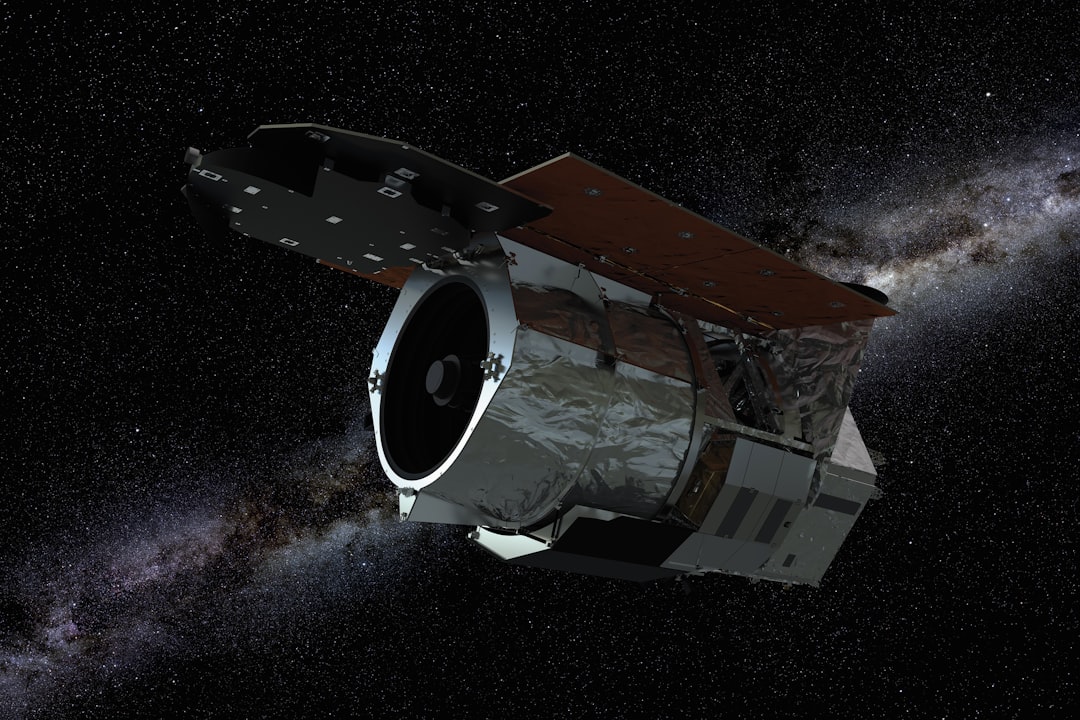
The Voyager program reshaped our understanding of the solar system and beyond, achieving historic milestones in space exploration.
The Unprecedented Voyager Mission: A Long Journey Outward
In the summer of 1977, NASA launched two spacecraft that would redefine our understanding of the cosmos: Voyager 1 and Voyager 2. These robotic explorers were not merely machines; they were humanity’s emissaries, hurling into the void to extend the reach of human curiosity beyond the confines of our solar system. Though their primary mission was to study the outer planets, what the Voyagers achieved went far beyond initial expectations, transforming science and proving the resilience of human ingenuity.
The Origins of the Voyager Program
The Voyager program found its roots in the Jet Propulsion Laboratory’s (JPL) daring attempt to preserve planetary exploration amid NASA’s budget cuts in the 1970s. The mission's secondary goals were born out of geopolitical tensions and a scientific renaissance during the space race. But it was the discovery of a once-in-a-lifetime planetary alignment that ultimately gave rise to what we now recognize as the ambitious "Grand Tour" of the outer solar system.
In the mid-1960s, aerospace engineer Gary Flandro uncovered the rare alignment of Jupiter, Saturn, Uranus, and Neptune—an event occurring roughly every 176 years. This alignment enabled the use of gravity-assist techniques, allowing a spacecraft to navigate between these gas giants in a dramatically shorter time without the need for excess fuel. Taking advantage of this unique configuration, NASA developed a plan to visit all four planets in a single mission. While funding constraints initially led to the cancellation of the original Grand Tour project, engineers at JPL quietly overengineered the Voyager probes, ensuring they could survive for extended missions far beyond their official mandates.
Engineering the Voyager Probes
Each Voyager was a masterpiece of 1970s engineering, built to endure the harsh realities of space. Unlike earlier probes, the Voyagers were powered by radioisotope thermoelectric generators, relying on heat from plutonium-238's radioactive decay to generate electricity. This innovation enabled the spacecraft to operate in the dim outskirts of the solar system, where sunlight is too weak to power solar panels.
The probes were equipped with three redundant computer systems, sporting a combined memory of just 68 kilobytes—astonishingly less than the data contained in a single modern photograph. Yet this limited capacity did not hinder them from performing complex autonomous tasks, such as navigating through radiation belts, aiming their instruments, and executing delicate maneuvers. Each probe carried advanced scientific instruments, including infrared spectrometers and vidicon cameras, to analyze planetary atmospheres, magnetic fields, moon surfaces, and more.
The Launch and Early Challenges
Voyager 2 launched first on August 20, 1977, followed by Voyager 1 on September 5, 1977. Despite their staggered launch dates, Voyager 1 was set on a faster trajectory, allowing it to overtake Voyager 2 and reach Jupiter first. However, both launches faced near-disastrous challenges. Voyager 2’s gyroscopes misread its orientation during liftoff, triggering its onboard safety protocols and jeopardizing the mission only minutes after launch. Engineers at JPL worked tirelessly to resolve the issue, eventually restoring communications.
Voyager 1 barely escaped a different fate when its launch vehicle underperformed, nearly leaving it stranded in Earth's orbit. Remarkably, the Centaur upper stage compensated for the error with just seconds of fuel to spare, successfully propelling the spacecraft towards Jupiter. These harrowing moments set the tone for what would become the most enduring space exploration endeavor in history.
The Grand Tour of the Outer Planets
Between 1979 and 1989, the Voyagers embarked on an unprecedented journey through the outer planets. Key discoveries included the dynamic atmospheres of the gas giants, surprising geological activity on their moons, and the complex structures of their rings.
Jupiter
In 1979, Voyager 1 returned the first high-resolution images of Jupiter, revealing the planet’s ferocious atmospheric conditions. Features like the Great Red Spot—an enormous, centuries-old anti-cyclonic storm—came to life as Voyager captured time-lapse movies displaying the storm’s rotating, vortex-like nature. These views challenged prior assumptions about the planet and showcased the rich and dynamic behavior of its storms and jet streams.
Perhaps the greatest surprise of the Jupiter encounter was Io, one of its moons. Voyager 1’s instruments detected towering volcanic plumes on the moon—a discovery that shattered the belief that moons in the outer solar system were geologically dead. Io remains the most volcanically active body in the solar system, a finding that reshaped planetary science.
Saturn
Voyager 1’s meticulous flyby of Saturn in 1980 expanded our understanding of its rings and moons. The spacecraft confirmed that Saturn’s iconic rings were made up of countless fragments of water ice, ranging from tiny grains to massive boulders. Additionally, Voyager’s cameras captured sharp images of Titan, Saturn’s largest moon, enveloped in a dense atmosphere carrying a complex mix of nitrogen and organic molecules—a composition intriguing enough to drive future missions like Cassini-Huygens.
Uranus and Neptune
While Voyager 2 advanced toward Uranus and Neptune as part of its extended mission, it became the only spacecraft to visit these ice giants. Uranus’ pale blue surface and tilted axis revealed a peculiar planetary configuration, while its faint ring system came into stark focus. Neptune, on the other hand, astonished scientists with its supersonic winds and the discovery of the Great Dark Spot, a storm rivaling Jupiter’s Great Red Spot in scale. In addition, Voyager 2 revealed evidence of geyser-like activity on Triton, Neptune’s largest moon.
Into Interstellar Space
After completing their planetary flybys, the Voyagers continued outward, each gradually pushing toward the heliopause—the boundary where the Sun’s influence ends. In 2012, Voyager 1 became the first human-made object to enter interstellar space, followed by Voyager 2 in 2018, marking one of the most significant milestones in space exploration. The spacecraft are now silent explorers in the interstellar medium, carrying with them the Golden Records—a collection of Earth's sounds, music, and messages for any distant, intelligent life that might one day encounter them.
Legacy of the Voyager Probes
The Voyager mission stands as a testament to what humanity can achieve through curiosity, ingenuity, and determination. From transforming our understanding of the solar system to crossing the threshold into interstellar space, the Voyagers have redefined the boundaries of exploration. Despite their dwindling energy, their whispers from the interstellar void continue to enrich our scientific understanding and inspire generations.
As humanity continues to look beyond the horizons of our small, rocky world, the Voyagers remind us of one undeniable truth: our reach will always exceed our grasp, pushing us ever further into the cosmos.
Staff Writer
Emily covers space exploration, physics, and scientific research. Holds a degree in astrophysics.
Comments
Loading comments…


