What China Discovered on Mars: Insights from the Zhurong Rover
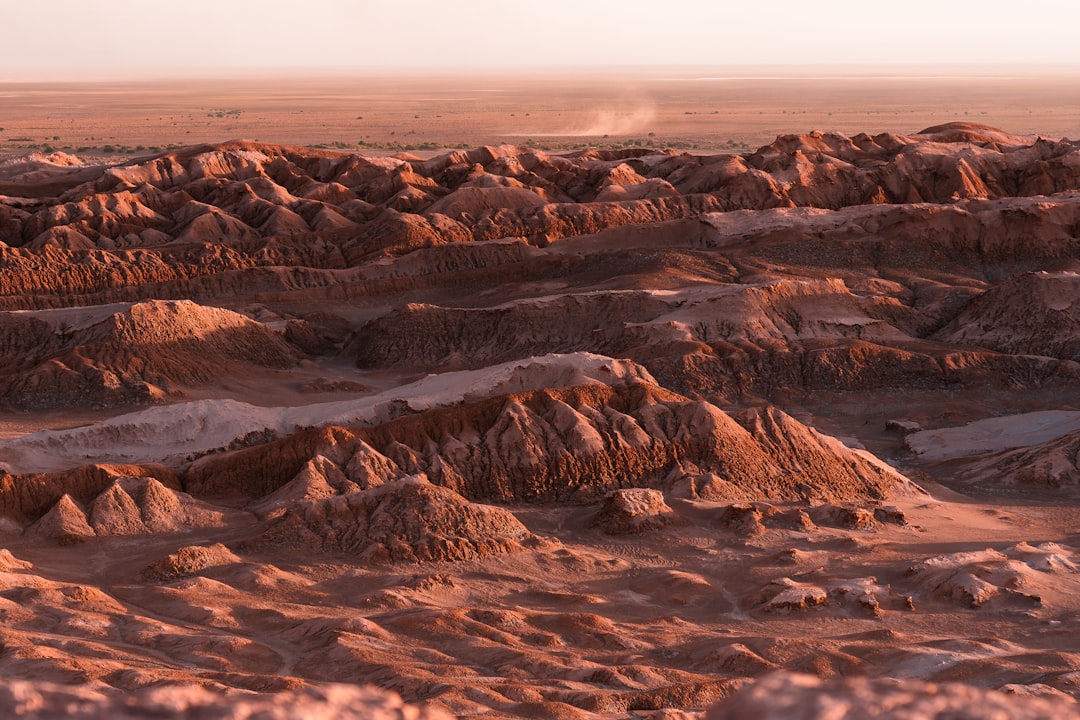
China's Zhurong rover has uncovered intriguing evidence of water and climate history on Mars, reshaping our understanding of the red planet.
China’s Zhurong rover, part of the Tianwen-1 mission, has offered new insights into the mysteries of Mars. Launched in July 2020, Zhurong was an ambitious first attempt by China to land and deploy a rover on the red planet, a feat achieved by only a handful of nations. Over the course of 358 Martian days, the rover gathered critical data, exploring Martian geography, tracing ancient water activity, and delving into the question of life beyond Earth.
Zhurong: China's First Mars Rover
Named after a mythical Chinese fire god, Zhurong is a medium-sized rover comparable to NASA’s Spirit and Opportunity vehicles from 2004. Unlike NASA’s cutting-edge Perseverance rover, which is powered by nuclear energy, Zhurong relies on solar panels for power. Despite its simpler design, the rover represented a milestone for China’s space program, which had previously focused on lunar missions with Chang’e landers and rovers.
Zhurong landed in Utopia Planitia, a vast plain in Mars’ northern hemisphere. This area, believed to have harbored an ocean billions of years ago, offered a relatively safe and flat landing site compared to NASA’s Jezero Crater, with its rugged hills and ancient river valleys. Utopia Planitia, however, is far from dull. Its history holds clues to Mars’ watery past and possibly, its potential to support life.
Breaking Down the Findings
Hydrated Minerals Beneath the Surface
Using its ground-penetrating radar, Zhurong detected 76 distinct layers of hydrated minerals buried 10 to 35 meters below the surface. These layers, tilted at an angle pointing north, suggest they were part of an ancient coastline. Scientists believe water once flowed down from the southern highlands into a northern ocean, reshaping the Martian landscape.
What’s groundbreaking about this discovery is the revised timeline for water on Mars. Previously, scientists assumed that liquid water disappeared approximately 3 billion years ago. However, the deeper mineral layers suggest water was present long before this period, and the upper layers point to a significant flood only 1.6 billion years ago—significantly more recent than earlier estimates.
Salt Crusts on Sand Dunes
Zhurong also studied long, low sand dunes in the region, identifying a crust of hardened salts up to 8 centimeters thick. This crust likely formed when liquid water briefly interacted with the surface before evaporating. Such water could have originated from Martian snow made possible by vapor condensation from the polar ice caps. The data suggest that liquid water may have existed on Mars as recently as 400,000 years ago. This timeline coincides with the era of early humans and Neanderthals on Earth.
Zhurong’s Innovative Techniques
Landing Methodology
To ensure a successful landing, China implemented a simplified parachute-and-rocket system reminiscent of NASA’s Viking landers from the 1970s. This system involved deploying a parachute to slow the lander’s descent, followed by firing a rocket engine to achieve a soft touchdown. Though less complex than NASA’s sky crane technique, this approach proved reliable and effective for Zhurong’s relatively lightweight design.
Research Instruments
Zhurong carried three main scientific instruments:
- Camera Array: High-resolution imaging of the Martian surface.
- Laser Spectrometer: Used to vaporize rock samples and analyze their composition.
- Ground-Penetrating Radar: Detected subsurface geological layers and hydrated minerals.
These tools enabled Zhurong to collect critical evidence of Mars’ watery past and its climatic history.
Implications for Life on Mars
The findings from Utopia Planitia suggest that water existed on Mars for extended periods, creating an environment potentially suitable for microbial life. Evidence of hydrated minerals and recent liquid water raises the possibility that Mars had conditions conducive to life even as late as 1.6 billion years ago.
This brings to mind the controversial experiments conducted by NASA’s Viking missions in the 1970s, which initially hinted at microbial life on Mars. Viking’s tests involved hydrating Martian soil and observing the release of carbon dioxide (CO2), a possible byproduct of microbial metabolism. Results were inconclusive, leading to speculation that the tests may have inadvertently destroyed any existing microorganisms. While no direct evidence of life has been confirmed, Zhurong’s work continues to add depth to this tantalizing mystery.
Looking Ahead: China’s Next Mars Mission
Though Zhurong surpassed its original 90-day mission lifespan, its operations ceased in May 2022 during a large dust storm, which likely covered its solar panels. Despite this setback, China is far from finished with Mars exploration. A future mission, slated for 2028, aims to retrieve Martian soil samples and return them to Earth. These samples could provide definitive answers about Mars’ habitability and geologic history.
Key Takeaways from Zhurong’s Mission
- Water on Mars: Evidence suggests that flowing water existed as recently as 1.6 billion years ago, significantly extending the planet’s wet period.
- Seasonal Climate Cycles: Ice melt and seasonal water cycles may have occurred as recently as 400,000 years ago.
- Hydrated Minerals: Subsurface layers hint at a long history of water-driven geological activity.
- Potential for Life: While no microbial life was detected, the findings support the possibility that life could have emerged during wetter periods.
Conclusion
Zhurong has added remarkable insights to our understanding of Mars, from its geology to its climatic history and potential habitability. By revising the timeline of water activity and uncovering intriguing surface features, China’s first Mars rover has set the stage for more ambitious missions. As we await the return of Martian soil samples in the coming years, one thing is clear: the red planet still holds many secrets waiting to be uncovered.
Staff Writer
Emily covers space exploration, physics, and scientific research. Holds a degree in astrophysics.
Comments
Loading comments…


