When the US tried to build canals and harbors with nuclear bombs
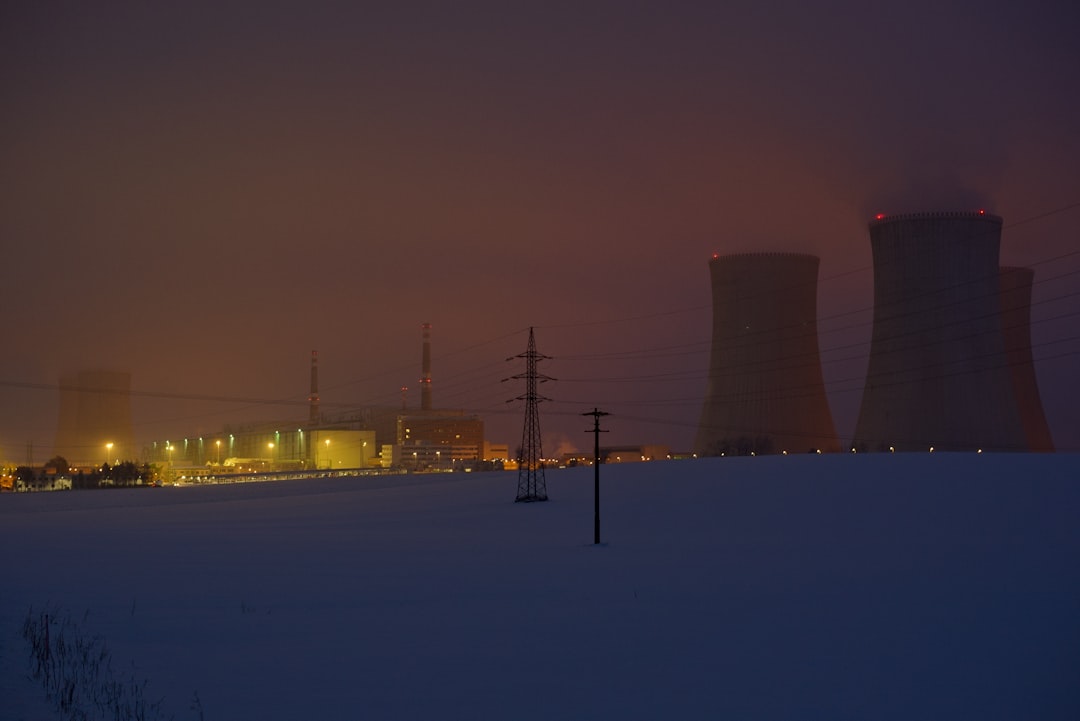
Project Plowshare, a Cold War-era plan to use nuclear bombs for massive engineering projects, resulted in radioactive failures instead of progress.
In the 1960s, at the height of Cold War tensions, the United States embarked on a highly unusual and deeply controversial experiment: using nuclear bombs not as weapons of war, but as tools for massive engineering projects. Dubbed Project Plowshare, the initiative promised to dig canals, carve out harbors, and tap natural resources—all with the destructive power of thermonuclear explosions. What unfolded over the next two decades, however, proved to be a series of radioactive missteps rather than progress.
The visionary—or hubristic—ideas of Edward Teller
The origins of Project Plowshare can be traced to Edward Teller, a Hungarian-American physicist who played a key role in the Manhattan Project, which developed the first atomic bombs. Teller went on to champion the development of even more destructive thermonuclear weapons, or hydrogen bombs, which derive their immense power from the fusion of hydrogen atoms. By the 1950s, Teller had successfully lobbied for these advances, unleashing weapons thousands of times more devastating than those dropped on Hiroshima and Nagasaki.
Teller also believed this power could be wielded for constructive purposes. With the public growing wary of nuclear weapons testing and a potential arms race with the Soviet Union, peaceful nuclear applications offered a convenient way for the US to continue testing bombs under the guise of progress. In Teller's eyes, "nuking for peace" meant harnessing the massive energy of hydrogen bombs to reshape the Earth's surface and open up vast possibilities for infrastructure.
Building canals, harbors, and tunnels with nukes
The Plowshare proposal was ambitious. One of its flagship ideas was to create an alternative to the Suez Canal through the Negev Desert in Israel—a project that would have required hundreds of nuclear detonations. Closer to home, plans emerged to widen and deepen the aging Panama Canal. Engineering studies calculated that removing the necessary 1.2 billion cubic meters of earth conventionally would cost $6 billion, while using thermonuclear devices could cut that cost nearly in half.
Before blasting through continents, however, the project needed smaller-scale tests. In Alaska, Teller and his team proposed using five nuclear bombs with a combined force of 170 Hiroshima bombs to excavate a new harbor. Though this plan never saw the light of day, its methodology laid the groundwork for future attempts.
The mechanics—and risks—of nuclear excavation
The principle behind nuclear excavation involved burying a bomb deep underground, where its detonation would hollow out a cavern and flash-melt surrounding rock. The theory suggested the resulting molten rock would pool below and solidify into a stable, radioactive-free barrier. Above ground, a massive crater would form, perfect for canals or harbors.
Despite Teller's confidence in the safety of this process, many experts worried about radioactive contamination. The notion of creating infrastructure that might remain dangerously radioactive for millennia elicited skepticism, especially from local communities.
Real-world tests—and radioactive disasters
Project Plowshare's first major test took place in New Mexico in 1961. Known as "Gnome," the test aimed to showcase a hybrid of nuclear and geothermal energy. Scientists detonated a bomb in a salt deposit, expecting it to generate a stable cavity of melting salt that could release heat for power generation. Instead, water in the salt deposit converted into superheated steam, amplifying the destructive force and blowing radioactive steam above ground. Everyone present was exposed to the fallout, and the test was widely criticized as a failure.
Another test, in Nevada in 1962, aimed to demonstrate the potential for nuclear excavation. The "Sedan" blast produced a colossal crater: 100 meters deep and 400 meters across. However, miscalculated parameters led to radioactive dust escaping into the atmosphere. Fallout contamination reached as far as South Dakota and Illinois. Milk in Utah was found to contain radioactive iodine, inciting public panic. These incidents reinforced fears that the risks of peaceful nuclear explosions far outweighed any potential benefits.
The Pan-Atomic Canal and other ambitious follies
Undeterred by failures, Teller continued proposing large-scale projects. Among these was the so-called "Pan-Atomic Canal" in Panama, which planners envisioned as a faster, cheaper alternative to expanding the Panama Canal. Route 17, an 80-kilometer stretch through dense jungle, emerged as a prime candidate. The project would have required 250 bombs, each with the power of 8,000 Hiroshima nukes.
The side effects of such an endeavor would have been catastrophic. Environmentalists warned of radioactive fallout spreading to both the Caribbean and Pacific, contaminating ecosystems and food chains. Landslides in the rainy season would have clogged craters, potentially undermining the entire project. In addition to these practical concerns, the proposal faced immense geopolitical backlash, as it risked turning Latin America into a nuclear testing ground.
The slow death of Project Plowshare
By the 1970s, public opinion had begun to turn decisively against nuclear testing of any kind. Growing awareness of the environmental damage and health risks associated with radioactive fallout made Plowshare increasingly untenable. The Pan-Atomic Canal was officially shelved in 1970, and subsequent projects, including nuclear fracking, also failed to deliver safe or cost-effective results.
Ultimately, in 1977, Project Plowshare was canceled without achieving any of its original goals. Twenty years of experiments and dozens of nuclear detonations resulted in no usable canals, harbors, or tunnels. Instead, the program left a legacy of contamination and served as a cautionary tale about the dangers of overconfidence in untested technologies.
Lessons from a nuclear dreamer
At its core, Project Plowshare was a product of its time—a period when the looming threat of nuclear war intersected with a boundless faith in science and technology. Ideas that seem absurd today, such as blasting holes in the Earth with hydrogen bombs, once captured the imagination of policymakers convinced that modern engineering could solve any problem.
In hindsight, the project's failures underscore the importance of evaluating long-term consequences—not just immediate technical feasibility. As contemporary discussions about geoengineering and nuclear energy evolve, the story of Project Plowshare offers valuable lessons about the balance between ambition and responsibility.
Staff Writer
Emily covers space exploration, physics, and scientific research. Holds a degree in astrophysics.
Comments
Loading comments…


