Why Interstellar Travel May Be Possible, but Sharing Its Insights Could Be Futile
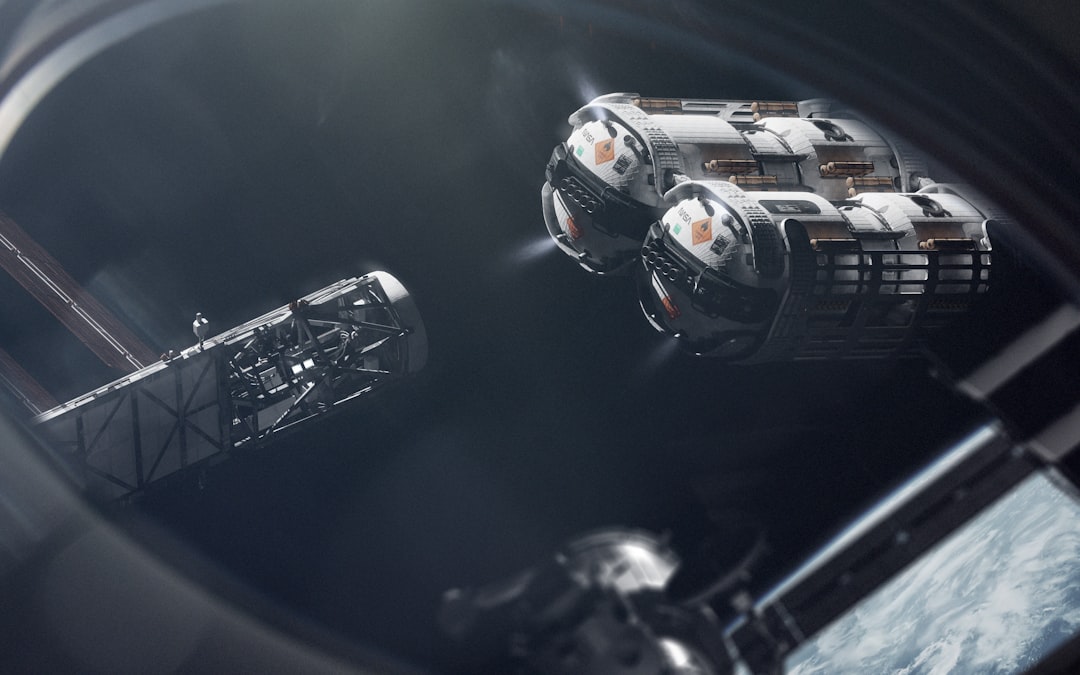
Physics makes interstellar travel possible in theory, but relativity imposes a time barrier, preventing practical returns to Earth's timeline.
Space exploration continues to astound us with new possibilities, yet a fundamental dilemma rooted in relativity asks us to question: what’s the point if we can’t share what we find? A recent discussion has surfaced regarding the theoretical feasibility of interstellar travel using the laws of physics. While the mechanics of shortening galactic distances exist, they come with an ironic and frustrating twist—returning to Earth to share information might render the endeavor meaningless due to the staggering time distortions predicted by Einstein’s theory of relativity.
The Physics Behind Interstellar Travel
One of the mind-bending principles of relativity is that distances change depending on the speed at which a traveler moves. As you approach the speed of light, space itself effectively shrinks from your perspective. This phenomenon, called relativistic length contraction, suggests that a spacecraft traveling at nearly light-speed could drastically reduce the interstellar distances that separate humanity from nearby galaxies.
For instance, the Andromeda Galaxy, situated approximately 2.5 million light-years from Earth, would take eons to reach with today’s technology. However, a spacecraft traveling close to the speed of light could traverse this incredible distance within a human lifetime—at least, from the crew’s perspective. Time slows down for objects moving at relativistic speeds, ensuring that those aboard the ship age much more slowly than those they leave behind on Earth.
This opens a fascinating door. In principle, humans could set out on journeys to explore parts of the universe currently far beyond our technological reach. Advanced propulsion systems, possibly leveraging concepts like antimatter engines or warp drives, could someday enable us to test these theories.
The Catch: Time Dilation
While the physics of traveling vast interstellar distances appears feasible, the consequences of time dilation make the trip profoundly isolating. According to relativity, time passes at different rates for those moving at relativistic speeds and those remaining stationary. For astronauts traveling to Andromeda and back at near-light speed, their journey might only take decades. But from Earth’s perspective, millions of years will have elapsed.
Consequently, when those explorers return to Earth, they would arrive in a reality unrecognizable from the one they left. Civilizations, societies, and ecosystems would have completely transformed—or possibly disappeared—over the millions of years that passed. The very audience they hoped to convey their discoveries to would no longer exist.
The Cosmic Irony
The implications are as profound as they are frustrating. Humanity could, in theory, unlock the ability to explore far-flung corners of the galaxy and beyond. But the universe’s very structure would prohibit the explorers from sharing their findings with the world they left behind. This predicament highlights the tension between our aspirations and our limitations as short-lived beings inhabiting a vast, relativistic cosmos.
It’s a somber reminder that achieving such milestones doesn’t inherently solve the deeper philosophical questions of purpose. Why explore if the knowledge can’t be communicated back home? For some, the act of discovery alone may be justification enough. For others, this harsh reality challenges the value of interstellar efforts altogether.
Why Focus on These Hypotheticals?
Given these constraints, one might wonder why we even bother imagining such scenarios. Isn't it more practical to address challenges closer to home, like climate change, poverty, and global inequality, before allocating resources to solve interstellar hurdles? This perspective has merit, and it underscores a growing critique of humanity’s priorities. While we’ve demonstrated the ability to create nuclear weapons and advance our scientific understanding of the universe, there remain many problems on Earth we seem incapable of solving.
Nonetheless, driving humanity toward space exploration isn’t purely about reaching distant galaxies. It’s about pushing the boundaries of what’s possible and testing the limits of our ingenuity. The technologies developed for interstellar travel may offer applications closer to Earth, whether in energy production, propulsion systems, or even human longevity. Moreover, preparing for life beyond our planet acts as an insurance policy against existential risks, like asteroid impacts or runaway climate change.
The Philosophical Challenge of Human Lifespan
Time dilation isn’t just a mathematical curiosity—it also serves as a humbling reminder of our biological impermanence. Human lives, comparatively fleeting on the cosmic scale, shape our perception of time and urgency. While the universe may allow some form of interstellar travel, it does not accommodate the brevity of our lifespans.
This presents an existential challenge: Can we redefine the purpose of exploration if its results can’t benefit those left behind? Should we embark on these journeys simply because we can, or does some level of pragmatism demand we prioritize more tangible goals?
A Way Forward
The debate isn’t likely to end soon. But as our understanding of physics evolves and our technology matures, humanity will inevitably face choices about interstellar exploration. Do we pursue the dreams offered by advanced physics despite their isolating consequences, or do we resign ourselves to staying within the gravitational well of Earth?
Until then, relativity remains the final arbiter of interstellar ambitions. It permits breathtaking possibilities while imposing limitations that seem almost cruel in their absolute finality. Space isn’t ruined, but it’s clear the universe has its own rules—and humanity must decide how to play within them or whether to play at all.
Staff Writer
Daniel reports on biology, climate science, and medical research.
Comments
Loading comments…


