Why NASA Isn’t Planning to Build a City on the Moon
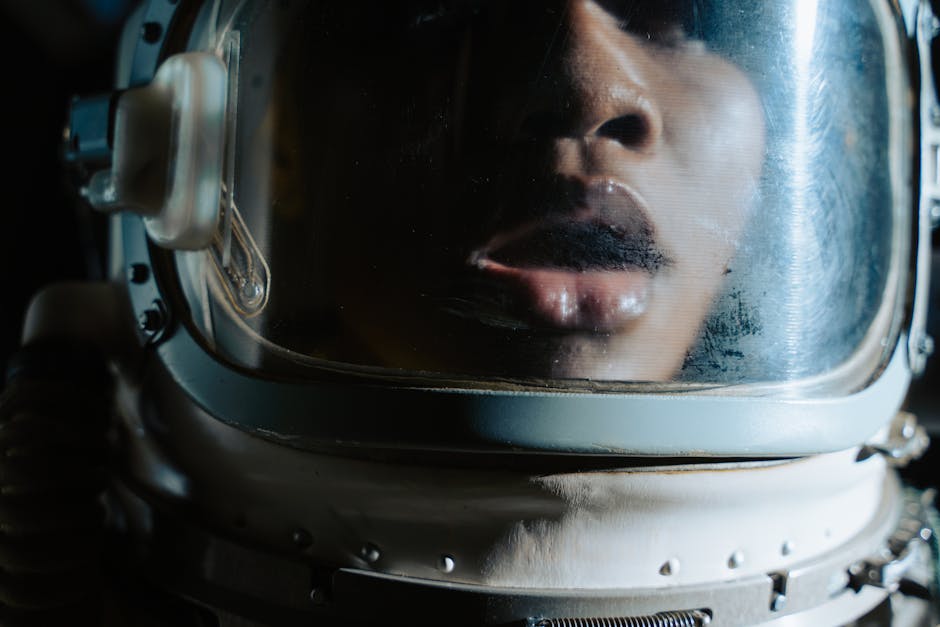
NASA has grand plans for lunar exploration, but challenges in physics, biology, and economics make building a moon city an entirely different task.
NASA’s Artemis program has reignited global excitement for human exploration of the moon. Scheduled milestones—like the Artemis 2 mission in 2026 and the first crewed lunar landing in over 50 years with Artemis 4 by 2028—signal serious commitments to long-term lunar presence. Yet, while headlines tout "permanent lunar bases," they also often mislead. What those involved actually mean by "permanent" is very far from a thriving, self-sustaining lunar city.
The idea of a lunar city, complete with neighborhoods, schools, and local self-sufficiency, is an idea rooted in science fiction. NASA isn’t just avoiding the term as a matter of conservative communication. The truths of space engineering, human biology, economics, and political reality make the dream of a lunar city in the near future virtually impossible. Here's why NASA and other space agencies are aiming for lunar "bases," not self-sustaining cities.
Artemis Program Plans: Where NASA Draws the Line
NASA’s Artemis program is ambitious. It aims to do something humanity hasn’t achieved since the Apollo missions ended in the 1970s—return people to the moon, but this time with an eye on long-term habitation. By 2030, NASA and its international partners, including Canada and the European Space Agency (ESA), plan to establish a “base camp” at the moon’s south pole.
This lunar base, however, will not resemble a city. NASA defines it as "a facility that supports crews rotating in and out for defined missions." Crews will live and work there for periods of up to 180 days—longer than Apollo ever allowed—but they will depend entirely on Earth for food, water, spare parts, and medical supplies. In essence, this moon base is a workplace, not a living space.
Key Infrastructure in Progress for Artemis
- Foundational Surface Habitat: Modular housing designed to support four astronauts for extended missions, but not permanently.
- Nuclear Fission Reactor: Provides continuous power during the moon's 14-day-long nights, when solar energy can't be relied upon.
- Pressurized Rovers: Vehicles designed for long-distance surface exploration.
- Lunar Gateway Station: An orbiting waypoint that supports the transfer of astronauts and supplies between Earth and the moon.
Why "Base" Doesn’t Mean "City"
While building the Artemis base camp is an enormous engineering and political effort, there's a fundamental distinction between it and a full lunar city. A moon base is dependent on Earth for survival. A lunar city, by contrast, would need to support itself entirely—with food grown locally, spare parts manufactured on-site, and a government to manage a permanent population.
The leap from base to city presents challenges that no current space agency or technology can address. This is not just a matter of scale—it's about entirely different categories of capability. The gap is defined by:
- Physics: The moon has one-sixth of Earth's gravity, which poses long-term health risks like muscle loss and bone degradation.
- Radiation: Unlike Earth, the moon has no atmosphere or magnetic field to protect humans from harmful cosmic radiation.
- Economics: Current lunar projects cost billions of dollars per year. Scaling up to a city-level infrastructure—one capable of self-sustenance—would cost exponentially more.
- Materials: Creating a self-sustaining city would require industrial-grade manufacturing, mining, and energy systems that simply don’t exist today on the moon.
Four Definitions That Matter
To understand the enormous challenges in progressing from a crude mission to a self-sustaining city, it’s vital to make distinctions. Here’s how space exploration is categorized today:
- Crewed Mission: Short visits, ranging from days to a few weeks, where astronauts perform tasks before returning to Earth. NASA’s Apollo missions fit this definition.
- Lunar Base: A semi-permanent facility supported by Earth. Crews rotate in and out, maintaining operations and conducting experiments.
- Permanently Inhabited Outpost: A continuously staffed location, like the International Space Station (ISS). Supplies are flown in regularly, and inhabitants depend entirely on Earth.
- Self-Sustaining City: A community that does not rely on Earth for basic needs—everything from food production to spare parts is handled locally. No such self-sufficient model exists on the moon or in space today.
NASA and its partners today aim for a lunar base, with hopes to evolve into the third tier—a permanently staffed outpost. Even this ambitious goal necessitates overcoming incredible logistical, biological, and technological hurdles.
Unrealistic Narratives: Where Public Perception Diverges
Popular media has played a significant role in blurring the lines between bases and cities. Concept art from NASA often shows sleek, illuminated lunar habitats surrounded by rovers and astronauts seamlessly working the lunar soil. Science fiction movies go even further, portraying bustling, self-sufficient colonies under domed ecosystems.
But images and stories gloss over complexities like radiation shielding, dust hazards, the need for constant resupply, and the fragility of life systems in the vacuum of space. These depictions inadvertently train the public to see cities on the moon as an inevitable next step instead of what they are—science fiction for the foreseeable future.
Challenges Still in the Way of Lunar Settlements
- Radiation Exposure: Long-term lunar inhabitants would face health risks from consistent cosmic radiation.
- Resource Constraints: Mining moon resources is in its infancy; manufacturing truly independent systems is decades away.
- Sociopolitical Considerations: Who governs a moon city? How are conflicts arbitrated between nations? These questions remain unresolved.
- Human Biology: Sustained life in low-gravity environments poses several risks, including cardiovascular and musculoskeletal degeneration.
- High Costs: Current Artemis missions face budget overruns. Expanding the effort to a city-scale project would require unprecedented investment.
Practical Takeaways
- NASA and its partners, including commercial players like SpaceX and Blue Origin, are focusing on practical, incremental goals. These include testing life support systems, developing more capable rovers, and ensuring reliable crew rotations.
- The Artemis base camp will set the stage for scientific discovery and industrial innovation on the moon. However, it will not evolve into a city unless breakthroughs occur in areas like autonomous manufacturing, advanced radiation shielding, and artificial gravity.
- Humanity's path to colonizing the moon remains long and uncertain. Future advances may lay the groundwork, but for now, a functional lunar base is the limit of realistic planning.
Final Thoughts
The dream of moon cities has captured imaginations for decades, but the reality is far more grounded. NASA’s Artemis program and similar efforts worldwide aim to establish a lasting human presence on the moon, offering unparalleled opportunities for science and exploration. At the same time, understanding the constraints of physics, economics, and human biology reveals why a full-fledged lunar city is not part of today’s plans—or tomorrow’s. A permanent moon base should be celebrated for the extraordinary achievement it represents, not misinterpreted as something it is not.
Staff Writer
Daniel reports on biology, climate science, and medical research.
Comments
Loading comments…


