AI reconstructs Pompeii victim's final moments
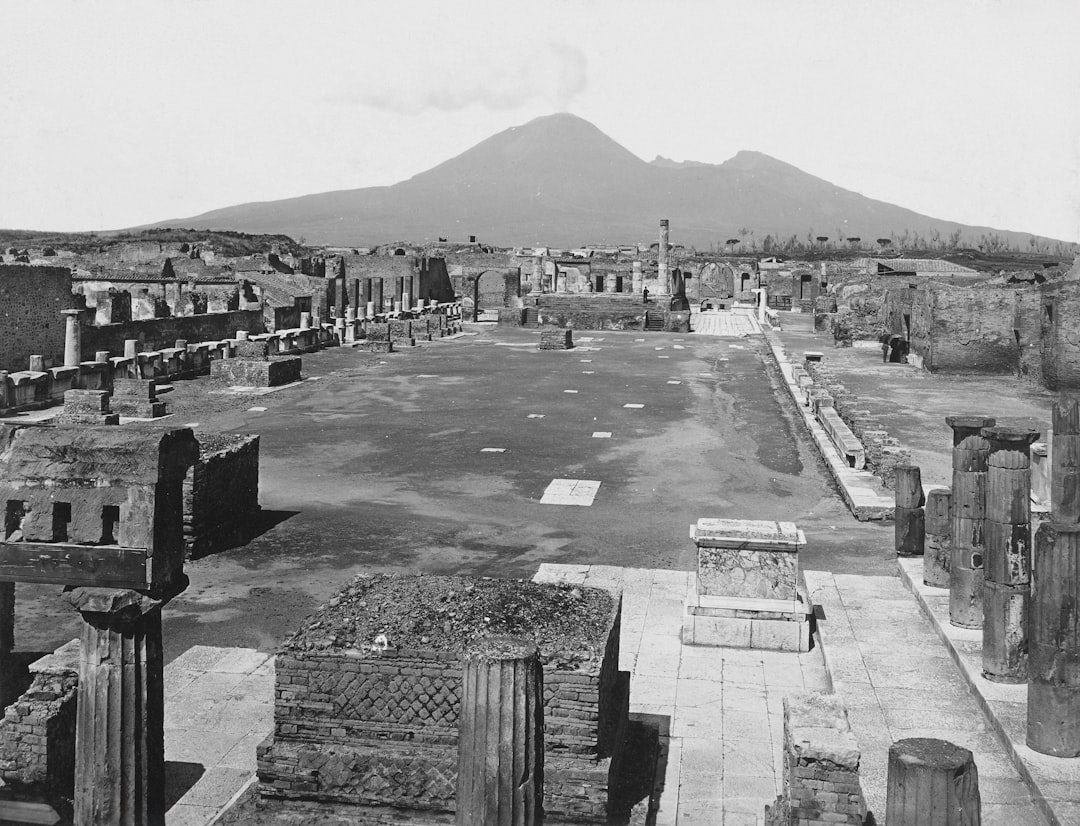
Using AI, researchers vividly recreated the final moments of a Pompeii volcano victim, revealing a grim scene from the 79 AD eruption.
The catastrophic eruption of Mount Vesuvius in 79 AD, which buried the Roman city of Pompeii in a thick layer of volcanic ash, continues to be a source of fascination and historical insight. Now, the convergence of artificial intelligence and archaeology has shed new light on the tragedy, offering a vivid recreation of what may have been the final moments of one unfortunate victim.
A Snapshot of History
Archaeologists recently uncovered the remains of a man caught in the chaos of Mount Vesuvius's eruption. His skeleton was discovered alongside a terracotta mortar, a household item he may have instinctively used as a shield against falling debris. The scene offers a chilling glimpse into the desperation and confusion that likely gripped Pompeii as volcanic stones and ash rained down on its inhabitants.
What makes this discovery especially compelling, however, is how researchers have used state-of-the-art AI technologies to recreate the grim scene. By analyzing the man’s skeletal position, the surrounding artifacts, and historical context, the AI was able to simulate what experts believe were the fleeing man’s final moments.
How AI Contributes to Archaeology
Artificial intelligence is becoming an increasingly valuable tool in disciplines like archaeology, where piecing together fragments of the past often involves some level of interpretation. In this case, the use of AI algorithms helped researchers extrapolate the likely posture and movements of the victim based on the orientation of his bones and the damage patterns observed. Beyond physical reconstruction, the AI factored in historical and environmental context, such as the size of volcanic debris and its trajectory, to infer how the man may have tried to evade falling stones.
Additionally, AI can process and synthesize vast amounts of data far faster than a human researcher. Historical records, prior research on volcanic eruptions, and environmental simulations all fed into the model, creating a plausible reconstruction of events in a matter of hours rather than weeks or months.
A Glimpse into Final Moments
The result of this technological effort is a chilling tableau. The man appears to have been attempting to shield himself with the terracotta mortar, perhaps in a futile effort to survive the onslaught of volcanic stones and ash. Researchers believe his posture and apparent choice of defense highlight the sheer unpredictability and terror of the event. Despite his efforts, his remains were found among the ruins—haunting evidence of a struggle lost to an overwhelming natural force.
This case provides a new dimension to understanding the human suffering caused by the eruption. While historical texts have given historians a broader view of the event, this recreation focuses intimately on one individual, humanizing the scale of the tragedy that claimed thousands of lives.
The Role and Limitations of AI Reconstructive Efforts
While the use of AI in archaeology opens up exciting possibilities, it is not without limitations. The reconstruction described here, for instance, is still based on informed probabilities rather than definitive answers. The researchers themselves acknowledge that the reconstruction reflects what was most likely to occur, given the evidence, not necessarily a precise retelling of what took place.
Skeptics may question how much AI reconstructions can truly tell us about historical events. The reliance on algorithms to "fill in the gaps" introduces a layer of interpretation that may not always align with future discoveries. Despite these concerns, the use of AI still represents a leap forward in our ability to visualize and understand the past. It also serves as an effective reminder that history is an ever-evolving narrative shaped as much by technology as by discovery.
Broader Implications for Science and History
The integration of AI into archaeological research is a powerful example of how modern technology can alter our understanding of history. From recreating the faces of long-lost historical figures to mapping entire ancient cities buried underground, AI enables researchers to analyze data on a scale previously unimaginable. For Pompeii in particular—a site already studied extensively—AI may help uncover nuances that traditional methods have overlooked. In the case of this victim, it has brought us closer to empathizing with and visualizing the human aspect of a 2,000-year-old tragedy.
Looking Ahead
Pompeii continues to reveal its secrets, and the use of AI will undoubtedly play an increasing role in future discoveries. As research methodologies evolve, there is potential for AI to reconstruct more than just individual moments. Entire dynamic scenes could emerge, giving us an increasingly accurate depiction of life—and death—during one of history's most infamous natural disasters. For now, this victim’s story stands as both a cautionary tale of nature’s power and a testament to technology’s ability to bridge centuries, offering new perspectives on ancient events.
Staff Writer
Chris covers artificial intelligence, machine learning, and software development trends.
Comments
Loading comments…


