Could AI Have Found a Second Earth? 17 Earth-like Planets Detected in Data Overlooked by Humans
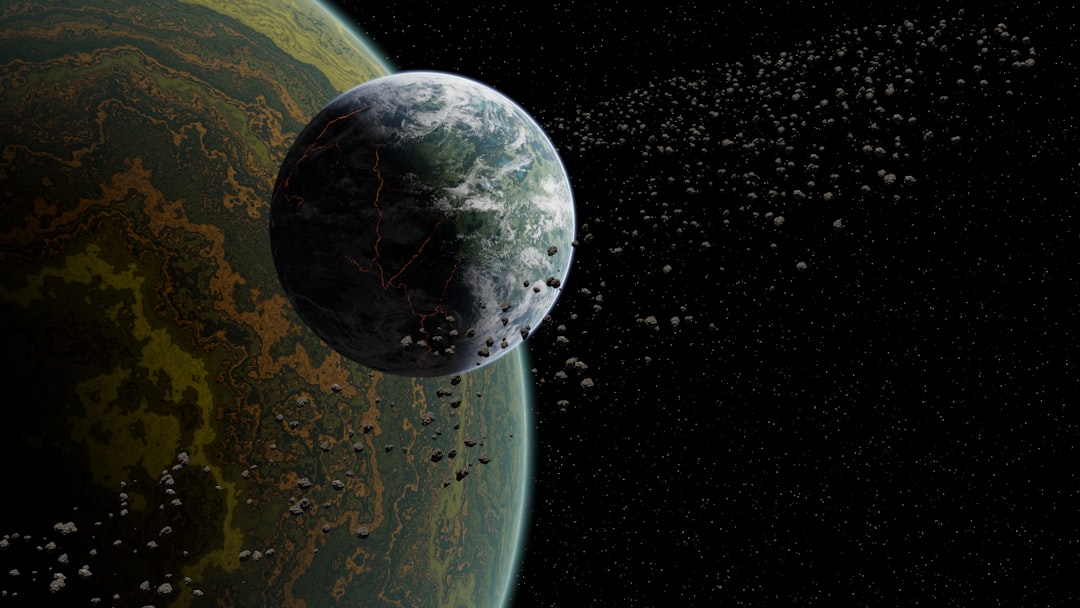
An AI has identified 17 Earth-like planets hidden in overlooked data, one showing signs of an atmosphere similar to early Earth's with potential life chemistry.
Artificial intelligence continues to challenge the limits of human capability, and its latest achievement might just be one of the most profound yet. According to a recent discovery, an AI has identified 17 Earth-like planets hidden deep within datasets that had previously been ignored. Among these planets is one seemingly bearing signs of an atmosphere similar to early Earth's, raising the tantalizing possibility that life, or the conditions for it, could already exist elsewhere in the cosmos.
How AI Made the Discovery
Typically, astronomers search for Earth-like planets by analyzing data from space-based observatories, such as NASA's Kepler or the European Space Agency’s Gaia missions. These massive datasets track dips in starlight as planets pass in front of stars — a method called transit photometry. However, the challenge lies in separating genuine planetary signals from background noise. Minor fluctuations in starlight, often dismissed as instrumental error or irrelevant cosmic activity, can hide subtle planetary signatures.
This is where the AI stepped in. Trained to identify patterns invisible to human analysis, the system combed through years of archived spectral data. Previous studies had overlooked this information, largely because the signals were obscured within what astronomers assumed to be noise. By contrast, the AI was able to parse out these faint fingerprints of potential exoplanets. Among the 17 planets identified, one stands out: a particular signature indicating an atmosphere containing oxygen, water vapor, and other bio-chemicals that parallel early Earth’s.
Earth’s Potential Twin?
The atmospheric composition of this standout planet bears a striking resemblance to Earth’s environment billions of years ago, during a period when life first emerged. The detection of oxygen — a potential indicator of biological activity — alongside water vapor has long been considered the gold standard in the search for habitable worlds. While the presence of these chemicals does not confirm life, it suggests that conditions necessary to sustain it may exist.
This discovery has amplified excitement in astrobiology circles. If further validated, such a planet could mark the first verifiable candidate for harboring extraterrestrial life or prebiotic conditions.
Why Were These Planets Initially Missed?
The datasets that the AI analyzed weren’t new. Instead, they were part of older observational archives that had been deemed unproductive. The limitations of past analytical tools, alongside the sheer volume of data, meant that many researchers focused their efforts on more obvious signals.
Human researchers are also forced to prioritize certain hypotheses over others, meaning fainter or more challenging data points often miss their share of attention. AI, on the other hand, lacks this subjective bias and can process vast amounts of data exhaustively. It doesn’t "decide" what’s unimportant, making it a powerful ally in addressing human blind spots.
The Role of AI in Astrobiology
This breakthrough represents just one example of how AI is transforming our search for extraterrestrial life. Beyond detecting Earth-like planets, AI systems are also analyzing chemical compositions of distant atmospheres, identifying unusual radio signals, and even guiding autonomous exploration in Earth's most extreme environments to train for future missions on Mars or Europa.
Given its success, experts are likely to expand AI’s role in planetary science. New datasets from upcoming missions, like NASA's James Webb Space Telescope or the European Space Agency's PLATO, will become fertile ground for further discoveries, and AI-driven insights could fast-track findings that would otherwise remain buried.
What Comes Next?
The discovery of these 17 planets demands next steps. First, researchers will aim to confirm their existence, as faint signals can sometimes result from data artifacts or cosmic interference. This will likely involve follow-up observations using higher-resolution instruments equipped to provide more precise measurements of these planets' size, distance from their stars, and atmospheric make-up.
The spotlight will undoubtedly focus on the planet with early-Earth-like qualities. Future telescopes, such as the upcoming Extremely Large Telescope in Chile, could provide direct imaging of this candidate and potentially analyze its atmosphere in even greater detail.
Limitations and Questions
While AI's discovery is remarkable, some limitations remain. Even with an atmosphere resembling early Earth, factors such as extreme planetary surface conditions, high radiation exposure, or distant star types could make habitability impossible. Moreover, while oxygen and water are promising biomarkers, they aren’t definitive proof of life. Geological activity, for instance, can produce oxygen without biological assistance.
Scientists and researchers must also contend with the accuracy of AI systems themselves. While incredibly precise, AI models can still produce false positives, particularly when applied to noisy, incomplete data.
What This Means for the Search for Life
The implications of AI-driven exoplanet discovery are vast. As these systems take on increasingly complex tasks, they could redefine humanity's understanding of its place in the universe. The idea that Earth might not be unique becomes more plausible with each additional Earth-like world found.
Beyond the philosophical resonance, such findings have practical implications for future interstellar exploration. Identifying planets with Earth-like qualities is the first step toward targeting missions capable of confirming habitability — or even visiting such worlds in future centuries.
For now, the thought that we may have just uncovered a second Earth is enough to reignite the collective imagination. Thanks to AI, the long-standing question of humanity’s uniqueness in the cosmos might soon receive an answer.
Staff Writer
Maya writes about AI research, natural language processing, and the business of machine learning.
Comments
Loading comments…


