Why AI is becoming 10x cheaper every year
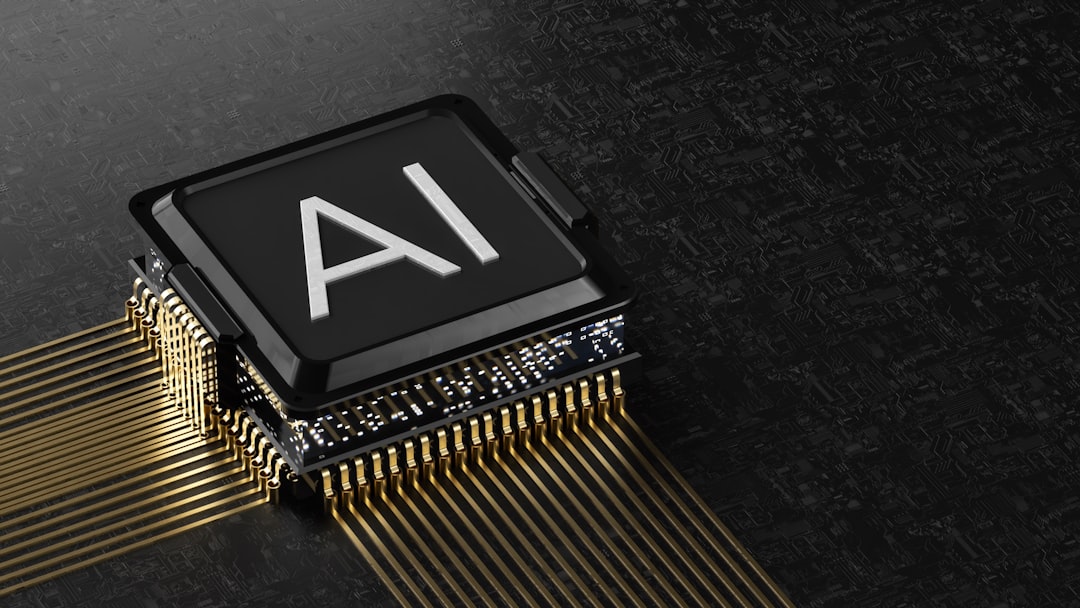
AI costs are dropping dramatically due to efficient hardware, model compression, and streamlined software. Here's what it means for the future.
Running a state-of-the-art artificial intelligence (AI) model used to demand the kind of financial and computational resources normally associated with a small server farm. Today, executing a comparable task costs mere pennies—and these costs are continuing to plummet with each passing quarter. But why is AI becoming 10 times cheaper annually? The answer lies at the crossroads of advancements in hardware, software, and model design.
Hardware: Better Chips, More Work Per Watt
One of the key drivers behind falling AI costs is the evolution of hardware used for training and deploying machine learning models. Specialized AI chips, like GPUs (graphics processing units) and TPUs (tensor processing units), have undergone several generations of development. Modern chips are engineered to perform far more mathematical calculations per unit of power consumed compared to earlier designs. This efficiency gain means that tasks requiring massive computational power can now be executed with far less energy and significantly lower costs.
For example, early-generation chips designed a decade ago would struggle to keep up with today’s AI workloads without requiring enormous, power-hungry infrastructure. In contrast, newer chips are tailor-made for AI-specific operations such as matrix multiplications, which are fundamental to neural networks, allowing the same amount of work to get done quicker and cheaper. For businesses and researchers, this means smaller electricity bills and fewer costly servers.
Model Compression: Smaller, Smarter AI
The next breakthrough in making AI cheaper lies in model compression. At its core, model compression is the art of shrinking a massive neural network without sacrificing too much of its performance or accuracy. Think of it like taking a detailed textbook and turning it into a concise pamphlet while retaining all the critical information.
By reducing the size of an AI model, researchers have significantly cut the computational resources and memory required to execute that model. Techniques like pruning (removing redundant connections in a neural network), quantization (using fewer bits to represent numbers), and knowledge distillation (training a smaller model to mimic a larger one) ensure that streamlined AI systems can achieve nearly identical results as their bulkier predecessors.
What this means in practical terms is that the same task—whether it’s recognizing an image, generating text, or translating a language—can now be done faster and more economically thanks to these smaller, more efficient models.
Software Optimizations: Squeezing Out Waste
The third pillar for cheaper AI lies in software engineering. Early-generation AI systems often relied on resource-intensive and wasteful code. Over time, software engineers have rewritten the underlying algorithms to eliminate inefficiencies. This includes optimizing how AI operations are computed and reducing the overhead often present in earlier AI frameworks.
For example, deep learning libraries like TensorFlow and PyTorch have incorporated cutting-edge techniques that minimize redundant computations and maximize parallel processing, ensuring that hardware resources are used as efficiently as possible. Compiler-level improvements have also played a role, enabling faster execution of AI tasks without needing new hardware.
Together, these three pillars—hardware, model compression, and software optimization—compound their effects. Since these advancements build on one another rather than working in isolation, the reduction in costs doesn’t follow a straight line. Instead, costs drop precipitously—making a task that cost a dollar last year require mere cents, or even fractions of a cent, today.
The Implications for Everyday Users
What does this mean for consumers and businesses? In short, AI tools are becoming far more accessible. As operational costs plummet, companies can afford to scale their AI implementations to offer users faster, smarter, and cheaper options.
For example, real-time AI-powered features—like voice transcription, image editing, and predictive text—are already embedded in consumer applications. Lower costs will encourage developers to integrate even more advanced AI capabilities, enhancing experiences without driving up subscription fees or purchase prices. Industries such as healthcare, education, and logistics may also benefit from the democratization of AI, enabling resource-constrained organizations to tap into powerful computational tools.
Furthermore, price reductions allow smaller firms and independent creators to experiment with AI services previously out of their reach, fostering innovation across the board. The barriers to entry for deploying machine learning are lower than ever, which is great news for startups and non-tech organizations eager to extract value from AI.
What’s Next in AI Efficiency?
The pace of these advancements shows no signs of slowing down. Major tech firms and research institutions continually unveil more efficient models and hardware solutions every quarter. For instance, the development of new AI processor designs is focusing not only on enhancing performance but also on improving energy efficiency—a key area as demand for AI services grows.
On the software side, emerging algorithms are already exploring even leaner approaches to computation. Meanwhile, the research community continues to refine techniques for training AI models with smaller datasets, which could further reduce both training time and associated costs. Combined, these next steps promise to unlock AI's full potential while keeping computation affordable even for the smallest of players.
Challenges and Concerns
While the cost of AI deployment is plummeting, scaling for broader accessibility also raises challenges. Among the concerns is the growing environmental impact. Training massive AI models—even with efficient hardware—still requires enormous amounts of electricity. Balancing cheap AI against this environmental cost will be crucial as AI adoption continues to grow.
Another issue to navigate is the concentration of cutting-edge hardware and algorithmic development within a handful of major tech companies. This creates a dynamic where only a few players control the fundamental enablers of AI’s affordability. Ensuring that smaller organizations and developing regions have access to these benefits will play a key role in AI’s equitable spread.
The Road Ahead
AI becoming 10 times cheaper every year signals more than just a triumph of engineering—it ushers in a future many are only starting to imagine. As these technologies continue to scale, the tools we rely on in daily life will transform rapidly, becoming smarter, faster, and, most importantly, more accessible to everyone. From startups to established industries, the opportunities are vast—but so too are the challenges of securing this progress sustainably. All the same, one thing is clear: the downward cost trajectory of AI is poised to define the next era of technological development.
Staff Writer
Chris covers artificial intelligence, machine learning, and software development trends.
Comments
Loading comments…


