Breaking Down Tesla’s Terafab Plans and New $3 Billion Order
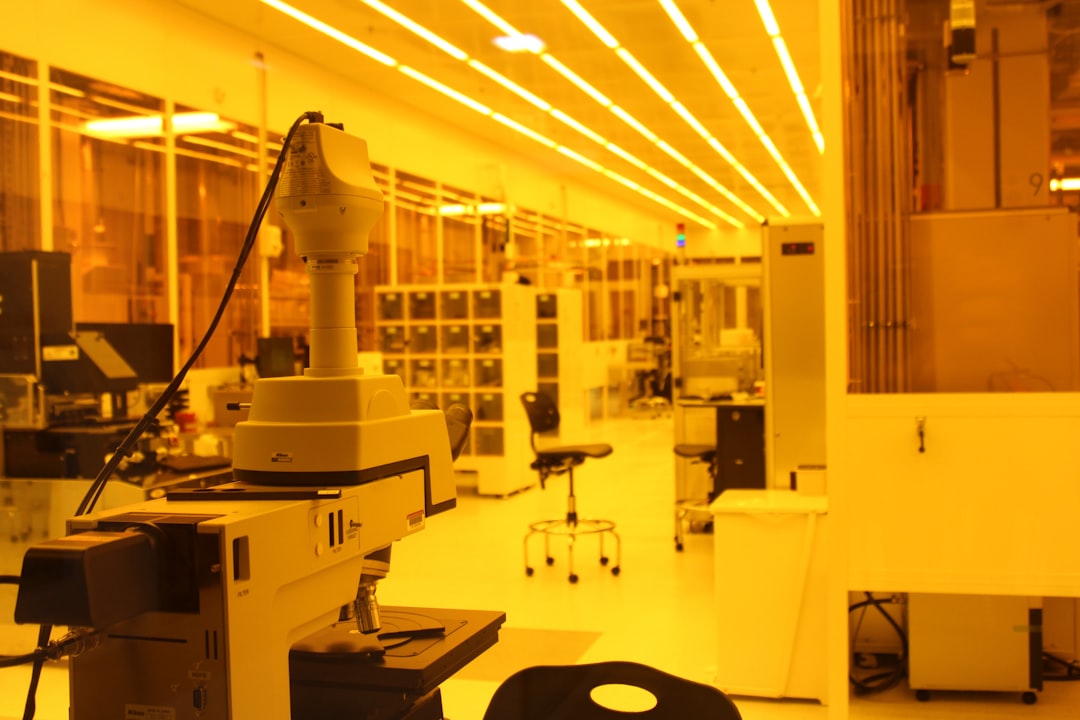
Tesla’s ambitious Terafab chip facility aims to revolutionize vehicle and space tech, but the challenges are monumental. Here’s the reality.
Tesla's recent announcement regarding its ambitious Terafab facility has sparked widespread conversation about the company’s future in chip manufacturing and its broader technological goals. From plans to produce one terawatt of chip output annually to updates on its Semi trucks and a newly revealed $3 billion order, Tesla once again has the world watching. While the announcement is exciting, it's critical to examine the logistics, challenges, and implications of such bold endeavors. Here's a detailed breakdown.
What is Tesla’s Terafab Initiative?
Tesla and SpaceX’s Terafab plan revolves around creating a chip manufacturing facility capable of fabricating one terawatt of chip output annually. For context, current global chip output is only around 20 gigawatts per year—just 2% of Tesla’s stated target. Elon Musk envisions using these chips to support everything from Tesla’s Full Self-Driving (FSD) technology to the development of Optimus humanoid robots and Tesla vehicles, as well as SpaceX applications.
The Terafab would be split into two main production facilities. Each would focus on manufacturing a single chip design—one optimized for Tesla products like vehicles and robots, and the other tailored for space-related tasks under SpaceX. An additional advanced technology facility, essentially a research lab, will be housed at Giga Texas for rapid prototyping and iterative development.
Elon Musk suggested this setup would allow Tesla to rapidly test and iterate new chip designs, producing prototypes in as little as one week. While this promises significant efficiency gains, it's worth noting that this level of quick iteration has never been achieved in the chip manufacturing industry before.
Unprecedented Challenges in Chip Manufacturing
The scale and complexity of the Terafab initiative are staggering. Consider just one critical bottleneck: EUV lithography machines. Currently manufactured on a large scale only by ASML, these machines are essential for producing advanced semiconductor chips. According to Dylan Patel, about three EUV machines are required to produce one gigawatt of chip output annually. Tesla’s one-terawatt goal would require approximately 3,000 EUV machines, an astronomical number given that ASML produced just 50 such machines globally in 2022. Even with optimistic projections, cumulative global production of these machines is expected to reach only 700 units by 2030.
Tesla’s ambitious plans mean rethinking the entire approach to chip manufacturing. Traditionally, companies like TSMC and Samsung separate the processes for logic, memory, and packaging into different facilities to avoid contamination. Consolidating all these stages under one roof introduces risks of cross-contamination and downstream complications.
Even Samsung, one of the industry leaders, has struggled with its 3-nanometer technology, achieving yields of only 10-40%, compared to TSMC’s 70-90%. Given how challenging chip manufacturing is, even for seasoned companies, Tesla faces a monumental uphill battle to meet its targets.
Timeline: Best Case Scenario
Elon Musk is known for pushing ambitious timelines, but the Terafab appears unlikely to meet its targets before the 2030s. Considering Tesla hasn't even decided on the facility's location, construction alone is expected to take years. For example, Tesla built the Giga Texas factory in approximately one year, but the Terafab will require far more precision, given the equipment and environmental controls necessary for chip fabrication.
Assuming Tesla breaks ground on the Terafab site in 2024, it could take until at least 2028 to complete construction. The subsequent testing, iteration, and ramp-up of chip production might push operational timelines to the early-to-mid 2030s. Even then, success is far from guaranteed, especially considering the technological and labor hurdles.
Labor and Specialized Talent Shortages
Around 20% of the workforce required at a semiconductor foundry like the Terafab consists of highly specialized roles, held by an estimated few thousand qualified individuals globally. Companies such as Samsung and TSMC have already faced delays in their U.S. factory operations due to shortages of experienced talent, often importing experts from South Korea and Taiwan. Tesla will likely encounter similar challenges in sourcing specialized workers, further complicating the timeline.
Financial Commitment: $30 Billion Estimates
Developing the Terafab and its associated infrastructure could cost Tesla and SpaceX upwards of $30 billion over the next decade. While Musk has cultivated a reputation for pulling off seemingly impossible feats, the sheer financial, technological, and human resource demand of the Terafab ensures this will be one of the most challenging projects in Tesla’s history.
New $3 Billion Order and Tesla Semi Updates
While much of the spotlight is on the Terafab, Tesla's Semi trucks also gathered attention recently. Jay Leno’s Garage showcased an updated Tesla Semi, with new details revealed. Tesla now has several hundred Semi units on the road, with the fleet collectively amassing 13.5 million miles. Tesla also highlighted one lead truck equipped with a battery capable of lasting up to one million miles.
Key specifications for the Tesla Semi include:
- Standard range variant: Mileage of 325 miles, fewer battery packs, and a shorter wheelbase.
- Long-range variant: Similar load-pulling capability to the standard model, but equipped with three battery packs in parallel for extended mileage.
Interestingly, Tesla hinted at ongoing development for wireless charging technology for the Semi, which could be a game-changer for reducing long-haul downtime.
What’s Next for Tesla and SpaceX?
The interconnected goals of Tesla and SpaceX increasingly point toward a tighter integration of the two companies. Speculation about a potential SpaceX acquisition of Tesla has reignited, given the growing overlap in technology, talent, and operational requirements. Musk’s ultimate vision for these entities seems to align with creating mutually reinforcing innovation loops.
Key Takeaways
- The Terafab aims to pioneer a new approach to semiconductor manufacturing by consolidating the process and achieving unprecedented chip outputs. Yet, the project is riddled with logistical, technological, and labor challenges.
- Tesla’s ambitious timelines should be approached with caution. Breaking ground in 2024 means operational readiness may not arrive before the early or mid-2030s.
- Tesla Semi updates reveal significant progress in electric trucking, including 13.5 million cumulative fleet miles and upcoming wireless charging.
- A potential $30 billion financial commitment underscores the high stakes of the Terafab and the importance of leveraging synergies between Tesla and SpaceX.
FAQs
What is the production target of Tesla’s Terafab?
The Terafab aims to produce one terawatt of chip output annually, which is about 50 times the global chip output in 2023.
How long will it take to complete the Terafab?
Construction and ramp-up could extend into the 2030s, with best-case scenarios pointing to initial production by 2030 and realistic timelines closer to 2035.
What are the major challenges for the Terafab?
Challenges include limited access to EUV lithography machines, shortages of specialized talent, and the complexities of integrating all manufacturing stages under one roof.
What’s new with the Tesla Semi?
Tesla’s Semi fleet has collectively driven 13.5 million miles, with updates pointing to wireless charging development and battery designs capable of lasting up to one million miles.
Tesla’s Terafab project may eventually redefine chip manufacturing for the automotive and aerospace industries, but considerable hurdles remain. A measured perspective on timelines and expectations will be crucial for stakeholders moving forward.
Staff Writer
Nina writes about new car models, EV infrastructure, and transportation policy.
Comments
Loading comments…


