Can an unplanned EV road trip work in India? A journey from Kolkata to Bhubaneswar
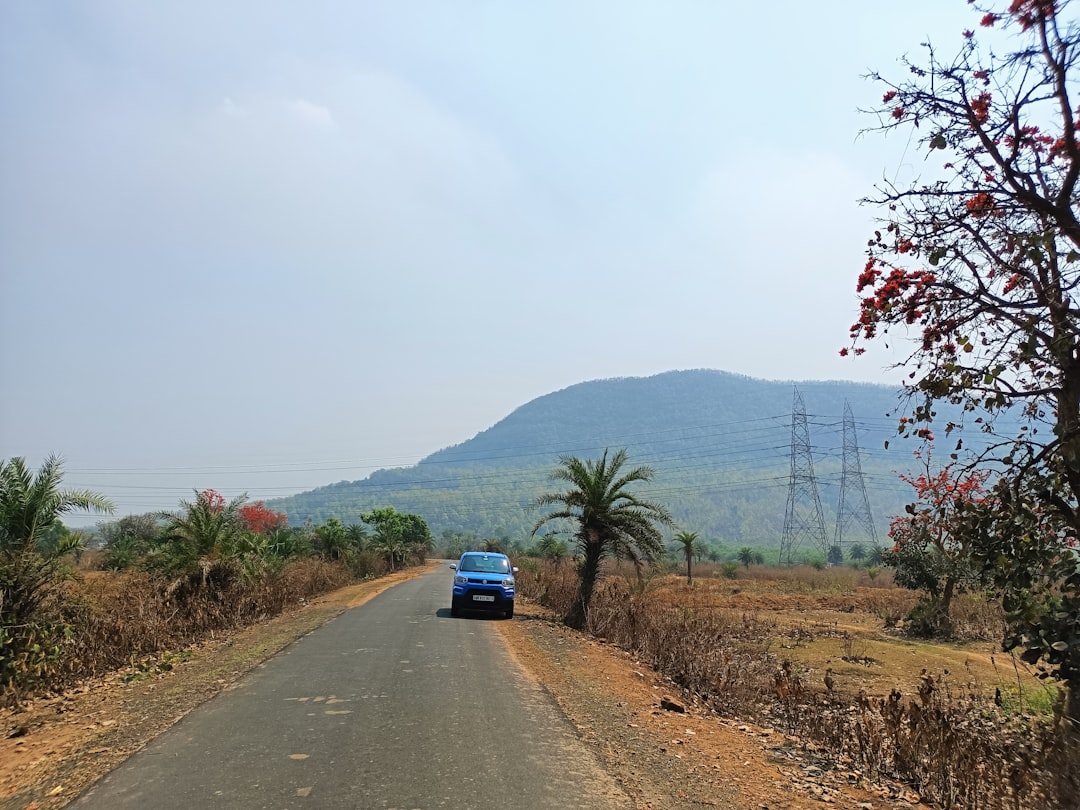
A Kolkata to Bhubaneswar EV road trip highlights both challenges and victories in India’s developing charging infrastructure.
Electric vehicles (EVs) are gradually becoming a viable option for road trips in India, largely thanks to an expanding charging infrastructure. But is it possible to plan—or rather, not plan—an EV trip without worrying about running out of charge? A recent road trip from Kolkata to Bhubaneswar in a Tata Nexon EV provides insights into the practicality of unplanned EV travel in the country. Here’s how the journey unfolded on Day 1.
A Highly Unplanned Start
The driver began with no chargers pre-mapped and no hotel reservations, turning this into a true test of the feasibility of unplanned EV travel. The route to Puri, Odisha, was decided last-minute after initial plans to visit Siliguri were thwarted by a cyclone alert.
With the Nexon EV fully charged at 100% and showing an estimated range of 411 km without AC (or 370 km with AC), the journey began down National Highway 16. Despite rain-induced heavy traffic on the stretch from Kolkata to Kolaghat, spirits were high as the driver navigated through the first leg of the trip using Eco mode and Region 3 regenerative braking to maximize efficiency.
Early Hiccups: Charger Anxiety
The dynamic weather conditions and the uncertainty of charger availability added layers of complexity. The rain posed a significant concern, as it could render roadside chargers inoperative. This underscored the importance of opportunistic charging—topping up the battery whenever a working charger was found, even if the car still had 50% or more battery left.
A rookie mistake added to the tension: the portable charger bag was forgotten at home, meaning dependency on public charging stations was absolute. Despite this, the driver remained optimistic, sticking to a strategy of charging at 30% battery or more to avoid risky lows.
Charging Middle Grounds
The first significant stop involved an Adani 60 kW DC charger. However, the charger only delivered a power output of 36 kW despite the car's state of charge (SOC). This discrepancy could be attributed to charging dynamics that slow down when the battery SOC is higher. After a quick top-up to 85%—a reasonable stopping point to avoid diminishing charging speed returns—the journey continued toward Bhadrak.
But things didn’t get easier. On reaching a BPCL station that appeared functional on the charger map, both of its charging guns were non-operational. This wasted valuable time as other EV users at the site grappled with similar frustrations. Eventually, a Jio BP charger 50 km away at K3 Dhaba came to the rescue. By the time the car was plugged in at 17% battery, the tension was palpable.
Thankfully, the charger worked. The Nexon EV consistently charged at 50+ kW initially, allowing the battery to reach 90% while the family paused for a meal. A key lesson was learned during this stop: given the unreliability of chargers in some parts of India, charging beyond 80% may sometimes be necessary when heading into areas with sparse infrastructure.
Balancing Speed and Range
The trip exemplified how EV range can vary based on driving habits. The car consistently delivered impressive efficiency at slower, steadier speeds. On average, the Nexon EV consumed 127 Wh/km during the journey, translating to a real-world range of approximately 360 km. The driver consciously kept the car’s cruising speed at or below 80 km/h, balancing energy efficiency with the need to make up for time lost at malfunctioning chargers.
Final Stretch of Day 1
The day ended after 485 km of driving, with the Nexon EV safely parked in Bhubaneswar. Despite tiredness from nearly 12 hours on the road, the family was satisfied with the car's performance. The weather, although rainy, kept the temperature manageable and helped maintain optimal battery conditions. However, the driver decided against a detailed hotel tour that night, saving energy for the next leg to Gopalpur.
Lessons and Insights from the Trip
-
Charging Infrastructure Is Expanding, But Gaps Remain While chargers are increasingly available along major highways, there were notable instances of malfunctioning or misrepresented stations. EV travelers must remain flexible and build buffer time in their plans.
-
Opportunistic Charging Is Critical The importance of topping up whenever possible cannot be overstated. Even when the battery has sufficient charge, the unpredictable nature of chargers—especially in adverse weather—makes it wise to take every opportunity to refill.
-
Travel Speed Impacts Range Significantly The Nexon EV’s range calculations highlighted how much driving speed impacts battery life. Cruising steadily at 80 km/h provided an estimated range exceeding 360 km, while speeds of 100 km/h would have reduced this to about 310 km.
-
Preparation Goes Beyond Packing Bags Forgetting the portable charger was a costly mistake. For unplanned road trips, carrying essential tools like portable chargers is non-negotiable, particularly in a developing EV market like India.
What This Means for EV Travel in India
While this unplanned road trip revealed stress points in India’s EV ecosystem, it also demonstrated the feasibility of long drives in electric cars. The journey served as both a reality check and a proof of concept—yes, you can take an unplanned EV road trip today, but it requires adaptability, patience, and a proactive approach to charging.
For those considering taking such a trip, the advice is simple: plan for the unexpected and embrace the adventure. As India continues to invest in EV infrastructure, the future of seamless electric road trips looks increasingly promising.
Staff Writer
Mike covers electric vehicles, autonomous driving, and the automotive industry.
Comments
Loading comments…


