Elon Musk's Digital Optimus: A Game-Changer in AI and Automation
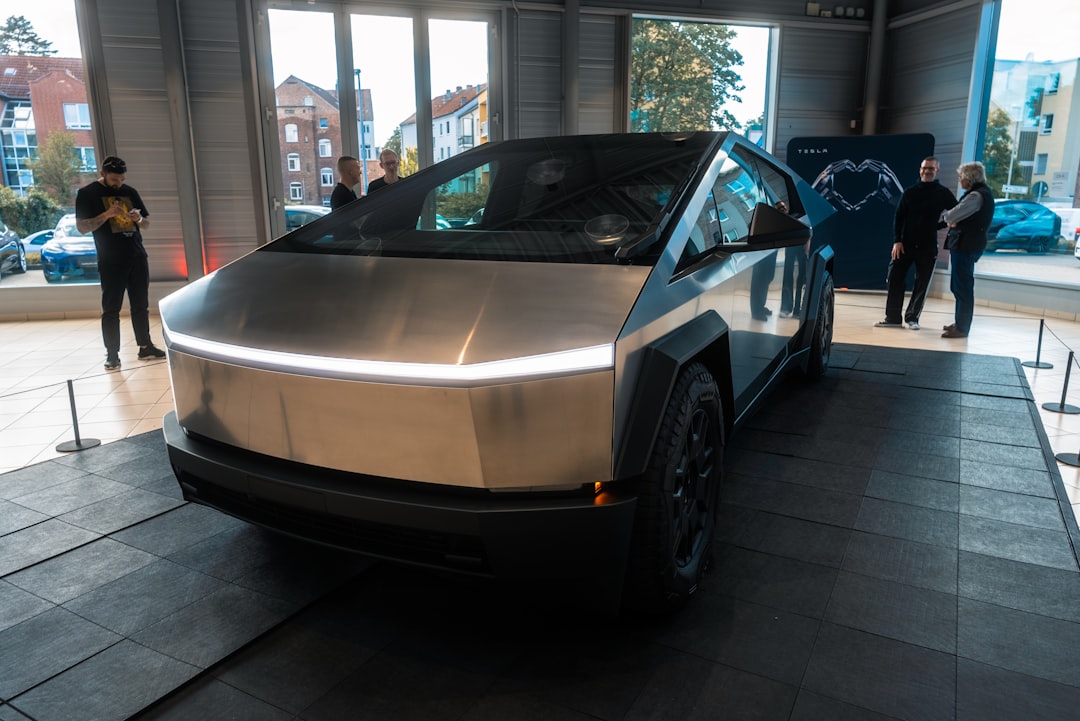
Elon Musk's Digital Optimus integrates Tesla's AI chip and a powerful new model, Grock, to redefine automation in vehicles, robots, and digital work.
Elon Musk’s Digital Optimus: The Next Revolution in Automation
Elon Musk is venturing into uncharted territory with a groundbreaking AI project called Digital Optimus. This innovative system promises to automate digital and physical tasks using Tesla’s AI4 chip, a proprietary Grock model, and a unified architecture that could change industries. Digital Optimus aims to integrate seamlessly into Tesla vehicles, robots, and distributed computing networks, challenging cloud-based AI systems with a focus on speed, lower costs, and efficiency.
Grock and Digital Optimus: Two Brains in One System
The foundation of this innovation lies in two interconnected AI elements—Grock and Digital Optimus. Together, they represent a dual-system structure akin to human cognitive processes:
Grock: The “System 2” Brain
Grock, developed by Musk’s XAI, serves as the high-level reasoning component. It specializes in deep thinking, planning, and contextual understanding. In AI terms, this is referred to as “System 2” thinking—the deliberate cognitive work involved in solving complex problems, from multi-step decision-making to strategic assessments.
-
Function: Grock acts as the navigator or conductor, handling complex queries requiring logical reasoning.
-
Example Workflow: If Digital Optimus encounters an anomaly in a financial report, Grock evaluates the situation. It identifies whether discrepancies arise from currency conversion errors, vendor updates, or other variables, and relays the correction.
Digital Optimus: The “System 1” Executor
In contrast, Digital Optimus handles fast, automatic tasks without requiring deep reasoning. Known as “System 1” thinking, it's responsible for real-time screen monitoring and action execution. Digital Optimus operates locally on Tesla's AI4 chip, autonomously clicking through software, filling out forms, and performing other repetitive digital tasks.
-
Function: Digital Optimus is the hands and eyes of the operation, working locally to execute surface-level tasks in real-time.
-
Example Workflow: For a routine task like reconciling expense reports, Digital Optimus cross-references fields, fills forms, and flags irregularities without external support, tapping into Grock for complex decision-making only when needed.
Hardware Powering Digital Optimus: The Tesla AI4 Chip
The system runs on Tesla's AI4 chip, priced at $650, making it a cost-effective alternative to cloud-based AI processing. This hardware is already designed for Tesla's Full Self-Driving (FSD) feature, which relies on real-time vision processing and decision-making for navigating roads. Musk’s team expanded this chip’s capabilities to encompass:
- Digital Work: Performing administrative tasks like email management and database navigation.
- Physical Work: Facilitating manual tasks in Tesla’s humanoid robot, Optimus.
Key Benefits of the AI4 Chip
- Lightning-Fast Local Processing: Unlike traditional AI models that rely on constant cloud connections, Digital Optimus handles most tasks locally, significantly reducing latency.
- Cost Efficiency: No recurring fees for cloud services; task costs boil down to electricity.
- Deployed at Scale: Millions of Teslas already contain these AI4 chips, creating a massive distribution network for edge computing.
This hardware approach sets Tesla apart from competitors like OpenAI or Anthropic, which rely heavily on cloud-based infrastructure.
Potential Applications of Digital Optimus
Teslas as Autonomous Workstations
When parked, a Tesla equipped with Digital Optimus could execute office tasks while plugged in—handling everything from processing spreadsheets to managing customer service operations. Screen feeds and inputs can stream directly from a user’s connected device, enabling the vehicle to take over repetitive tasks autonomously.
Idle Robotics Redefined
Tesla’s Optimus robot, designed for physical tasks like warehouse and factory work, can seamlessly transition to digital work when idle. The same AI model enables both physical and digital labor, maximizing productivity without requiring separate AI systems.
Distributed AI Networks at Superchargers
Tesla’s supercharger network, boasting 7 gigawatts of available power according to Musk, could host AI4-powered computing nodes. These distributed AI centers would handle massive processing volumes across thousands of locations globally, creating a scalable and resilient edge AI network.
Why Tesla’s Approach is Game-Changing
Tesla's decision to localize AI operations—rather than relying on the cloud—represents a major shift. Compared with cloud systems that charge per interaction, Tesla’s localized hardware allows:
- Real-Time Performance: Eliminating lag caused by sending data to and from the cloud.
- Lower Costs: Minimal operational expenses since users only pay for electricity, not cloud compute services.
- Greater Reliability: Local AI ensures operability even during cloud outages, offering a more resilient alternative.
A Unified AI Ecosystem: One Brain, Three Products
Musk’s approach integrates one AI architecture across three unique applications:
- Full Self-Driving (FSD): Using AI to navigate roads autonomously.
- Physical Optimus Robot: Performing tasks like carrying objects and assembling products.
- Digital Optimus Agent: Automating computer-based office tasks.
This unified design allows Tesla to continually improve its single model with data collected from all three domains. For instance, driving data from the FSD system enhances the model’s ability to interpret visual data, which benefits both the factory robot and the digital agent tasked with analyzing graphical interfaces.
Comparison: Digital Optimus vs. Cloud-Based AI Systems
| Feature | Digital Optimus | Cloud-Based AI |
|---|---|---|
| Processing Location | Tesla’s local AI4 chip | Remote cloud servers |
| Latency | Near-zero latency | Limited by network speed |
| Task Cost | Electricity only | Per token, API call, or compute time |
| Reliability | Runs locally, unaffected by outages | Dependent on cloud availability |
| Hardware Requirement | Tesla vehicles or distributed chips | None (external cloud services) |
Digital Optimus is likely to attract organizations and customers seeking faster, cost-effective alternatives to traditional cloud-based AI services.
Practical Takeaways for Enterprises and Individuals
- Enterprises: Businesses handling repetitive digital work—like data entry or form processing—could dramatically cut labor costs by deploying Tesla’s Digital Optimus.
- Individuals: Owners of Tesla vehicles could literally monetize their parked cars by using the hardware for digital tasks, turning downtime into productive time.
- Industry Disruption: Cloud AI providers may face significant competition if Tesla’s localized processing proves cheaper, faster, and scalable.
Looking Ahead
Tesla’s unified AI strategy—centered on the AI4 chip, Grock, and Digital Optimus—signals a seismic shift in the AI landscape. By eschewing cloud dependency in favor of edge computing, Musk is setting the stage for a new era of real-time AI that operates locally, at lower costs, and across multiple applications. Will traditional AI companies adapt, or will Tesla revolutionize yet another industry? That question remains, but the implications are already profound.
Staff Writer
Nina writes about new car models, EV infrastructure, and transportation policy.
Comments
Loading comments…


