Gas vs. EV: What $5 gas actually costs drivers at the pump and the plug
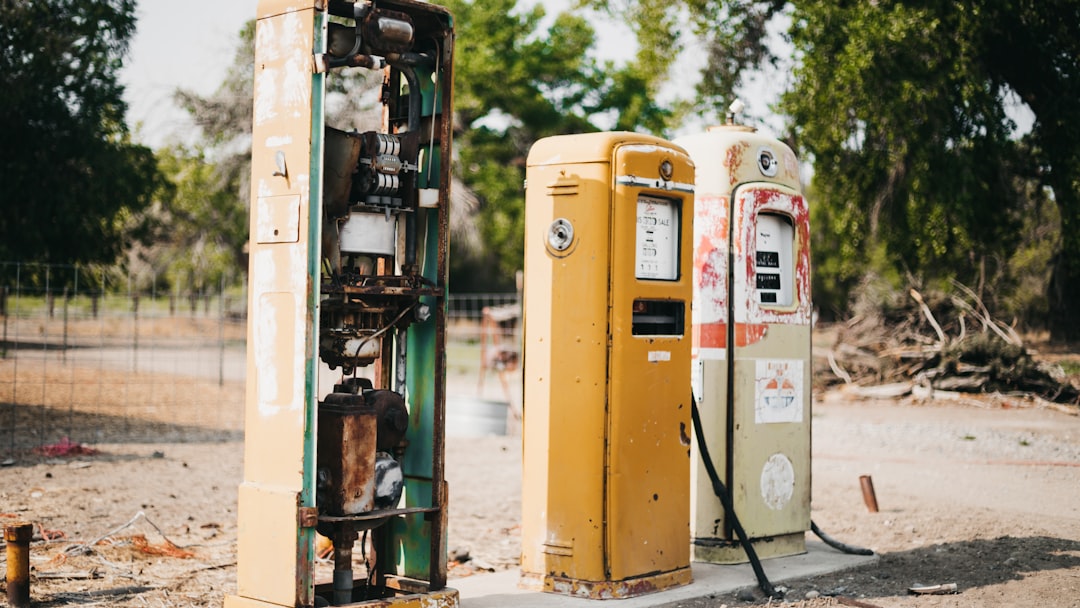
A reporter hits the streets of Southfield, Michigan to compare real-world costs for gas and EV drivers as fuel prices surge. The answers aren't always clear.
Gasoline in Southfield, Michigan hit $5.09 a gallon for regular on a recent Tuesday, and Fox 2 News reporter Scott Wolchek was at a BP station to see how drivers were handling it. The station isn't just a gas stop — it has a large charging station too, creating a natural experiment on a single lot: pump versus plug, price versus convenience, frustration versus satisfaction.
Wolchek talked to a woman pumping mid-grade gas who was clearly hurting. "I really don't want the regular," she said, knowing the extra cost would pinch harder. Then he walked over to the EV charging area, where a man named Rob was filling his Silverado EV. Rob's take? "Great. I don't use them." He said he loves the truck and is never going back to gas.
But the comparison isn't as clean as Rob's glee suggests. Wolchek's reporting reveals exactly how murky the cost picture is for the average shopper — and why "do your own research" may be the only honest advice right now.
What drivers actually pay
The gas driver paid $5.09 a gallon. EV drivers Wolchek interviewed said they spend about $30 for a full charge. The reporter pressed one EV owner on range: "How far does it go if you spend $30 on a charge?" The answer: "Goes about 100 kilowatts. That's probably like 200 miles."
That claim — $30 for 200 miles — sounds like a slam dunk for EVs. At $5.09 gas, a typical sedan getting 30 miles per gallon would need about 6.7 gallons to go 200 miles, costing roughly $34. So the EV comes out slightly ahead, assuming the range claim holds.
But the math gets messy fast. Another EV driver Wolchek encountered offered a very different number: "Yeah, $30 for 20 kilowatts." That's a radically different ratio. Twenty kilowatt-hours — the typical unit for EV battery capacity — would only push a Silverado EV maybe 50 to 70 miles, not 200. The $30 for 20 kW figure suggests a very expensive charging session, possibly at a fast charger with per-minute pricing, or a misunderstanding of what "kilowatts" means.
The confusion is real
Wolchek himself admitted he went into the assignment not knowing basic EV facts — including that EV drivers have to pay to charge in public. That knowledge gap isn't unusual. A 2023 survey from the Energy Department found that 40% of American adults still aren't sure how EV charging works financially. The language around kilowatts, kilowatt-hours, charging speeds, and home versus public rates creates a thick fog for anyone trying to comparison-shop.
For context: A kilowatt-hour (kWh) is a unit of energy. Most EVs get 3 to 4 miles per kWh. So 20 kWh would yield 60 to 80 miles, not 200. A charge giving 200 miles would require roughly 50 to 67 kWh, depending on efficiency. At a public fast charger, that could cost $20 to $40 depending on location, time of day, and the operator's pricing scheme. The wide range is exactly the problem.
The emotional divide
The reporter's final interaction captured the tension. When he told the gas customer that EV drivers were paying around $30 to go 200 miles, she replied, "That's a shame for them — they need to pay more, too, then." Wolchek called it vicious. It was also honest. The gas driver felt trapped by rising prices and resented that EV drivers appeared to be escaping the pain.
Rob, the Silverado EV owner, had no sympathy in the other direction. "I'm never going back to gas," he said, and the cost advantage — real or perceived — was clearly a big reason.
Where the numbers actually land
To put the Southfield data in perspective: At $5.09 a gallon, filling a 15-gallon tank costs $76.35 for roughly 400 miles (in a 27 mpg car). An EV charging to 80% at a public fast charger might cost $25 to $40 for similar range, depending on the vehicle. Home charging, at the U.S. average of $0.14 per kWh, would cost about $9 for a 60 kWh charge good for about 210 miles in a mid-size EV.
The gap is real, but it's not universal. People without home charging — apartment dwellers, street parkers — pay more at public stations. Cold weather cuts EV range. Towing and highway speeds hit both gas and EV efficiency differently. The Silverado EV, a huge truck, will not match the efficiency of a Tesla Model 3.
What's missing from the debate
Neither Wolchek's segment nor most on-the-ground reports capture the total cost of ownership: purchase price, insurance, maintenance, depreciation. A new Silverado EV costs north of $75,000. The average new gas car is about $48,000. Fuel savings take years to offset that difference, especially if you can't charge at home.
But the immediate pain at the pump is visceral. The woman buying mid-grade gas saw the dollar amount rise with every click of the nozzle. The EV drivers saw a flat $30 charge once a week or less. That psychological difference matters more than a spreadsheet.
Who benefits and who doesn't
EV ownership makes the most sense for people who can charge at home (or work) and drive predictable, moderate distances daily. The Southfield BP's charging customers — mostly Silverado and similar truck owners — likely fall into that camp. They're not paying $5 gas, but they did pay a premium for the truck and the charger.
For renters, people in older homes with limited electrical panels, or anyone who needs to fast-charge regularly, the savings shrink. Public charging can cost nearly as much per mile as gas in some cities, especially for slower Level 2 stations that bill by the hour.
What comes next
Gas prices will fluctuate. EV charging prices will too, as more utilities introduce time-of-use rates and as public charger operators raise prices to cover maintenance and grid upgrades. The gap may narrow over time, especially as more EVs hit the road and the grid feels the strain.
For now, the Southfield snapshot offers a useful, if messy, real-world comparison. The EV drivers Wolchek talked to are saving money and enjoying it. The gas driver is paying more and resenting it. And the reporter — like many Americans — left with more questions than answers. That's not a failure of reporting; it's the reality of a market in transition, where the honest answer is still: it depends.
Doing your own research, as Wolchek recommended, means looking beyond the per-gallon price. It means calculating your annual mileage, your home electricity rate, the cost of a home charger install, and the range you actually need. For some drivers, an EV will save hundreds a year. For others, it's not even close — and the frustration at the pump will keep boiling over.
Staff Writer
Nina writes about new car models, EV infrastructure, and transportation policy.
Comments
Loading comments…


