Geely Galaxy M9: The high-performance SUV Americans can’t have—yet
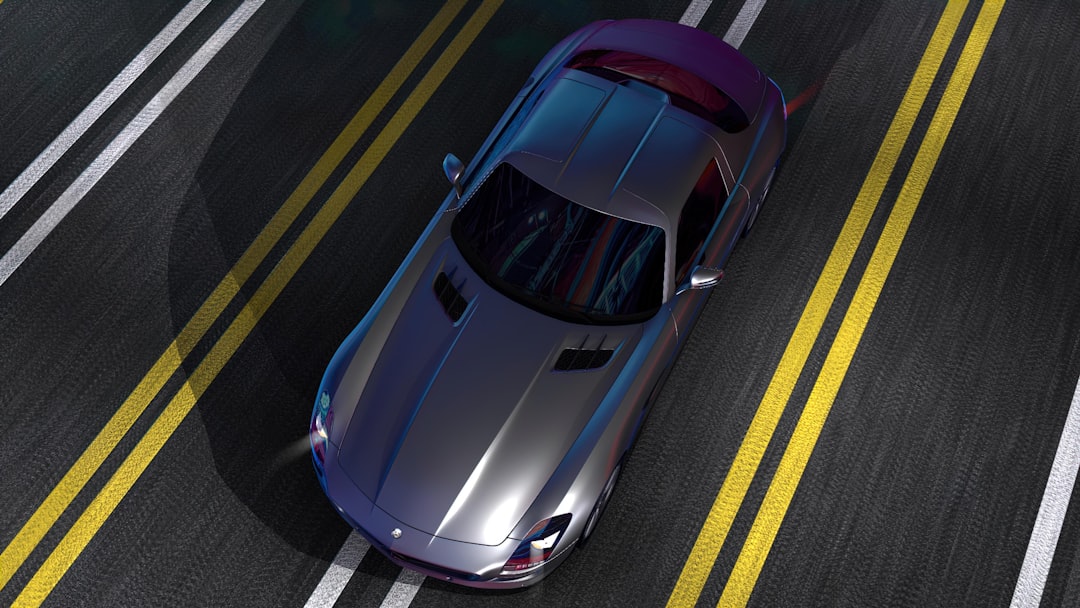
The Geely Galaxy M9 combines luxury and performance at an unbelievable $35,000, but it’s only available in China. Here’s why it matters.
China’s Geely is showcasing innovation and value with their latest high-performance family SUV, the Galaxy M9, a vehicle that immediately raises eyebrows with its capabilities and affordability. With over 800 horsepower, a range exceeding 800 miles, and a price tag that starts at just $35,000, this three-row SUV offers features and performance that rival or exceed luxury names like BMW, Lexus, and Hyundai—yet it’s exclusively sold in China for now. This raises the question: is the M9 an unparalleled industry value, or does its regional exclusivity mask its true potential?
Massive power meets unrivaled range
The Geely Galaxy M9 doesn’t just claim impressive numbers—it delivers them. Under the hood, it combines a plug-in hybrid architecture with a 1.5-liter turbocharged four-cylinder engine and three electric motors, producing a staggering 850 total horsepower. In real-world performance, it’s no slouch: it goes from 0 to 60 mph in an officially tested 4.2 seconds, making it faster than comparable vehicles like the all-electric Kia EV9 and the BMW X5 plug-in hybrid.
Range anxiety is a thing of the past with the M9. Geely claims an all-electric range of 130 miles, far exceeding most plug-in hybrids in the U.S. Combine that with its gas-powered engine, and the Galaxy M9 boasts a total range of 808 miles—unmatched by anything currently on American roads, including diesel-powered trucks.
For context, the Ford F-150 Hybrid offers a maximum range of roughly 700 miles, while EV competitors like the Rivian R1S hover in the 300-mile range before recharging. By doubling down on electric and fuel capabilities, Geely introduces a uniquely practical hybrid model not currently mirrored in U.S. offerings.
Style meets substance—on the inside
While performance and range are headline-grabbing features, the interior design and luxury touches should not be overlooked. Tested by car reviewers at Edmunds, the M9 offers an experience compared to top luxury brands. The cabin comes equipped with premium materials like wood accents, crystalline control knobs, and high-quality metal speaker trims. It features heated, ventilated, and even massaging seats, ensuring creature comforts typically reserved for vehicles well above its price point.
The pièce de résistance inside the cabin is its tech-forward, high-resolution 30-inch 6K dashboard screen, which stretches from the driver’s center console to the passenger seat. It boasts industry-leading responsiveness and clarity, rivaling systems offered by Tesla and Rivian. Rear passengers aren’t left out either, enjoying conveniences like a built-in refrigerator, reclining seats, and even a flip-down touchscreen for entertainment options.
A smooth ride, though some compromises
By all accounts, the M9 emphasizes comfort with a suspension system designed to absorb everything from potholes to uneven city roads. Testers likened its ride quality to luxury automobiles like Rolls-Royce, albeit without quite reaching that tier. Laminated acoustic glass and a quiet engine mean the M9 provides excellent insulation from external noise—a crucial selling point in the family SUV segment.
Yet, the focus on luxury and comfort has its trade-offs. Reviewers found the suspension too soft for sharp cornering. Despite the massive 850 horsepower, the M9 feels cumbersome in high-speed turns, with pronounced body lean. Driving enthusiasts in regions like the U.S., where SUVs increasingly pride themselves on blending performance with agility, might find this a drawback.
Practicality in every seat
Beyond luxury, the Galaxy M9 shines in its practicality. The second-row seats come with a surprising number of high-end amenities like adjustable pillows, tray tables, and entertainment controls. Even the third-row passengers gain adjustable recline angles, heated seats, and dedicated storage and charging options—attention to detail that is rare in cars below $70,000 in the American market.
Cargo space is sufficient for small to midsize luggage, with electronic fold-down features for the second and third rows to create a more versatile loading area.
Limitations in design and market focus
The M9 performs so well that one wouldn’t be shocked if Geely took it worldwide—but its design may explain its China-only status. Reviewers noted the M9’s exterior styling as surprisingly anonymous, at least by American design tastes. With its understated silhouette, the vehicle lacks the visual flair often seen in popular American three-row SUVs like the Hyundai Palisade or Kia Telluride. The anonymity extends to potential drawbacks in how its soft-tuned suspension may feel out of place on U.S. highways.
Another quirk is in its regenerative braking—a system that lets the driver recover energy while slowing down. Unlike immediate systems in rivals like Tesla, the M9 incorporates a slight delay, allowing a brief coasting phase before braking takes effect. While this feels familiar for Chinese or European markets, American EV drivers accustomed to instant deceleration might find it less intuitive.
What would it take to bring the M9 stateside?
Although Geely’s manufacturing and sales efforts are largely centered in Asia and Europe, the company has long contemplated entering the U.S. market, primarily through its established presence with Volvo and Polestar. The M9 exemplifies a new wave of Chinese car innovation with global appeal—its combination of value, performance, and luxury makes it competitive even in the notoriously competitive American market.
However, bringing the M9 or similar vehicles across the Pacific wouldn’t be simple. Tariffs, labor, and environmental compliance would likely drive up costs, pushing the SUV far beyond its eye-popping $35,000 price tag. Even with these hurdles, experts suggest a price point closer to $50,000-$70,000 for the U.S. market—a bracket that still places it toe-to-toe with luxury SUVs from Lexus, Hyundai, and Kia.
Why the Galaxy M9 matters
The Galaxy M9 isn’t just another SUV; it’s part of a broader trend where Chinese automakers top the charts in value and innovation. With its impressive specs, this SUV proves that China has both the ambition and capability to disrupt global auto markets. More so, the M9 serves as a wakeup call to American and European automakers to take note of China’s evolving automotive industry.
If Geely does enter the U.S. as more than just Volvo and Polestar’s parent company, brands rooted in affordability—like Toyota or Honda—have the most to lose. And if Geely can undercut its competitors while delivering these features, its entry into the U.S. market would send shockwaves across the industry.
For now, American car buyers can only admire from afar. But the existence of the Galaxy M9 raises one undeniable question: Are U.S. automakers ready for what comes next?
Staff Writer
Mike covers electric vehicles, autonomous driving, and the automotive industry.
Comments
Loading comments…


