Ephraim Owens sets the tone at the IU Health 500 Festival Mini-Marathon with a dawn national anthem
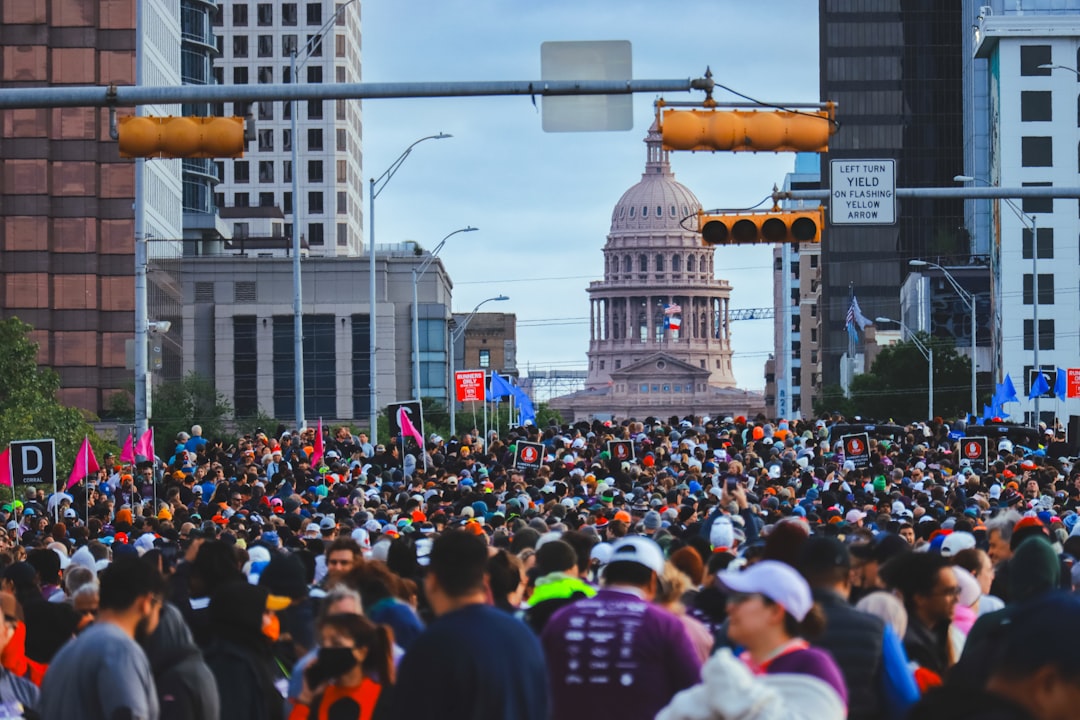
Singer Ephraim Owens delivered a stirring national anthem at 6 AM to kick off the 500 Festival Mini-Marathon, setting the stage for elite 5K runners vying for a national championship.
A little before sunrise on race day, Ephraim Owens stood at the start line and sang the national anthem. The performance lasted roughly 90 seconds. It was enough to pull the crowd — half asleep, clutching coffee cups and layered in running gear — into something close to full attention.
Owens understood the assignment. The announcer said so: "My man Ephraim always, that was fantastic. 6 in the morning, making it sound amazing." The military ceremonial unit from the Indiana Department of Defense stood nearby with the flag. Owens' voice carried through the cool air, and for a moment the chatter stopped.
That moment marked the beginning of the IU Health 500 Festival Mini-Marathon, a fixture of the Indianapolis 500 festival season. The main event — a half marathon and a 5K — draws tens of thousands of runners each year. But this year's start featured something different: a deliberate, early-morning ceremony designed to prime the atmosphere before the competitive racing began.
The dawn chorus
Races that start at 6:30 or 7 AM are common in the endurance world. Runners accept the early alarm as the price of finish-line bragging rights. But a live national anthem at that hour is a risk. A singer's voice can crack, the acoustics can betray the moment, and a sleepy audience may fail to respond.
None of that happened. Owens delivered the "Star-Spangled Banner" with enough clarity that the announcer noted the sudden energy shift: "I don't know how one person can like flip the switch, but it worked for me. I hope it did for our audience too."
It's the kind of performance that organizers hope for but cannot guarantee. A national anthem at a sporting event often becomes background noise — a prescribed piece of pageantry before the action. Owens turned it into a genuine starter's pistol. The applause that followed didn't sound like obligation.
The race within the race
Once the anthem ended and the ceremonial unit stepped back, the clock started. The official race time was 6:37 AM. The first athletes to leave the starting corral were not the half-marathon pack but the elite 5K runners: the fastest amateur and professional 5K athletes in the United States, competing for the national championship in that distance.
That distinction matters. The 5K national championship is typically contested at stand-alone events or as part of larger road racing weekends. Subsuming it inside the 500 Festival Mini-Marathon gives the shorter distance a larger audience and a more festive context. It also means the first finishers cross the line before the half-marathoners even reach the midway point.
Owens' anthem served as the threshold. After his final note, the elites surged forward, heads down, arms tight, chasing a championship title on a course lined with spectators still blinking away the dawn.
Why the performance resonated
The announcer's spontaneous praise suggests that the anthem was not merely a checkbox on the schedule. Events of this scale — the 500 Festival Mini-Marathon draws more than 30,000 participants in a typical year — rely on a series of small emotional beats to carry the crowd through the long morning. The national anthem is one of those beats. When it works, it shifts the collective mood from sleepiness to purpose.
Owens delivered that shift. The announcer's comment about flipping a switch is telling: it implies that the audience had not yet arrived emotionally. They were present physically, standing at the rail or shuffling toward the start, but the anthem pulled them into the moment. Within minutes, the announcer declared the crowd "full of spirit."
The broader picture
For a publication that usually covers technology and culture, a story about a singer and a road race might seem like a departure. But the intersection of human performance, event design, and timing is a recurring theme at SysCall News. The 500 Festival Mini-Marathon is not a product launch or a software update, but it is an engineered experience: logistics, audio, staging, and crowd psychology colliding at a precise hour.
Owens understood that engineering. He sang at volume and pitch that carried across the start area without overwhelming the early-morning calm. He let the anthem breathe. The military unit presented the flag with the crisp precision that spectators expect. The announcer knew when to speak and when to stay silent.
It worked because everyone involved understood the assignment.
What comes next
The elite 5K runners have already finished. The half-marathon wave will continue through the morning, winding through downtown Indianapolis and past the Indianapolis Motor Speedway. By noon, the results will be posted, the medals distributed, and the temporary infrastructure packed away.
But the first 90 seconds of the day belong to Ephraim Owens. He sang the national anthem at a race that needed a spark, and he provided it. The announcer said it plainly: "Owens has got a great voice. He understood the assignment."
That is the whole story.
Staff Writer
Lauren covers medical research, public health policy, and wellness trends.
Comments
Loading comments…


