Artemis II: Humanity's Return to the Moon Sparks Debate
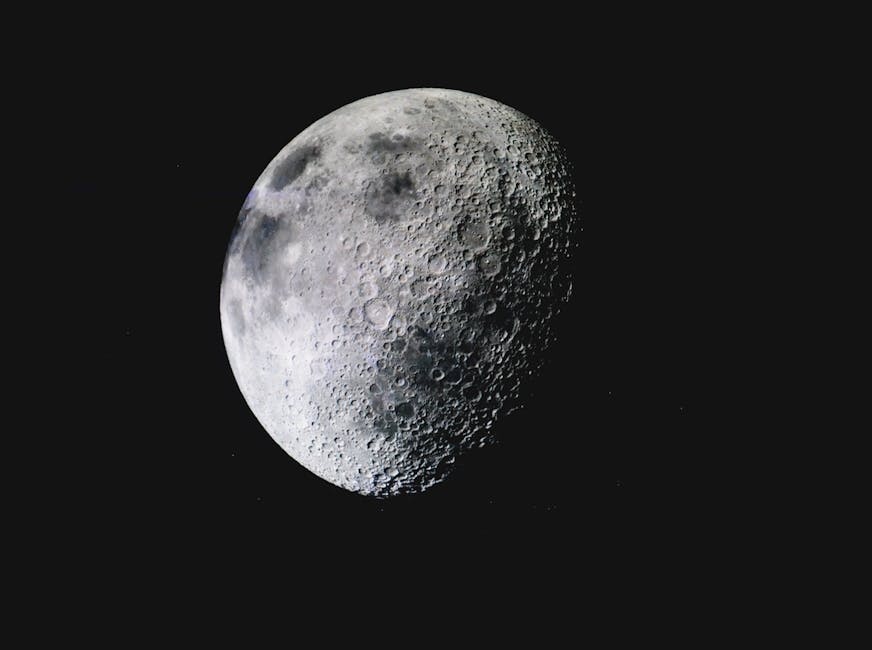
NASA’s Artemis II set new records and reignited lunar prospects, but was its $4 billion cost worth it?
On April 1, 2026, NASA successfully launched Artemis II from Cape Canaveral, marking humanity’s first crewed mission to the Moon in over five decades. As the second mission under NASA’s Artemis program, Artemis II wasn’t just about breaking records—it was a dress rehearsal for humanity’s eventual return to the lunar surface. But as awe-inspiring as the mission was, its $4 billion price tag has reignited debates about the value of such ambitious endeavors in the broader scope of scientific discovery and economic priority.
Breaking Records, Rekindling Exploration
Artemis II carried a crew of four astronauts: Commander Reid Wiseman, Victor Glover, Christina Koch, and Jeremy Hansen. Over the course of ten days, the crew journeyed a record-breaking 695,081 miles, traveling to the Moon, looping around at just 4,670 miles above the surface, and returning to Earth. This achievement broke a distance record that had stood since the Apollo 13 mission in 1970, which managed 248,655 miles from Earth.
The mission also demonstrated a critical maneuver called a free-return trajectory, relying solely on the Moon’s gravity to slingshot the spacecraft back towards Earth. This required impeccable timing and precision, with the Earth’s and Moon’s positions determining narrow windows for launch. The goal of Artemis II was clear: stress-test new equipment and mission protocols for future lunar landings under Artemis III and Artemis IV.
NASA emphasized the success of the mission’s operational aspects: its precise execution, the reliability of the new Orion spacecraft, and its SLS (Space Launch System) rocket. "It’s a major milestone," claimed NASA officials during press briefings. Yet, the mission’s striking visuals—Earth’s ‘set’ against the Moon, luminous lunar craters, and crew-taken images—stole much of the public’s attention.
The Debate Over Cost and Justification
While Artemis II revitalized global interest in human spaceflight, discussions about its worth have divided enthusiasts, scientists, and policymakers alike. The Artemis program’s projected cost exceeds $90 billion by the time its full goals are realized, including crewed Moon landings. Artemis II alone cost an estimated $4 billion, not including the decades of development required for its supporting systems.
For some, the mission holds unparalleled cultural and inspirational value. Social media buzzed with responses to the astronauts’ camaraderie, the beauty of the Moon’s surface, and heartfelt stories like the suggestion to name a Moon crater after Commander Wiseman’s late wife.
However, critics argue that the Artemis program prioritizes political and economic objectives over scientific ones. With stiff competition from China’s burgeoning lunar ambitions, the U.S. sees Artemis as a geopolitical statement of its technological superiority. A 2026 UN treaty prevents nations from claiming ownership of celestial bodies, but it doesn’t prohibit resource extraction rights. Artemis aims to secure potential lunar resources—particularly water ice at the poles—as leverage in the future space economy.
Astrophysicists and other researchers, including Dr. Becky Smith, have questioned the trade-offs. "The mission is scientifically thin," Smith noted. "The funds could have supported astrophysics programs capable of yielding deeper insights into the universe." Even the most stunning imagery produced by Artemis II, while captivating, lacks the detail obtained from unmanned probes, which are far less expensive.
The Value of Human Presence
Proponents argue that human involvement still holds an irreplaceable role in space science. Field geologists point out that astronauts can evaluate their surroundings to identify geological features and anomalies that automated systems may overlook. For example, Christina Koch, one of Artemis II’s astronauts, documented areas of interest in the Moon’s craters during the mission. Despite the cost disparities, advocates maintain that having trained humans on-site adds an invaluable layer of discovery.
Artemis II also offered opportunities to study human physiology during extended space missions. Understanding the toll of deep-space radiation, microgravity, and other stressors on the human body is crucial for missions to Mars and beyond. The astronauts described their experience as taxing yet rewarding, managing everything from solar observations to medical experiments during their journey.
Political Implications and Future Goals
NASA’s focus isn’t solely scientific. Artemis missions underscore the strategic ramifications of human spaceflight as the U.S. races against China to obtain a foothold on the Moon. Beyond exploration, Earth’s natural satellite could potentially serve as a launchpad for ventures deeper into space or even as a commercial hub for extraterrestrial mining.
Artemis III and Artemis IV—anticipated for the late 2020s and early 2030s—could see astronauts establish a semi-permanent base on the Moon. This reflects a long-term vision for lunar development: a mix of science, commerce, and international partnerships. Artemis II has paved the way, but the route to sustainability in lunar endeavors remains fraught with financial, ethical, and geopolitical questions.
The Legacy of Artemis II
Despite the varied opinions, Artemis II exemplified what human beings can achieve when focused on shared goals. It reignited public interest in space exploration, introduced new generations to the Moon’s wonders, and allowed millions to collectively dream of what lies ahead. While the costs may overshadow the tangible scientific returns for now, the mission succeeded in communicating the sheer audacity of reaching beyond Earth.
As Dr. Becky Smith summed up in her analysis, "Artemis brought much-needed joy to people in recent weeks. Perhaps it stands as a beacon of human aspiration—a reminder to look up." Whether that joy alone justifies a $4 billion price tag remains a question governments and taxpayers will continue to grapple with as we plan the next phase of lunar exploration.
Staff Writer
Daniel reports on biology, climate science, and medical research.
Comments
Loading comments…


