European Space Agency's 2026 Missions: Key Highlights and Ambitious Goals
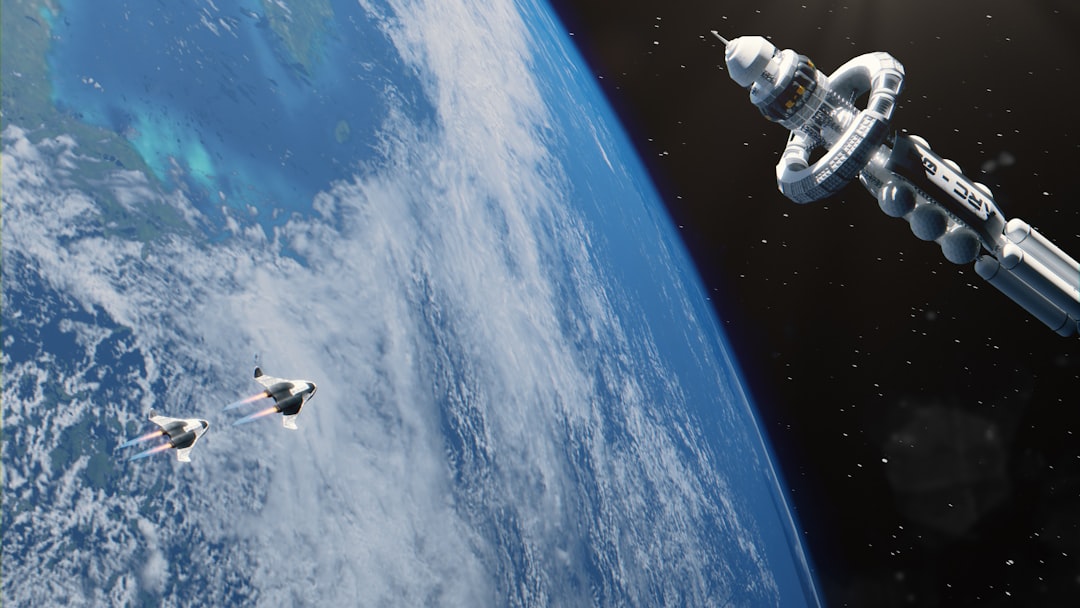
The European Space Agency (ESA) will undertake groundbreaking missions in 2026, including lunar exploration, navigation system advancements, and key Earth observation projects.
The European Space Agency (ESA) is poised to achieve a remarkable year of advancements and scientific breakthroughs in 2026. From ground-shaking space exploration missions to cutting-edge technological developments, ESA is forging ahead in its mission to explore the universe, improve life on Earth, and secure its role as a global leader in space exploration. Below, we delve into the highlights ESA has planned for this pivotal year.
First ESA Astronaut Mission to the ISS in 2026
ESA astronaut Sophia Adeno will embark on her maiden mission, named Epsilon, to the International Space Station (ISS). During her time on the ISS, Adeno will conduct scientific research, test innovative technologies, and contribute to the progress of long-duration exploration in microgravity environments. This mission underscores ESA's commitment to nurturing human spaceflight while advancing science and technology for future exploration endeavors.
Galileo Second-Generation Satellites
In 2026, ESA will take a significant step in advancing global navigation technology. The year will mark the final phase of system testing for the next-generation Galileo satellites. These satellites will provide higher accuracy and improved resilience, solidifying Galileo’s role as one of the leading navigation systems globally. Complementing this, the Celeste constellation satellites will begin testing in low Earth orbit to enhance Galileo’s capabilities further. The Celeste project is envisioned to deliver an expanded level of navigation service in conjunction with existing systems.
| Key Attribute | Galileo Second-Generation Satellites | Celeste Constellation |
|---|---|---|
| Launch Location | Europe | New Zealand |
| Main Purpose | Higher accuracy in navigation | Complement existing systems |
| Technological Focus | Resilience and precision | Testing low Earth orbit navigation |
The Artemis 2 Lunar Mission
ESA continues its collaboration with NASA's Artemis program, with the Artemis 2 mission standing out as a landmark event in 2026. This mission will take a four-member astronaut crew aboard the Orion spacecraft on a journey around the Moon, marking the first human presence beyond low Earth orbit in over 50 years. Powered by the ESA-developed European Service Module, the spacecraft will provide propulsion, life support, and electrical power during this 10-day deep space mission. The success of Artemis 2 will pave the way for subsequent lunar landings and human exploration of Mars.
Missions to Understand Space Weather and Earth's Environment
The Smile mission is slated to launch aboard a Vega C rocket to investigate how solar winds interact with Earth’s magnetic shield. Utilizing X-ray and UV imaging, Smile will improve our understanding of space weather and its impacts on satellites, astronauts, and essential infrastructure.
Another critical mission, Flex, will launch to analyze photosynthesis activity in plants globally. By measuring faint fluorescence emitted by plants, Flex will offer unprecedented insights into vegetation health and how it affects carbon and water cycles. Simultaneously, the third Copernicus Sentinel-3 satellite will continue monitoring the planet’s oceans, atmosphere, and landforms from space.
Expanding the Horizon in Astronomy
Euclid's Cosmic Investigations
Euclid will provide astronomers with detailed data about the Milky Way’s inner bulge before embarking on a vast survey of galaxies across space and time. By mapping billions of galaxies, the mission aims to unravel the enigma of dark matter and dark energy, two fundamental yet elusive components of our universe.
Plato's Hunt for New Worlds
ESA's Plato mission is also set to launch in 2026, equipped with 26 precision cameras to simultaneously observe over 150,000 stars. This mission will search for Earth-like planets orbiting Sun-like stars. By detecting subtle changes in starlight caused by orbiting planets, Plato will provide extensive knowledge of planetary systems nearby, while also examining the internal processes within stars.
Key Earth Observation Satellites
Europe's space capabilities will be further demonstrated with the launch of the Arian 64 heavy-lift rocket, which doubles payload capacity to over 20 tons. Along with Flex and Copernicus satellites, this year will see unprecedented commitments to Earth observation. These efforts are aimed at addressing global environmental issues, providing critical data for climate monitoring, and aiding in disaster response planning.
Studying Asteroids and Deep Space with Hera and BepiColombo
ESA’s groundbreaking asteroid mission, Hera, will continue its study of Dimorphos, the asteroid whose orbit was previously altered by NASA's DART mission. Hera’s advanced sensors will analyze the impact site and interior of Dimorphos with unparalleled precision, enhancing our understanding of planetary defense mechanisms against potential asteroid collisions.
Meanwhile, the long-anticipated BepiColombo mission to Mercury will enter its operational phase. After an eight-year journey, two spacecraft will separate and orbit Mercury to analyze its surface, interior, and magnetic environment. These findings promise to unlock insights into one of the solar system’s most mysterious planets.
Solar Eclipse Across Europe
August 2026 will feature a rare total solar eclipse visible across Europe, the first such event since 1999. Greenland, Iceland, and Spain will experience over two minutes of complete darkness, while the rest of Europe will enjoy a partial eclipse. ESA plans to celebrate the occasion with educational events, inviting people to witness the eclipse alongside experts. These events will combine ground-based observations with unique perspectives captured by ESA's space missions.
Strengthening European Space Resilience
A key focus for ESA in 2026 will be enhancing Europe’s space resilience in collaboration with the European Union and defense partners. This includes accelerating Earth observation services, preparing advanced navigation systems, and developing secure connectivity networks vital for crisis response.
Practical Takeaways for 2026
- For space exploration enthusiasts, Artemis 2 signifies humanity’s long-awaited return to deep space.
- Industry stakeholders can look forward to Galileo’s improved navigation capabilities and Celeste’s innovative constellation.
- Scientists have opportunities with vast datasets offered by Euclid, Flex, and Plato focusing on Earth, deep space, and planetary systems.
- Global audiences are invited to engage in the total solar eclipse and ESA’s outreach programs.
Conclusion
In 2026, the European Space Agency plans to achieve a year of significant milestones. With a robust lineup of missions—ranging from pioneering lunar exploration to groundbreaking scientific studies—the agency not only reinforces its leadership in space but also inspires global collaboration for the betterment of humanity. These ventures underline ESA’s commitment to exploring the unknown, unlocking the universe's secrets, and ensuring that space technology continues to benefit life on Earth.
Comments
Loading comments…


