From Apollo to Artemis: The Unyielding Dangers of Space Travel
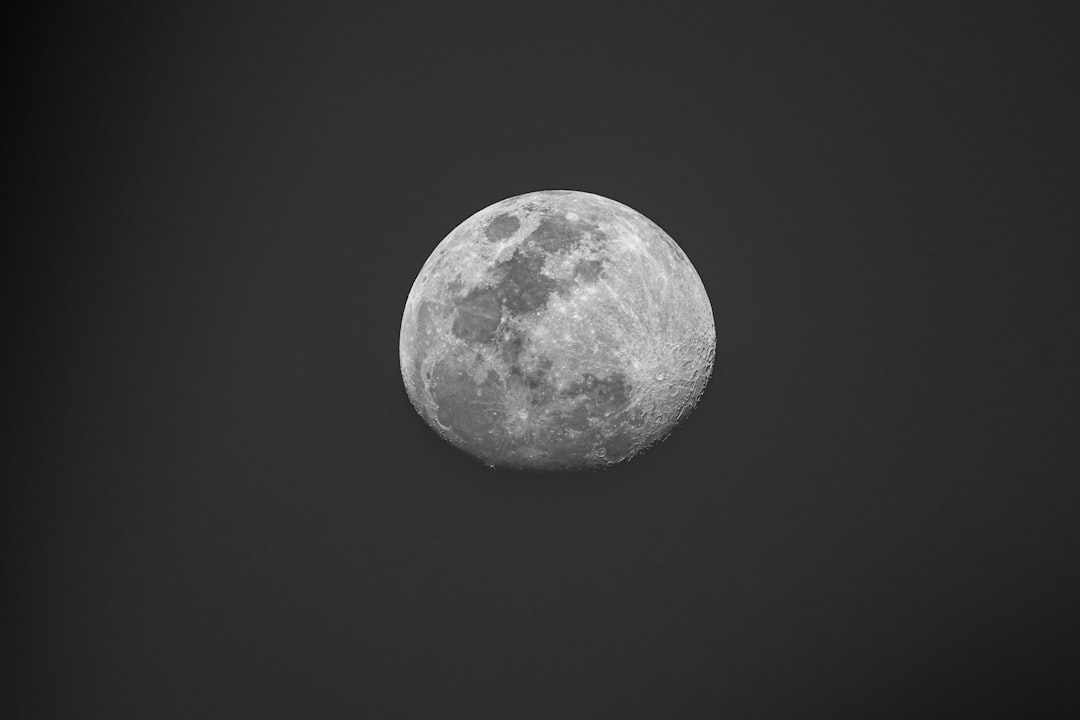
The Artemis missions rekindle human exploration of the Moon, but they also remind us of the terrifying realities of space: isolation, radiation, and death.
For more than fifty years, humanity has gazed at the Moon and longed to return. With NASA’s Artemis II mission, we finally embarked on the next chapter of lunar exploration, sending astronauts farther into the void than anyone in half a century. The technological marvel of Artemis II and the bravery of its crew have captured imaginations worldwide, heralding what many hope will become a new golden era of space exploration. Yet in our collective celebration, we must confront the sobering truth of what space travel entails: an environment of unrelenting hostility and existential danger.
The Moon: A Beautiful, Lethal Neighbor
Through poetry and literature, humanity has held the Moon as a beacon of beauty and romance—a steady presence in the night sky. The reality of the Moon, however, is far from benign. It is a barren, airless expanse with an environment that does not nurture life, only threatens it.
Take lunar dust, or regolith, as an example. It might look like a fine powder, but it is composed of sharp, glass-like particles formed by billions of years of micrometeor impacts. During the Apollo missions, astronauts reported how this abrasive dust clung to spacesuits, eroding their outer layers. If inhaled, these particles could penetrate deep into lung tissue, causing damage akin to asbestosis, an affliction for which there is no cure. This cosmic menace doesn’t kill instantly; it suffocates its victims from within, even long after they have left the surface.
And then there are the temperatures. With no atmosphere to soften the extremes, the Moon’s environment is both blisteringly hot and unimaginably cold. Standing in sunlight can expose you to temperatures of 120 degrees Celsius, while moving into shadow plunges it to -130 degrees Celsius. There is no breeze to cool you, nor any protection from the raw energy of the Sun. For the Apollo astronauts, surviving in these extremes demanded the utmost precision in suit and spacecraft design.
The Thin Line Between Survival and Death
Perhaps the most unnerving aspect of lunar exploration lies in the fragility of the technology that enables it. During Apollo, astronauts relied on the Lunar Module—a spacecraft whose walls were just millimeters thick—to keep them alive on the surface. These thin barriers separated them from the vacuum of space, where a single micrometeor traveling at 70,000 kilometers per hour could puncture the metal and spell doom.
An explosive loss of cabin pressure would tear the air from their lungs, and the absence of pressure would cause body fluids to boil—not from heat, but from the vacuum. Faced with such a failure, there was no Plan B. No rescue would come. The prospect of an Apollo astronaut becoming stranded on the Moon loomed heavily over every mission.
While many aspects of Artemis II represent an engineering leap forward, space remains unforgiving. The Orion spacecraft at the heart of the mission is advanced, more robust, and smarter than its Apollo predecessors, but the universe itself remains just as lethal, and human biology is as vulnerable as ever.
Isolation in the Infinite Void
Beyond the physical risks, the psychological toll of space travel cannot be ignored. Apollo astronauts experienced moments of unprecedented isolation. Michael Collins, for example, who piloted the Apollo 11 Command Module, spent 48 minutes of every lunar orbit completely disconnected from Earth, cloaked in the Moon’s shadow. During this time, radio communication was physically impossible; humanity, for him, ceased to exist. He floated in a metal capsule surrounded by billions of kilometers of nothingness, entirely alone. If his engine had failed, neither his crewmates on the surface nor mission control on Earth could have saved him. He would have orbited the Moon in silence until his oxygen ran out.
These moments of isolation, while temporary during Apollo, are intrinsic to spaceflight. As Artemis II orbited the Moon and recreated this journey into the dark, its crew undoubtedly felt the weight of that silence and separation. Space—void of sound, connection, and comfort—offers a stark reminder that even in the age of advanced technology, astronauts are still fragile beings of bone and water tethered by the slimmest of threads to survival.
Artemis: A New Era, Old Challenges
The Artemis program represents a bold step forward in humanity’s exploration of space. It begins with demonstration missions like Artemis II before advancing to crewed landings, planned with Artemis III and beyond. NASA also aims to target unexplored lunar regions, such as the Moon’s South Pole—a site of perpetual shadow and bone-chilling cold that may hold water ice but will challenge humans in previously unimaginable ways.
This bold journey is not without precedent, but it carries amplified risks. The Artemis II crew exited the protective magnetic field of Earth entirely, exposing themselves to the full brunt of cosmic and solar radiation, including the Van Allen Belts—a region teeming with high-energy particles. These layers of radiation around our planet are a hazard no spacecraft can avoid during a journey to the Moon. While carefully calculated shielding in the Orion capsule mitigated the exposure, no safeguard is absolute.
Furthermore, Artemis astronauts face the same psychological pressures as their predecessors. They orbited the far side of the Moon, losing all direct communication with Earth, and were left alone with the knowledge that failure meant complete isolation in a cosmic graveyard. They even witnessed the enduring, frozen footprints of Apollo astronauts—spectral monuments to those who first embraced these challenges decades ago.
The Road Ahead
Future Artemis missions will press humanity deeper into the lunar shadows. Artemis IV aims to establish a foothold near the Moon’s South Pole—an area cloaked in perpetual darkness, where temperatures might never rise above -200 degrees Celsius. Scientists believe these craters may hold water ice, a critical resource for sustained exploration, but reaching them will involve navigating uncharted dangers.
This ambition is characteristic of human tenacity. From Apollo to Artemis, we’ve convinced ourselves that we are conquering space. But the harsh truth is that space cannot be conquered. The Moon, Mars, and beyond are indifferent to our bravery. At most, we survive for as long as our ingenuity, engineering, and courage allow.
Still, we press on. The Artemis program is not just a technological feat; it’s a testament to humanity’s innate desire to explore. The dangers of space—radiation, isolation, the brutal environmental conditions—are terrifying, but they also remind us of our place in the cosmos: small, fragile, and alone, yet endlessly curious.
When Artemis IV inevitably touches down in the Moon’s frozen craters, humanity will take another step forward. But that step, like all the others before it, will remind us just how far we still have to go to master the terrifying reality of space travel.
Staff Writer
Daniel reports on biology, climate science, and medical research.
Comments
Loading comments…


