How NASA Captures Earth from Unprecedented Distances
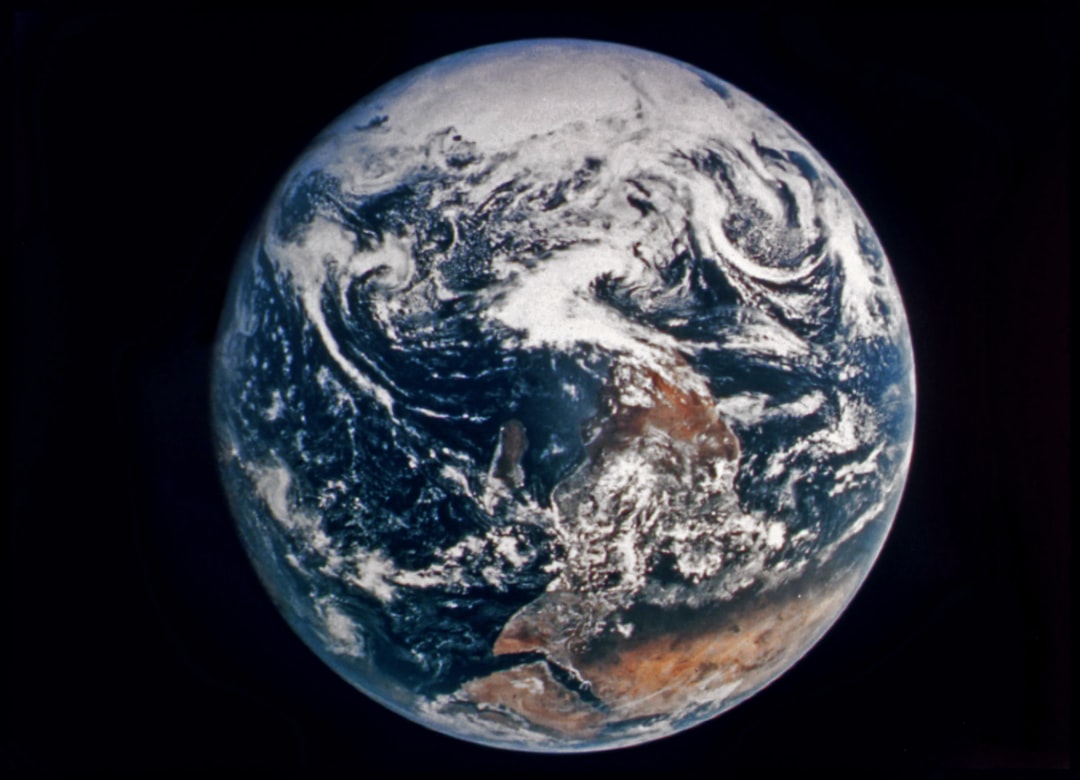
NASA has captured Earth like no other, from 13 miles above with aircraft to 3.7 billion miles away via Voyager 1. Explore these unique perspectives.
For over 60 years, NASA has revolutionized the way we see Earth by capturing its image from an astonishing range of distances and vantage points. From close aerial missions to deep space probes, NASA offers a perspective on our planet that no other organization has matched. Here, we explore some key examples of these milestones and what they reveal about our world.
Viewing Earth from the Edge of the Atmosphere
NASA’s imaging of Earth begins at just 13 miles above the surface with the ER-2 aircraft. This high-altitude research plane, the civilian version of the U-2 spy plane, operates in the upper stratosphere. The ER-2 provides data for environmental research, climate modeling, and even satellite instrument calibration, offering essential views of Earth’s weather systems and surface changes.
From these altitudes, researchers can observe atmospheric conditions with more precision compared to ground instruments, making it a cornerstone for Earth science.
Earth from Orbit: ISS, Space Shuttles, and Satellites
International Space Station (250 Miles from Earth)
Orbiting at around 250 miles above Earth, astronauts aboard the International Space Station (ISS) enjoy a breathtaking view of our planet, completing about 16 orbits daily. The ISS is crucial for understanding Earth's surface through high-resolution imagery and is also used for monitoring changes such as deforestation or urban sprawl.
Space Shuttle Missions (400 Miles from Earth)
When the Space Shuttle program was active, it provided a platform for photography and scientific studies from the 400-mile altitude range. While no longer operational, the program’s achievements laid the groundwork for subsequent observation missions.
Landsat and GOES Satellites
NASA’s Landsat satellites operate 438 miles from Earth, capturing multi-spectral images critical for analyzing land cover, crop health, and natural disasters. These images are publicly available and are used globally by scientists and governments alike.
Meanwhile, the GOES-East and GOES-West satellites, positioned 22,236 miles above Earth in geostationary orbit, continuously monitor weather patterns and severe storms, providing life-saving real-time data to meteorologists.
| Satellite/System | Distance from Earth | Primary Function |
|---|---|---|
| International Space Station | 250 miles | Surface and atmospheric study |
| Landsat | 438 miles | Earth surface imaging |
| GOES-East/West | 22,236 miles | Weather monitoring |
Earth from the Moon: Apollo and Artemis
Apollo 8: The Iconic Earthrise (240,000 Miles)
The iconic “Earthrise” photo captured during the Apollo 8 mission gave humanity its first glimpse of Earth from the Moon’s vantage point. Taken at a distance of roughly 240,000 miles, the image revealed the fragility and beauty of our home planet, sparking a global environmental movement.
Artemis I
The Artemis I mission, part of NASA’s return to the Moon program, captured Earth from 268,563 miles away. These images offer a modern take on the legendary Apollo missions and highlight NASA’s advancements in imaging technologies.
Earth as Seen from Our Neighboring Planet
Curiosity Rover on Mars (99 Million Miles from Earth)
While not focused solely on Earth, the Curiosity Rover on Mars captured a unique image of our planet from 99 million miles away. This distant perspective reminds us of Earth’s delicate position in the solar system.
Seeing Earth Across the Solar System and Beyond
Cassini’s 'The Day the Earth Smiled' (898 Million Miles from Earth)
While orbiting Saturn, NASA’s Cassini spacecraft took one of the most awe-inspiring images of Earth, aptly titled “The Day the Earth Smiled.” From 898 million miles away, Earth appears as a tiny pale dot, nestled in the vastness of the universe.
Voyager 1: Pale Blue Dot (3.7 Billion Miles from Earth)
No image of Earth is more humbling than the “Pale Blue Dot” photo taken by Voyager 1 in 1990. At 3.7 billion miles away, Earth is seen as a mere speck, underscoring the singularity of our planet.
| Milestone | Mission | Distance | Significance |
|---|---|---|---|
| Earthrise | Apollo 8 | 240,000 miles | First view of Earth from Moon |
| Day Earth Smiled | Cassini | 898 million miles | Earth in vast context of Saturn |
| Pale Blue Dot | Voyager 1 | 3.7 billion miles | Human insignificance in the cosmos |
Practical Takeaways
- Data for Science and Safety: NASA’s high-altitude aircraft and satellite systems provide invaluable data on weather, climate, and disaster management.
- Perspective and Inspiration: Images like “Earthrise” and the “Pale Blue Dot” offer a humbling perspective, inspiring environmental action and global unity.
- Remote Observation: Technologies like Landsat enable monitoring of Earth’s surface changes over decades, crucial for sustainable policy-making.
Conclusion
NASA’s unique ability to capture Earth from so many distances, ranging from 13 miles to 3.7 billion miles away, underscores the importance of this work in science, conservation, and human understanding. Each image tells a story—not just of our planet—but of our place in the universe.
Comments
Loading comments…


