NASA Artemis 2 Countdown Stops Again: Technical Challenges Mount
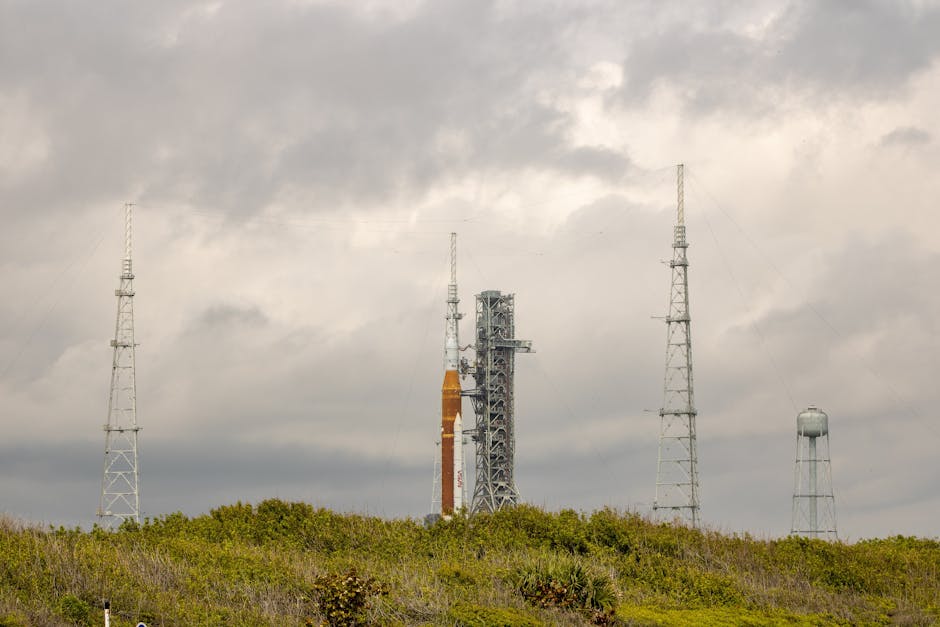
NASA's Artemis 2 moon mission faces recurring delays due to liquid hydrogen and helium issues, shifting its timeline further.
NASA’s ambitious Artemis 2 mission, set to return humans to the vicinity of the Moon for the first time in over 50 years, has faced a series of technical setbacks that have caused multiple launch delays. The issues arose during critical countdown rehearsals, highlighting challenges with the intricacies of modern spaceflight and the highly complex systems involved.
Liquid Hydrogen Leak Halts First Attempt
The trouble began in February 2026 during a scheduled countdown rehearsal. NASA engineers discovered a leak of liquid hydrogen from the core stage of the Space Launch System (SLS) rocket as they prepared to simulate the propellant load and countdown procedures. This type of cryogenic fuel, essential for the rocket's engines, must be stored and transferred at extremely low temperatures, making it prone to leaks due to the material stresses involved.
Although leaks are not uncommon in large-scale space missions, the timing of this particular issue was less than ideal. The Artemis program has already faced delays due to supply chain shortages, contractor setbacks, and budget constraints. After identifying and fixing the source of the hydrogen bleed, the teams conducted a second countdown rehearsal to stay on schedule.
Helium Problem Compounds the Delay
The second rehearsal did not go smoothly, either. Once the liquid hydrogen issue had been resolved, a separate problem emerged with the helium system. Helium is used to maintain pressure in the rocket’s tanks and lines, ensuring that fuel flows properly through the engines during critical phases. Malfunctions in this system rendered another simulated countdown impossible and forced NASA to roll the vehicle back from the launch pad to the Vehicle Assembly Building for further troubleshooting.
These repeated setbacks pushed the anticipated launch date from February to March, then to April, testing both the patience and resilience of NASA engineers, contractors, and stakeholders alike. Each delay compounds logistical issues, as it requires rescheduling teams, reserving international tracking assets, and potentially incurring higher costs.
Why Technical Issues Persist
NASA has long been aware of the challenges associated with the Artemis program, which uses new technologies in combination with modified legacy designs adapted from the Space Shuttle and Apollo eras. Liquid hydrogen, in particular, is notoriously tricky to handle. While it offers strong performance as a propellant, its extremely low boiling point makes it difficult to manage without leaks.
At the same time, the helium system issue underscores the importance of redundancy and reliability in pressurization during fuel loading and countdown. The Artemis program's reliance on cutting-edge yet complex technologies means that even small anomalies can ground massive hardware and derail the ambitious schedule laid out by NASA.
Implications for the Artemis 2 Mission
Artemis 2 is the next step in NASA’s long-term effort to establish a sustainable presence on the Moon. It follows the successful, uncrewed Artemis 1 mission and will carry astronauts around the Moon to test life support and mission systems ahead of a lunar landing on Artemis 3.
Recurring technical delays are not necessarily unusual in high-stakes spaceflight programs, but they come with clear consequences. Further delays may push Artemis 2 deeper into 2026, which could result in scheduling conflicts with Artemis 3 and delay NASA’s goal of landing humans on the Moon again by the end of the decade. International partners such as the European Space Agency and Canada, which are contributing critical components to the mission, are also closely monitoring these developments.
The Bigger Picture
These challenges highlight both the ambition and complexity of the Artemis program. NASA aims to lead humanity’s return to the Moon and eventually send astronauts to Mars. However, these technical issues underscore significant hurdles that must be overcome before future milestones can be achieved.
While disappointing, the delays reflect NASA’s commitment to safety—a non-negotiable factor in crewed spaceflight. It is clear that team members are leaving no stone unturned to ensure that Artemis 2 is ready for success. Space enthusiasts and industry watchers alike remain hopeful as NASA continues troubleshooting these setbacks and working toward a historic step back to the Moon.
What happens next will depend on what engineers can achieve in the weeks ahead. NASA’s leadership has emphasized transparency around the challenges, ensuring open communication about the risks and solutions shaping the mission’s future.
Staff Writer
Daniel reports on biology, climate science, and medical research.
Comments
Loading comments…


