NASA commits $20 billion to accelerate lunar base and exploration efforts
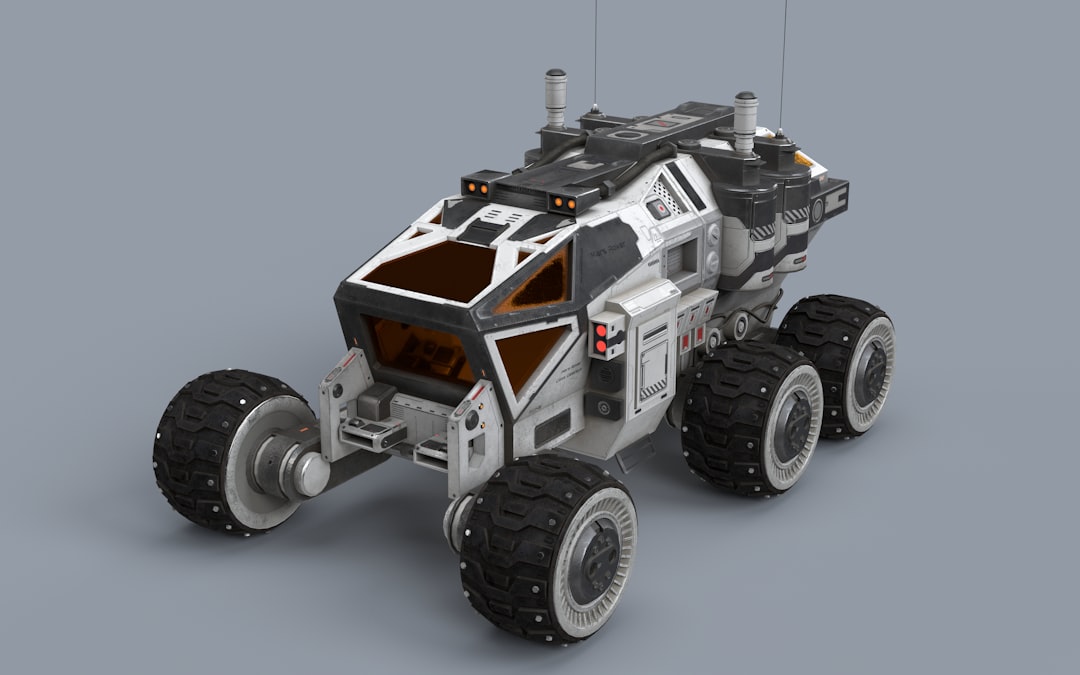
NASA's $20 billion pledge underscores its commitment to developing a moon base, advancing lunar exploration, and strategic initiatives with international and private partners.
NASA has pledged $20 billion over the next seven years to accelerate its lunar exploration initiatives, signaling a decisive shift in priorities. The funds will focus on building a sustainable moon base, fostering deeper scientific research on the lunar surface, and collaborating with private and international partners to meet ambitious timeframes. The announcement reiterates NASA's commitment to returning to the moon and establishing a lasting presence, a goal set to outpace global competitors such as China.
Breaking down the budget: How $20 billion is allocated
NASA Administrator Bill Nelson clarified that the $20 billion pledge is not an isolated sum. It is part of a broader $30 billion investment allocated over the next decade. The funding draws from NASA's overall annual appropriations, which total $25 billion, alongside additional allocations in recent years. These resources reflect not only NASA's ability to focus on lunar exploration but also its priority to pursue high-impact, goal-oriented initiatives.
Nelson emphasized the importance of redirecting existing resources toward 'needle-moving' programs. For example, NASA has paused its Gateway—a proposed space station that would orbit the moon—to concentrate efforts on building a surface-based lunar base. This change represents a significant departure from previous strategies, focusing on achieving operational reliability on the lunar surface rather than conducting operations predominantly from orbit.
Lunar base development: Phased approach
The moon base project is divided into three key phases:
-
Phase One - Testing and Experimentation: Early landers and rovers will achieve high landing frequency, testing technology crucial for lunar mobility, communication, and power systems. This will inform later developments.
-
Phase Two - Semi-Habitability: The insights gathered during testing will shape semi-habitable installations on the lunar surface, paving the way for prolonged human and robotic activity.
-
Phase Three - Enduring Presence: The final step involves constructing an enduring and operational moon base capable of supporting regular missions and acting as a springboard for deeper space exploration, including Mars.
The focus on rapid prototyping, scale, and iterative approaches is designed to meet NASA's 2028 target to establish a lasting lunar presence. This tight timeline underscores the commitment to adaptability and results.
Collaborations across industries: NASA’s demand signal
A major component of NASA's approach involves partnerships with private companies and international agencies. The agency has issued a "demand signal" to industry leaders, including companies like SpaceX and Blue Origin, for faster and scalable solutions. Both companies are contributing proposals that simplify technical challenges and accelerate NASA's timelines.
SpaceX and Blue Origin have reportedly proposed innovative approaches to integrate lunar landers with Orion spacecraft, improving mission efficiency. Notably, the agency is shifting away from Near-Rectilinear Halo Orbit (NRHO)—a previously planned lunar orbit—to configurations that better suit operational efficiency on the surface.
From propulsion systems like hypergolic thrusters to deploying NASA experts across supply chains, the agency is actively working to streamline progress. NASA plans to conduct launches with greater frequency, pulling forward production schedules and reducing bureaucratic delays.
Artemis program benchmarks: Progress and missions ahead
Central to NASA’s lunar ambitions is the Artemis program, aiming to return humans to the moon after more than five decades. Key mission milestones include:
- Artemis II: A crewed mission designed to orbit the moon, set to launch soon.
- Artemis III: A mission that will rendezvous with lunar landers in Earth orbit.
- Artemis IV and V: Scheduled for 2028, these missions will aim for a human landing on the lunar surface and the establishment of the early lunar infrastructure.
The Artemis missions serve as critical stepping stones, not just for lunar exploration but also for testing technologies aimed at longer-term goals, like Mars colonization.
Beyond the moon: Mars exploration initiatives
In parallel with its lunar focus, NASA is advancing plans to explore Mars. A significant milestone is the planned deployment of a nuclear-powered interplanetary spacecraft in 2028. This cutting-edge vehicle will deliver a "Skyfall" payload, including helicopters similar to the Ingenuity drone, to Mars. Moreover, NASA is collaborating with the European Space Agency (ESA) on the Rosalind Franklin Rover, which will search for organic matter and potential signs of life.
The next planetary alignment window in 2028 is crucial for advancing these Mars-related initiatives. By focusing on nuclear propulsion technology, NASA aims to shorten travel times and improve payload capacities for interplanetary missions.
Practical challenges and competitive urgency
NASA faces formidable challenges as it works to meet its goals. Supply chain issues, particularly related to hypergolic thrusters, have been flagged as significant bottlenecks. The agency's proactive approach, deploying experts to suppliers and partners, aims to prevent delays and cost overruns. NASA has committed to working closely with industry to ensure that these challenges do not impede the program’s ambitious schedule.
Competitiveness also drives urgency. China has announced plans to return to the moon by 2030, compelling NASA to deliver results within a narrower timeframe. With the success of the lunar base construction measured in months rather than years, NASA is adopting a high-urgency mindset to stay ahead.
Conclusion
NASA's $20 billion investment reflects not only a renewed focus on lunar exploration but also a strategic pivot toward building sustainable infrastructure that enables humanity to live and work on the moon. By coordinating public-private partnerships, advancing technological innovations, and adhering to clear timelines, NASA is positioning itself as a leader in the next era of space exploration. The Artemis program, coupled with Mars missions planned for 2028, represents a concrete step toward advancing human capabilities beyond Earth.
With deadlines approaching and global competition intensifying, the pace at which NASA moves will be instrumental to its success in shaping the future of human space exploration.
Staff Writer
Emily covers space exploration, physics, and scientific research. Holds a degree in astrophysics.
Comments
Loading comments…


