NASA’s Artemis II breaks records, captures historic lunar images, and prepares for return to Earth
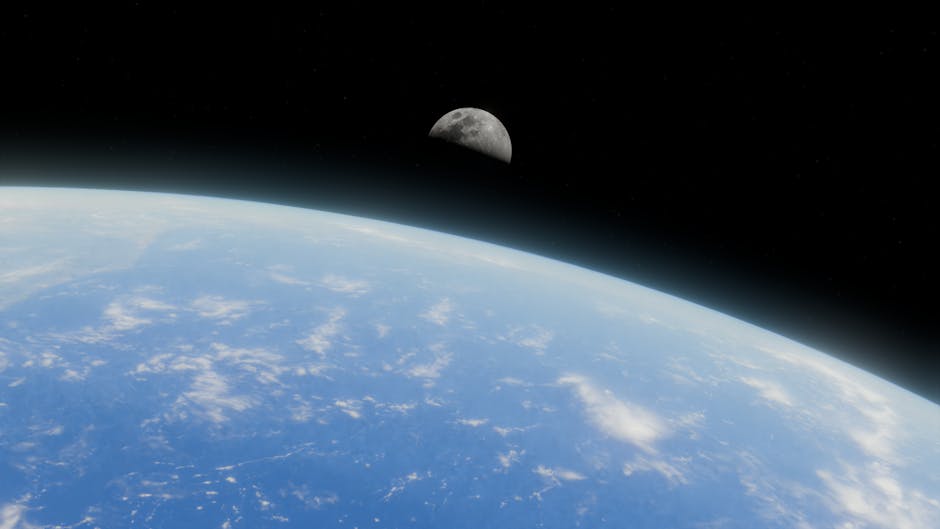
Artemis II surpasses Apollo 13’s distance record, delivers stunning lunar images, and tests critical mission protocols ahead of its splashdown.
NASA's Artemis II mission, the first crewed flight aboard the Orion spacecraft, continues to make waves as it approaches its splashdown target on April 10, 2026. The mission, which is seen as a critical stepping stone in NASA’s ambitious Artemis program, has already established its place in history for pushing human exploration further than ever before.
Breaking Records and Capturing History
On this test mission, Artemis II has broken a notable record previously held by Apollo 13, reaching a distance of 252,756 miles from Earth. The mission marked the farthest a human-rated spacecraft has traveled from our planet, offering an unprecedented view of the moon's far side and Earth’s "Earthset." These achievements not only set new benchmarks but also reignite inspiration for the next generation of space exploration.
The mission has also served as a platform for gathering extraordinary visuals. Over 175 GB of images and videos were captured during the lunar flyby, including rare snapshots of the moon’s far side and high-resolution imagery of its features. NASA Administrator Jared Isaacman lauded the use of advanced optical communications technology that facilitated the transmission of these awe-inspiring visuals back to Earth. Among the iconic moments was the crew’s capture of green and brown hues in the Aristarchus Plateau, which has significant scientific implications for understanding lunar chemistry.
Science and Operations in the Spotlight
Over the course of Artemis II, NASA has used the Orion spacecraft as a testing ground for both engineering and scientific parameters. Yesterday’s lunar flyby provided the perfect backdrop for observing impact flashes—micrometeorite collisions with the moon’s surface. The Artemis science team, in coordination with citizen scientists and the Lunar Reconnaissance Orbiter, is now studying these events to gain insights into the dynamic lunar environment.
Human observations have proven crucial in gathering scientific data. The crew described low sun angles and exaggerated shadows at lunar regions mimicking the conditions of the moon’s South Pole, where the future Artemis III mission aims to establish a permanent moon base. These observations will directly influence mission planning for operations in such complex terrains.
Poignant Moments: Naming Craters
In a historic move during the lunar flyby, the Artemis II crew proposed names for two previously unnamed craters. They suggested "Crater Integrity" after their spacecraft and "Crater Carol" in honor of Commander Reid Wiseman’s late wife. The crew aims to submit these names to the International Astronomical Union for official recognition. This emotional moment struck a chord both within NASA and among millions of viewers worldwide.
Testing Systems for Future Missions
Artemis II not only aims to inspire, but also rigorously test the systems intended for future lunar and Martian exploration. For example, the cabin pressure inside the Orion spacecraft has been kept at 10.5 psi to simulate conditions for eventual integrated operations with future lunar landers. Additionally, the team performed manual piloting exercises and successfully completed orbital trajectory correction maneuvers that fine-tuned the spacecraft’s path.
The spacecraft is now on its journey back to Earth, having exited the moon’s gravitational sphere of influence on April 7 at 1:23 PM ET. Engineers are closely monitoring all operations, including the critical return trajectory correction maneuver scheduled for later today. The spacecraft will undergo another test of its service module thrusters as it navigates its way to the planned splashdown off the coast of California this Friday, April 10, at 8:07 PM ET.
Crew and Ground Support
The Artemis II team, consisting of Commander Reid Wiseman, Pilot Victor Glover, Mission Specialist Christina Hammock Koch, and Mission Specialist Jeremy Hansen, has handled the mission with precision despite some minor setbacks, such as issues with the spacecraft’s waste management system. The toilet system remains operational, though adjustments are being made to manage the wastewater vent process.
As the mission continues, the team aboard the USS John P. Murtha has left port and is en route to the recovery point. A smooth splashdown and recovery would serve as the perfect closure to an already groundbreaking mission.
Looking Ahead: The Artemis Program
Artemis II is just the beginning. NASA’s Artemis program sets the stage for a sustainable human presence on the moon and, eventually, missions to Mars. Efforts are already underway for Artemis III, which will include the first crewed moon landing in the program and establish a pathway for long-term lunar exploration. NASA is also advancing programs such as the development of the Blue Origin Mark 1 lunar lander, science payloads for Mars missions, and interplanetary nuclear spacecraft.
The lessons learned during Artemis II will feed directly into these ambitions. As Dr. Lori Glaze, head of the Artemis program, noted, the collaboration between teams at NASA and their remarkable orchestration of hardware, science, and crew operations demonstrate the power of human exploration.
Why Artemis II Matters
Artemis II represents not just an exploration milestone, but also a unifying moment for humanity. From integrating cutting-edge science to capturing the imagination of millions, this mission highlights the value of international collaboration, as well as the inspiring impact of spaceflight on Earth. With splashdown just a few days away, the focus remains on ensuring the crew’s safe return while reflecting on the significance of their achievements. As NASA sets its sights on even more ambitious goals, Artemis II reminds the world that the spirit of exploration is unwavering.
Staff Writer
Emily covers space exploration, physics, and scientific research. Holds a degree in astrophysics.
Comments
Loading comments…


