NASA’s Artemis II Crew Successfully Returns to Earth After Historic Lunar Mission
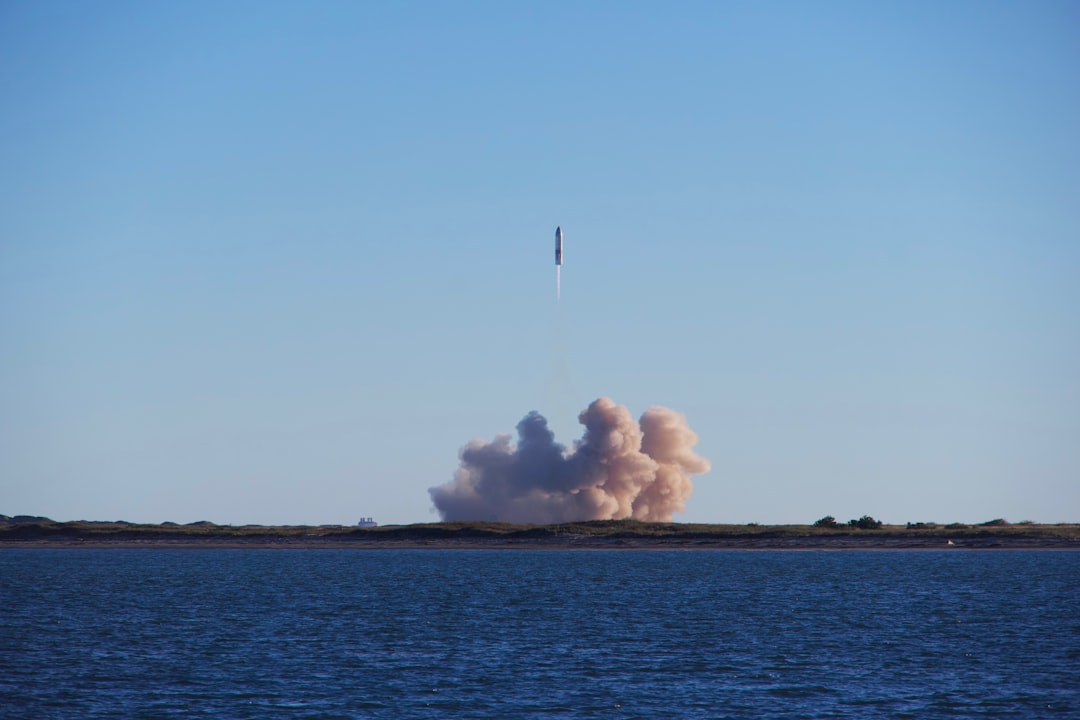
NASA’s Artemis II mission concludes with a successful Pacific splashdown, marking the first crewed lunar flyby in over 50 years.
NASA’s Artemis II mission, a major milestone in the agency’s long-term lunar program, has concluded with its four-person crew safely back on Earth. Following their 10-day journey, including a groundbreaking lunar flyby, astronauts Christina Koch, Victor Glover, Jeremy Hansen, and mission commander Reid Wiseman splashed down in the Pacific Ocean near Southern California aboard the Orion spacecraft. This marks the first crewed mission to the Moon in over 50 years, a feat NASA envisions as the precursor to establishing a sustainable presence on the Moon and potentially venturing to Mars.
The High-Stakes Return
The Orion spacecraft reentered Earth’s atmosphere at speeds approaching 25,000 mph, as temperatures on its heat shield soared to a staggering 5,000°F. During this critical phase, the capsule and its crew endured a 13-minute communications blackout, widely considered one of the riskiest portions of the entire mission. Once communication was restored, the mood in NASA’s Mission Control in Houston was jubilant. “Houston, Integrity. We have you loud and clear,” announced the crew upon the reconnection, using the call sign designated for the Artemis II capsule.
The spacecraft deployed multiple parachutes to slow its descent before finally achieving a picture-perfect splashdown. Mission teams carefully coordinated the extraction process over two hours to ensure both the crew’s safety and the capsule’s integrity. The astronauts were then transported by inflatable rafts and helicopter to the USS John P. Murtha, a U.S. Navy recovery ship, where they underwent preliminary medical evaluations.
A Long-Awaited Milestone
Artemis II serves as a key stepping stone for NASA’s Artemis program, which aims to return humans to the Moon and establish a permanent presence by the end of the decade. Unlike previous lunar missions, this effort is designed to pave the way for prolonged human activity on the Moon’s surface, including the construction of lunar habitats and research facilities. The Artemis II crew orbited 250,000 miles away from Earth, traveling farther than any human spaceflight crew before them. Among the highlights of their journey were stunning images of the far side of the Moon, areas never before seen by human eyes.
The mission also tested technology and offered NASA invaluable insights for future lunar landings. Artemis III, slated for 2028, aims to land astronauts on the Moon’s surface for the first time since Apollo 17 in 1972. Artemis IV, planned for shortly after that, hopes to build on these efforts with sustained operations.
Crew Reflections and Challenges
Despite the mission’s resounding success, it wasn’t without its challenges. Reports indicate that the spacecraft’s onboard toilet faced malfunctions, and temperature controls were less than ideal. Yet, the crew described the overall experience as “picture-perfect.” Reid Wiseman and Christina Koch were spotted smiling and waving as they exited the spacecraft for medical evaluations. Victor Glover, visibly moved, clapped his hands and expressed gratitude to the support teams.
At the USS John P. Murtha, an integrated support system was ready to ensure the astronauts’ health and safety. Initial reports indicate that the crew was in good condition, though NASA scientists are conducting extensive medical assessments. These examinations aim to understand the effects of space radiation and microgravity on their bodies. NASA considers the experiments critical for planning longer missions, especially as part of its eventual Mars initiatives.
A Moment of National Prestige
At NASA’s Johnson Space Center in Houston, where Mission Control was abuzz, there was a strong sense of accomplishment among the teams who had spent years preparing for this mission. For many, Artemis II had been two decades in the making. One NASA official likened the mood to the celebrations of a major playoff win: “You celebrate tonight, but tomorrow you start preparing for the next big game.” Work is already well underway in preparation for Artemis III and Artemis IV.
The success of Artemis II also reignited public interest in the U.S. space program. Crowds gathered at the Air and Space Museum in San Diego to watch the mission’s conclusion live. There were cheers at every checkpoint milestone as the Orion spacecraft completed its journey. Many attendees shared personal connections to the space program, linking bygone Apollo missions with the new generation’s achievements.
Looking Ahead
NASA Administrator Bill Nelson described Artemis II as a historic turning point, showcasing the agency’s renewed ambitions for human space exploration. The Artemis program’s scientific and logistical findings will directly contribute to the Artemis III mission, where astronauts will set foot on the Moon, potentially including the first woman and person of color to do so. Beyond that, the goal is the development of a Moon base, essential for Mars exploration planned for the 2030s.
Koch, Glover, Wiseman, and Hansen will spend the upcoming days undergoing further medical tests and mission debriefs. Early studies will focus on their physical readaptation to Earth’s gravity and the overall toll of deep-space travel on the human body. Insights gleaned from these evaluations will shape future missions not only to the Moon but also to more distant goals like Mars.
The Artemis II mission was not simply an echo of the iconic Apollo days but rather a signal that humanity's ambitions in space are entering a new era. It brought cutting-edge technology and international collaboration to the fore, while also reigniting the world’s imagination about the possibilities of space exploration. If Artemis II is any indication, the future of NASA’s lunar endeavors is both promising and transformative.
Staff Writer
Emily covers space exploration, physics, and scientific research. Holds a degree in astrophysics.
Comments
Loading comments…


