Nutcracker Man: A Glimpse Into the Chewing Power of an Extinct Cousin
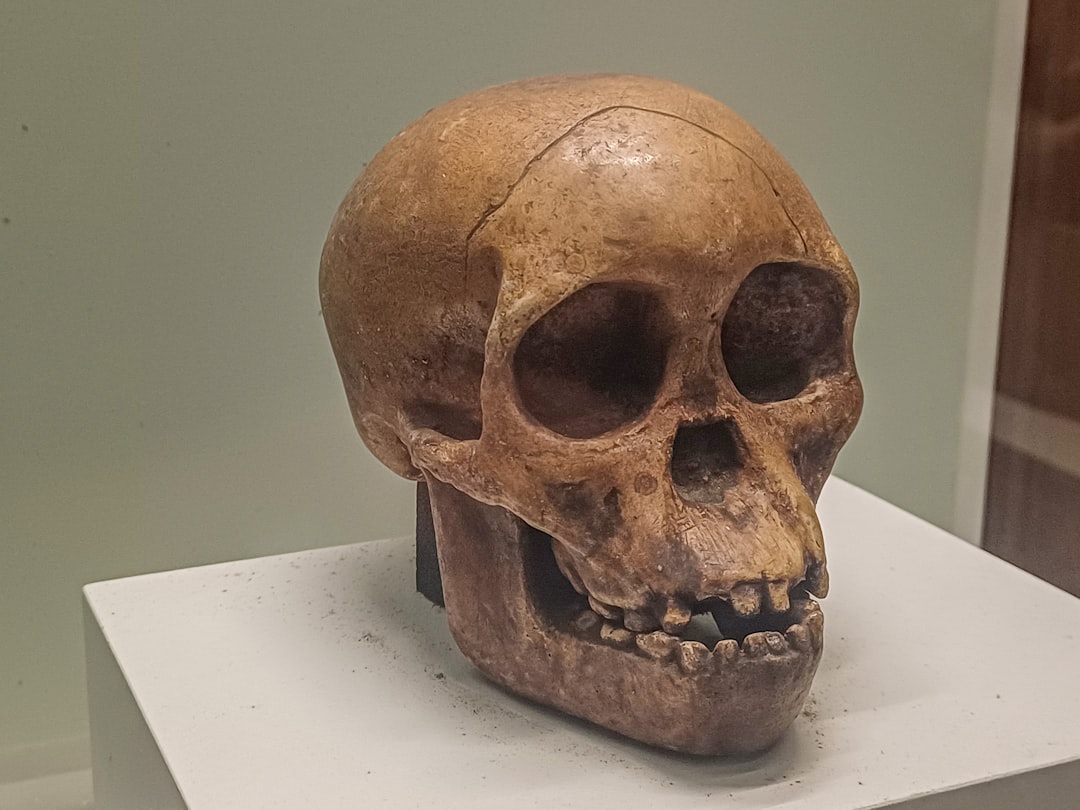
Paranthropus boisei, nicknamed Nutcracker Man, had giant teeth and jaws designed for a unique diet. But the mystery of its chewing habits persists.
In the late 1950s, paleontologists Louis and Mary Leakey discovered a skull so unusual that it sparked decades of debate and earned the nickname Nutcracker Man. Belonging to the species Paranthropus boisei, this hominin—an evolutionary cousin of humans—stood out for its massive jaws, enormous molars, and a prominent bony ridge on its skull. While the nickname hinted at a diet of cracking nuts open, research over the years has revealed a surprising twist about what this extinct hominin really ate—and raised even more questions about its place in our family tree.
Meet the Nutcracker Man
The Nutcracker Man stood out not just for its appearance, but for its remarkable adaptations. Unearthed in Eastern Africa and dated to more than two million years ago, P. boisei featured massive cheekbones (zygomatic arches) and a sagittal crest—a ridge of bone along the top of the skull. Both features allowed the attachment of extraordinarily large chewing muscles. Combined, these biological traits indicated a bite force capable of pulverizing tough food.
Early theories suggested that P. boisei relied on its impressive jaw strength to crack open hard foods like nuts and seeds. But as more fossils were studied, researchers noted surface damage on its teeth that didn’t align with that hypothesis. Rather than enamel pitting—consistent with chewing hard objects—scientists observed long, parallel grooves. This evidence hinted that the Nutcracker Man consumed softer plant material.
From Nutcracker to Grass Grazer
The shift from the nut-eating theory came when scientists examined the isotopes preserved in P. boisei’s tooth enamel. Isotopic analysis tracks the types of food an organism consumed during its lifetime. Specifically, plants are categorized by their photosynthesis pathways: C4 plants like grasses and C3 plants like shrubs or trees. The isotopic signature in P. boisei revealed a diet dominated by C4 plants, suggesting the species primarily consumed grasses and reeds.
This was a surprising revelation. Despite having the jaws and teeth for chomping hard foods, P. boisei rarely used them in the way researchers first imagined. Instead, its biological toolkit may have allowed it to process fallback foods—less desirable, tougher meals—only when its preferred grassy staples were unavailable.
Comparing Paranthropus Species
Nutcracker Man wasn’t an isolated curiosity. It belonged to the genus Paranthropus, which includes two additional species: Paranthropus robustus and Paranthropus aethiopicus. Each lived in different regions of Africa and exhibited similar robust features tailored for heavy chewing.
- P. robustus: Known from Southern Africa, P. robustus displayed dietary differences from P. boisei. It had a more varied diet, evidenced by a stronger presence of C3 isotopes and more frequent tooth chipping—likely from chewing harder foods such as seeds and roots.
- P. aethiopicus: Fossil evidence for P. aethiopicus is sparse, but it appears to share several traits with P. boisei and P. robustus.
These dietary differences suggest that while they might share similar anatomy, the Paranthropus species adapted to different ecological niches.
Were They Tool Users?
One long-standing question about P. boisei and its relatives is whether they were capable of making or using tools. Early members of the Homo genus—our direct ancestors—were known to create tools during the same period P. boisei lived. But whether Nutcracker Man had the intellect and dexterity for tool-making remains uncertain.
Recently, new fossil evidence provided clues. In a striking 2025 discovery, hand and foot bones were found alongside P. boisei skull fragments. The hands exhibited human-like dexterity with strong thumbs, suggesting they were capable of powerful grips. While one explanation is that these hands were used for tool-making, another possibility is that they helped in tearing apart tough plants—a necessary skill for its grass-heavy diet. Until further discoveries are made, the tool-use hypothesis remains open.
Sex, Size, and Species Complexity
One of the challenges in studying Paranthropus involves telling apart the sexes and determining whether certain fossils represent separate species or reflect variability within one species. Sexual dimorphism—where males and females exhibit significant differences in size and shape—is common in great apes, and it might apply to P. boisei as well.
For example, researchers previously relied on measurements like tooth size to draw conclusions about dimorphism. However, recent advances have introduced paleoproteomics, a new technique that analyzes proteins in fossilized dental enamel. Using this, scientists can discern markers linked to the Y chromosome, helping to identify male teeth.
A 2025 study of P. robustus found that smaller teeth previously thought to belong to females were actually from males. This suggests significant variability within the species and raises questions about whether similar patterns apply to P. boisei. It’s another example of how modern technology is rewriting what we thought we knew about ancient relatives.
Why Does Nutcracker Man Matter?
Studying P. boisei and its relatives offers insight into evolution and the adaptability of early hominins. While it may not have led directly to Homo sapiens, the genus Paranthropus helps us better understand the diverse experiments in survival that shaped our family tree. The way its anatomy adapted to specific environments—specialized teeth, massive chewing muscles—illustrates how evolutionary pressures influence physical characteristics.
The Nutcracker Man’s dietary habits also challenge our assumptions about “primitive” lifestyles. Despite its heavy-duty jaws, it followed a mostly specialized diet of grasses, unlike early Homo species that exhibited greater dietary flexibility. These adaptations highlight the role of environment and resources in shaping evolutionary outcomes.
The Unanswered Questions
For all that we’ve learned about P. boisei, questions remain. Why exactly did it develop such exaggerated chewing muscles if its diet didn’t demand them under normal conditions? Were P. boisei and its relatives capable of basic technological skills? And how closely did they interact with the other hominins they coexisted with two million years ago?
The discovery of new fossil records and the application of emerging techniques like paleoproteomics will likely continue to refine our understanding. For now, the Nutcracker Man remains a fascinating example of evolutionary specialization—a distant but undeniably intriguing cousin who has left us with a lot to chew on.
Staff Writer
Emily covers space exploration, physics, and scientific research. Holds a degree in astrophysics.
Comments
Loading comments…


