SpaceX Challenges Boeing in NASA’s Artemis Moon Mission
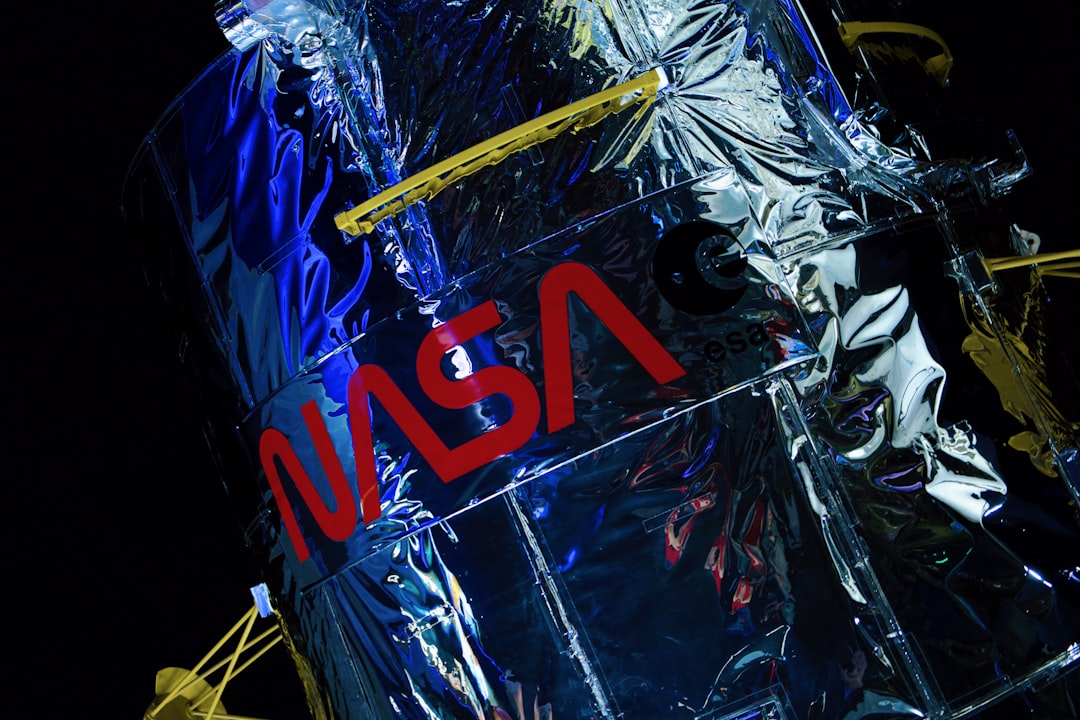
SpaceX's Starship replaces Boeing's SLS as NASA accelerates its Artemis Moon mission plans. Blue Origin also competes for the lunar lander contract.
NASA's Artemis program, aimed at returning astronauts to the Moon and establishing a long-term presence in deep space, is undergoing pivotal changes in its strategy. According to recent reporting, SpaceX’s Starship has taken over critical responsibilities in the Moon mission, displacing Boeing’s Space Launch System (SLS). The shift reflects NASA’s efforts to accelerate human exploration and leverage emerging technologies while pushing its private industry partners like SpaceX and Blue Origin to meet demanding schedules.
Planned Roles of SLS and Starship
Originally, Boeing’s SLS rocket was to play a major role in the Artemis missions. Under that plan, astronauts aboard the Orion crew capsule would have launched atop the SLS. This booster would have propelled Orion near the Moon, where it would dock with a lunar lander—SpaceX’s Starship—in lunar orbit. Starship would then facilitate the actual Moon landing.
However, NASA has restructured its approach. Instead of relying on the SLS for the most complex parts of the mission, SpaceX’s Starship will now assume a central role. Under this new design, SLS will launch Orion only into low Earth orbit. There, the spacecraft will rendezvous and dock with Starship. Starship will then perform the "heavy lifting," propelling Orion toward the Moon before placing it into low lunar orbit. This adjustment marks a significant shift of responsibility from Boeing’s SLS to SpaceX’s Starship.
Challenges Ahead for SpaceX’s Starship
While SpaceX has made notable advances in private space exploration, Starship faces considerable challenges before it is ready for human missions. A critical hurdle is the implementation of in-space cryogenic refueling. Starship will require multiple refueling missions in orbit to carry enough propellant for the lunar journey. This process involves launching several tanker Starships back-to-back to transfer fuel—an operation that has never been demonstrated in space.
Additionally, Starship has yet to complete a fully successful orbital test flight. Though the vehicle has shown promise in uncrewed test flights, it still needs to prove it can operate reliably in complex mission scenarios, including carrying humans to the Moon. NASA has set an ambitious timeline, giving SpaceX roughly two years to demonstrate Starship’s readiness for end-to-end lunar missions.
Competition from Blue Origin
SpaceX is not alone in the race. Blue Origin, another private spaceflight company, has also submitted a proposal for a lunar landing system. Although the details of Blue Origin’s updated plans remain undisclosed, reports suggest that NASA may choose between the two companies based on which one demonstrates readiness first. NASA Administrator Bill Nelson emphasized that whichever system—Starship or Blue Origin’s—meets mission requirements fastest will have the honor of landing the first Artemis astronauts on the Moon.
Blue Origin is reportedly also focusing on using its infrastructure to support satellite capabilities and data systems in orbit. However, the company will need to balance those priorities while accelerating efforts to meet NASA’s tight deadlines for the Artemis program.
NASA’s Vision for the Artemis Program
The Artemis program represents NASA’s most ambitious human spaceflight initiative since the Apollo era. It aims to return astronauts to the Moon’s surface for the first time in over 50 years and establish a sustainable presence around and on the lunar surface. This effort will pave the way for future Mars missions and broader human exploration of deep space.
Notably, NASA has moved toward integrating the strengths of public and private partnerships for Artemis, underscoring the value of companies like SpaceX and Blue Origin. While Boeing remains a major contractor and the SLS will continue to play a role, the rapid development of technology from newer players like SpaceX has altered the trajectory of the program.
Expert Insights on NASA and Industry Efforts
Lori Glaze, former director of NASA’s Jet Propulsion Laboratory, highlighted the importance of partnerships in accelerating lunar exploration. In her remarks, she noted that while SpaceX has made strong progress, the company still has significant milestones to reach before being ready for human lunar missions. “Never bet against SpaceX,” she said, emphasizing the company’s track record of overcoming technical challenges. At the same time, she acknowledged the complexity of Starship’s remaining requirements, from successful orbital test flights to demonstrating lunar landing capabilities.
Boeing, despite its reduced role in this phase of the Artemis program, stands to benefit from more frequent SLS launches. These launches remain integral to NASA’s broader space exploration strategy, including planned missions to farther destinations like Mars in the decades ahead.
The Road Ahead for Human Lunar Exploration
With missions like Artemis, the pace of innovation in space exploration is accelerating. NASA has placed immense pressure on its private partners to deliver solutions quickly, reflecting global competition and a renewed sense of urgency to achieve milestones in human spaceflight. The success of programs like Starship will not only determine who gets to the Moon first but also shape the future of collaboration between public agencies and private companies in space exploration.
At the same time, the Artemis program reminds us that space exploration is still extraordinarily challenging. The need for groundbreaking technology, rigorous testing, and precise execution underscores the complexity of sending humans safely beyond low Earth orbit to destinations like the Moon and, eventually, Mars. Whether it is SpaceX’s Starship, Blue Origin’s lander, or Boeing’s contributions to the program, teamwork and innovation will be critical to achieving NASA’s long-term goals.
Comments
Loading comments…


