SpaceX IPO in 2026? The Real Business Isn’t Rockets
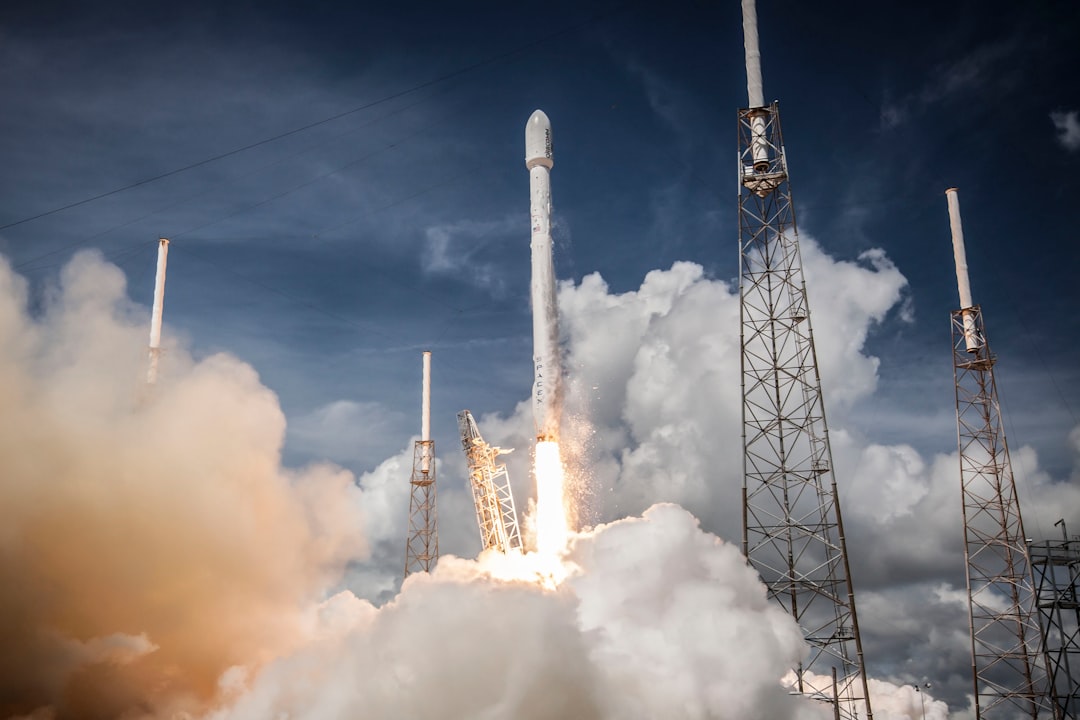
SpaceX is evolving into a space infrastructure powerhouse driven by Starlink and Starship, eyeing a future of energy and AI computing beyond Earth.
For years, SpaceX has captured public imagination with its ambitions to colonize Mars and its revolutionary rocket designs. But a closer look at its recent developments suggests the company is building something much broader: a fully integrated space infrastructure system. This vision, powered by its Starlink satellite network and the massive Starship transport system, positions SpaceX as a key player not only in space exploration but also in energy and computing at planetary and even galactic scales.
Starlink as More Than Satellite Internet
Initially positioned as a satellite internet service, Starlink has already become a lifeline for remote and underserved regions worldwide. The expanding network, with thousands of satellites in low Earth orbit, bypasses the limitations of traditional ground-based infrastructure. Yet Starlink's value lies not only in its immediate service offerings but also in its potential as a platform for testing and refining technologies critical to SpaceX's larger goals.
Recently, Starlink deployed hundreds of direct-to-cell satellites designed to connect directly to smartphones without requiring ground towers. This advancement is a game-changer for the telecommunications sector, providing coverage in areas where building terrestrial infrastructure is either impractical or cost-prohibitive. More critically, this capability is another step in building a space-based communication system robust enough to support broader infrastructure needs, such as space-based energy and AI computing systems.
Operating these satellites in the harsh conditions of space offers SpaceX an unparalleled opportunity to test how power systems, thermal dynamics, and communication technologies function in the real-world environment of orbit. Essentially, Starlink serves as a test bed for what could evolve into much larger-scale infrastructure projects beyond Earth.
Starship’s Role in the Grand Vision
While Starlink focuses on connectivity, the Starship program is concentrated on logistics — specifically, moving massive amounts of cargo into space at a low cost. Designed to be fully reusable, Starship aims to carry up to 200 tons of payload in a single launch, a quantum leap in capacity compared to any previous launch system.
Why does this matter? Building any meaningful infrastructure in space, whether for energy production, computing, or colonization, demands transporting millions of tons of material into orbit. Current launch economics make this infeasible. However, SpaceX’s ultimate goal is to bring these costs down significantly through Starship’s reusability and scalability. Musk himself has outlined an ambitious target: launching up to 10 million tons of cargo into orbit every year. At this scale, entirely new possibilities for humanity’s presence in space open up.
Space-Based Energy and AI: The Next Frontier
One of the most intriguing aspects of SpaceX’s strategy is how it marries space logistics with energy and computing ambitions. Space offers unique advantages for these applications. Unlike Earth, the vacuum of space provides uninterrupted solar energy — no atmospheric interference, no day-night cycles, and no seasonal changes. This constant energy supply, paired with the isolation of space, creates ideal conditions for scaling energy-intensive computing systems.
Musk has floated the possibility of creating space-based AI hubs, where artificial intelligence systems could perform large-scale computations entirely off Earth. The appeal of placing AI infrastructure in orbit lies in the potential for terawatt-level energy availability, something Earth’s constrained energy grids would struggle to support sustainably at scale. By decentralizing both energy and computing into space, SpaceX is laying the groundwork for systems that could surpass Earth’s limitations altogether.
A Civilization Beyond Earth
On the surface, referring to SpaceX as “just” a rocket company or a Mars colonization aspirant misses the point. What it is building is an integrated system of energy, connectivity, and logistics that can function both on Earth and beyond. This system would support a future civilization operating at scales previously confined to science fiction.
As Starship and Starlink mature, SpaceX could play a critical role in enabling human activity beyond Earth’s orbit — from asteroid mining to building autonomous colonies on other planets. While these scenarios remain distant for now, the company’s current trajectory makes them increasingly plausible.
What’s Next for SpaceX?
All this raises the question of whether SpaceX’s strategic shift is preparing it for an IPO, potentially as early as 2026. Public investors would surely be interested in what is no longer just a Mars rocket company but a space infrastructure leader with footholds in global connectivity, logistics, and energy. However, the company’s heavy reliance on innovation and ambitious timelines may remain a point of scrutiny for the markets.
For now, SpaceX is pushing technological boundaries that could redefine human interaction with space. Whether it’s internet, cellphone connectivity, or the hardware to make space-based AI a reality, the company is betting on a future where Earth is only part of the equation.
The real business isn’t rockets — it’s everything they enable.
Staff Writer
Emily covers space exploration, physics, and scientific research. Holds a degree in astrophysics.
Comments
Loading comments…


