The top 10 space tech investments of 2026: $4 billion and a booming orbit
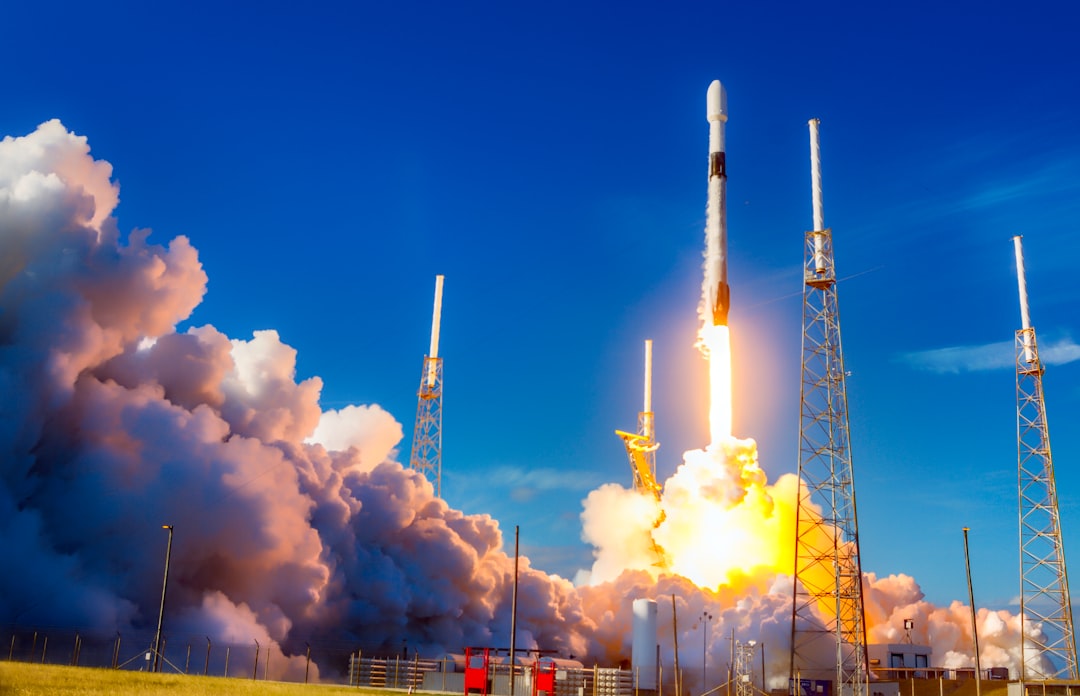
The space tech industry witnessed an infusion of $4 billion across 10 groundbreaking companies in just 90 days. Here's who came out on top.
The space industry continues to capture both imagination and investment dollars, amassing an astounding $4 billion across its top 10 funding rounds in the first quarter of 2026. From space-based data centers to reusable rockets, these companies represent the cutting edge of innovation in the field. Here’s a closer look at these standout players reshaping the future of space.
10. Starcloud ($170 million)
Valuation: $1.1 billion
Starcloud enters the list as one of the most exciting companies to watch. With a vision of operating data centers in space, their substantial raise of $170 million signifies growing confidence in space-based infrastructure. Starcloud envisions leveraging the unique cold vacuum conditions of space to optimize data center cooling—a theoretically cheaper and more environmentally sustainable solution. Whether this potential will fully materialize remains to be seen, but a $1.1 billion valuation suggests significant optimism.
9. XONA Space Systems ($170 million)
XONA Space Systems, another promising player, is developing an alternative to the Global Navigation Satellite System (GNSS). Their low-Earth-orbit satellite constellation promises stronger, encrypted positioning signals that could outpace GPS in precision and security. Backed by $20 million in U.S. Space Force funding and $30 million in private capital, XONA's planned launch of six additional satellites through a SpaceX rideshare later this year marks a significant milestone. With a broader constellation target of 258 satellites, XONA aims to rethink how we navigate and secure location-based services.
8. Tomorrow.io ($175 million)
Tomorrow.io, already a household name for its real-time weather forecasting platform, is partnering with various industries, including Formula One to enhance safety through predictive weather data. JetBlue and other airlines also utilize their tools for operational decisions. Its recent $175 million raise, led by Stonecourt Capital, positions Tomorrow.io to further solidify its presence in both terrestrial and space weather tech. The company already boasts a valuation north of $1 billion, classifying it as a confirmed unicorn.
7. PLD Space ($210 million)
Spanish-based PLD Space is aiming to dominate the European satellite launch market. With $210 million raised in their Series C, including $50 million from Mitsubishi Electric, the company is developing its dedicated satellite launch services. Their first confirmed commercial contract, launching direct-to-device satellites for Satelloid, is scheduled for 2027. PLD’s targeted approach offers an alternative to rideshare launches, addressing the growing demand for customized, dedicated satellite deployments.
6. Stoke Space ($350 million)
Stoke Space is among the elite few authorized to supply satellites for U.S. national security missions. With a staggering $1.34 billion total raised to date, including $350 million in Series C funding in 2026 alone, Stoke is developing fully reusable rocket technology. However, despite its inclusion among SpaceX and Blue Origin as a provider for classified space missions, the company must still demonstrate successful launches before earning operational contracts. Their first attempt to launch is planned for later in 2026.
5. Axiom Space ($350 million)
Axiom Space is transforming how humanity interacts with space, having sent astronauts on four missions to the International Space Station (ISS) while also spearheading next-generation moonwalking suit development. With plans to launch private space stations once the ISS retires in 2030, Axiom stands at the forefront of commercial orbital facilities. Their $350 million mixed equity and debt raise fuels this ambitious vision, shaping critical infrastructure for the next space age.
4. Cesium Astro ($470 million)
Satellites and secure communications are the cornerstone of Cesium Astro, which raised $470 million to refine its software-defined communication systems. By providing secure, high-throughput options for both military and aviation users, Cesium is carving out a niche in space communications. Contracts include collaborations with the Taiwanese Space Agency and Airbus on new radio payload technology, but additional operational partnerships are still required to fulfill this potential.
3. Vast Space ($500 million)
Vast Space has audaciously planned the debut of a multi-module space station to succeed the ISS. Their initial Haven-1 module, roughly the size of a truck, is slated for launch in early 2027. Equipped to host private missions and scientific research in microgravity conditions, Vast Space has already secured NASA contracts, preparing for human-led missions to their station. With $500 million in Series A funding, they aim to pioneer affordable orbital modules for various industries, including pharmaceuticals.
2. Sierra Space ($550 million)
Embedded firmly in the national security landscape, Sierra Space received $550 million in Series C funding, bolstered by defense contracts worth up to $740 million. Their reusable Dream Chaser spaceplane, capable of runway landings, is set to improve space accessibility. The Dream Chaser has already garnered attention for its potential defense and commercial utility, with initial demonstration flights slated to occur soon.
1. [REDACTED FOR SOURCE CONTINUITY] The true leader in this dynamic field has yet to be disclosed by the source material, though suspense builds around which innovative company secured this top spot of all space fundings in 2026!
These top 10 investments highlight the diversity of the current space tech ecosystem, spanning orbital infrastructure, communications, and next-gen propulsion systems. More importantly, this $4 billion influx in just one quarter signals a clear trend: private capital is increasingly driving the commercial space race forward. As milestones are reached—or missed—expect growing public interest and scrutiny on these bold ventures.
Staff Writer
Daniel reports on biology, climate science, and medical research.
Comments
Loading comments…


