$5,500 dual-screen gaming laptop is absurd, powerful, and aimed at nobody
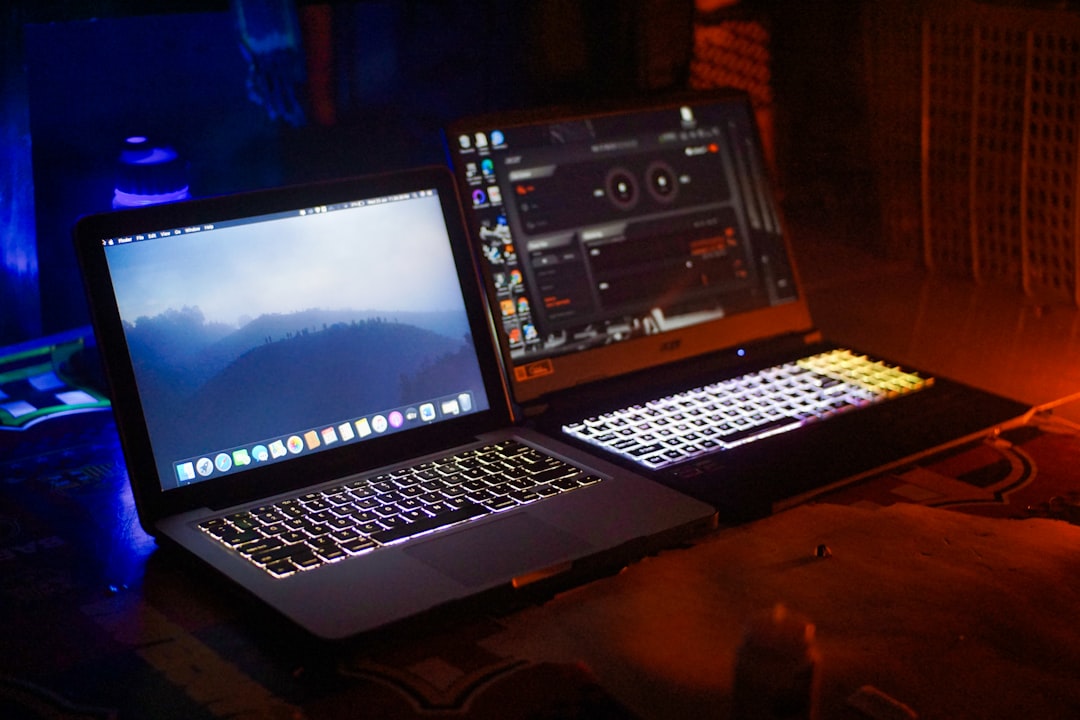
A new dual-screen gaming laptop packs two 16-inch OLEDs, an Nvidia 5090, and a $5,500 price tag. One reviewer called it 'a laptop for nobody' and also admitted 'it kind of rips, dude.'
Some products make you ask, "Why does this exist?" Other products make you ask, "Who would buy this?" And then there is this new dual-screen gaming laptop, which makes you ask both questions at the same time, while also wondering if the thing is about to tip over and bite you.
A recent episode of The Verge's podcast, The Vergecast, covered a review by senior editor Antonio G. Di Benedetto of a gaming laptop that costs $5,500 as configured. The machine packs two 16-inch OLED displays stacked vertically, driven by an Nvidia GeForce RTX 5090 GPU and a 16-core Intel Panther Lake chip. It comes with 32GB of RAM and a 1TB SSD. The second screen does not fold flat like the dual-screen laptops we've seen from Asus or Lenovo. Instead, it pivots upward from behind the main panel, creating a tall, two-screen tower that one host described as "very precarious and also somewhat scary."
Another panelist summed up the laptop's design philosophy with a line that will stick: "This is a laptop for someone who's very serious about video games and also trading crypto."
Specs that make you say "whoa" and then "wait"
Let's start with the raw hardware. Two 16-inch OLED screens means roughly 32 inches of diagonal display real estate, though the vertical orientation makes it more like a portrait monitor stack. The RTX 5090 is Nvidia's top-of-the-line mobile GPU for the next generation, and Panther Lake is Intel's upcoming high-performance mobile architecture. Even with 32GB of RAM and a 1TB SSD, storage might feel tight for modern game installations, but it's a configurable starting point.
The $5,500 price puts it well above the typical high-end gaming laptop. A top-tier Asus ROG Zephyrus or Razer Blade 15 with a single 16-inch OLED and a 4090-class GPU costs around $3,500 to $4,000. This dual-screen machine commands a premium of roughly 40 to 60 percent for the novelty of a second display.
The precarious design
The most distinctive physical feature is the way the second screen attaches. Instead of a hinge that folds backward (like the Asus Zenbook Duo), this laptop has a secondary panel that rises up from behind the main screen, almost like a visor on a helmet. The result is a tall, narrow assembly that looks unstable. One Vergecast host compared it to something that looks like it's going to attack you, and another said the screen appears to be tipping toward the user during the process of lifting it.
This is not a laptop you toss in a backpack and pull out in a coffee shop. It is a desktop replacement that happens to have a battery and a keyboard. The dual-screen setup makes sense for stock tickers, chat windows, or reference material while gaming. But for actual portable use, it seems impractical.
The review in a nutshell: "a laptop for nobody" but "it kind of rips, dude"
Antonio's full review contains a line that perfectly captures the contradiction at the heart of the machine: "This is a laptop for nobody." Yet the same review argues that, despite its absurdity, it is incredibly capable. The dual OLEDs look fantastic when propped up properly, the 5090 can push modern games at high frame rates even on two screens, and the overall build quality — stable or not — seems solid.
The "it kind of rips, dude" assessment suggests that if you can look past the price, the precarious screen, and the fact that you'll likely never use both screens simultaneously in most games, the laptop delivers a genuine enthusiast experience.
Who is this for, really?
The obvious candidate is the game streamer or content creator who wants a secondary display for chat, OBS controls, or monitoring tools without carrying an extra portable monitor. The crypto trader joke is not far off — anyone who needs a lot of real-time data visible at once could benefit from the vertical stack. But at $5,500, you could buy an excellent gaming laptop and a 32-inch 4K OLED monitor for less money, getting more screen space in a more comfortable configuration.
The real audience might be the early adopter who craves something unique, who values the conversation-starting factor over practicality. Or it might be the reviewer's worst nightmare: a product designed to prove that something can be done, not that it should be done.
Dual-screen laptops: a brief history
This is not the first dual-screen laptop. The Asus Zenbook Duo (starting around $1,500) features a secondary screen built into the palm rest. The Lenovo Yoga Book 9i ($2,000) has two 13-inch OLEDs that fold like a book. The Acer Iconia 6120 (2011) had two touchscreens. But none of those were gaming machines, and none tried to stack the screens vertically in this fashion.
What sets this new laptop apart is its focus on raw gaming performance. The 5090 GPU and Panther Lake CPU are not found in dual-screen laptops from mainstream brands. That combination, plus the 16-inch OLED panels, creates a niche product for someone who demands the absolute best hardware and doesn't mind a questionable form factor.
Bottom line
A $5,500 dual-screen gaming laptop with a precarious vertical monitor stand is not a practical purchase for most people. It is a showcase, a conversation piece, and a test of how far the laptop form factor can bend before it breaks. The reviewer's conclusion — "a laptop for nobody, but it kind of rips" — is honest. If you have the money and want something that no one else has, this machine delivers. If you need a reliable tool for gaming or work, there are better, cheaper, and sturdier options.
One thing is certain: the market for $5,500 laptops is small, and the submarket for $5,500 laptops with two unstable 16-inch screens is almost nonexistent. But for the handful of people who want that exact experience, this laptop exists. And it rips.
Staff Writer
Alex covers consumer electronics, smartphones, and emerging hardware. Previously wrote for PCMag and Wired.
Comments
Loading comments…


