Artificial Intelligence Reshaping Warfare: Key Insights from Bloomberg Tech Asia
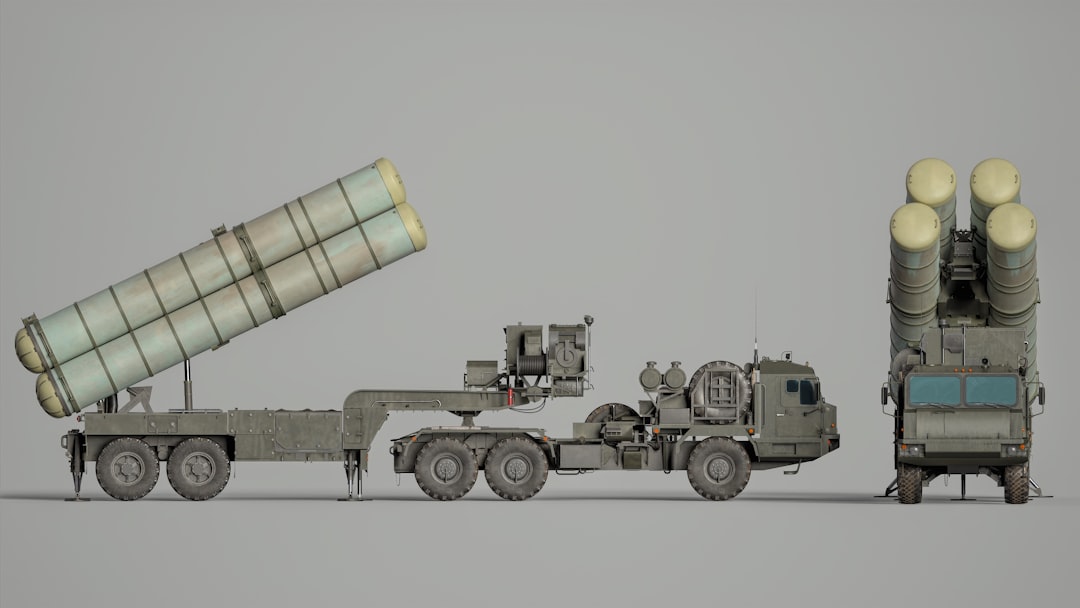
AI is revolutionizing defense with applications in intelligence, weapons, and decision-making, while raising concerns about ethics and control.
Artificial intelligence (AI) is fundamentally changing modern warfare, integrating into everything from intelligence gathering to autonomous systems. According to Bloomberg Tech Asia, AI’s rapid adoption in the defense industry raises both groundbreaking opportunities and significant challenges. The competition between global superpowers, particularly the United States and China, is steering this technological arms race.
AI’s Expanding Role in Modern Warfare
AI is no longer confined to futuristic speculation—it is already shaping military operations today. The U.S. military, for instance, employs AI to enhance effectiveness on the battlefield. A spokesperson from U.S. Central Command revealed that AI tools are being used to analyze data, reducing once time-consuming processes from days or hours to mere seconds. These tools generate "points of interest," like elevation or precise coordinates, which aid in operational planning.
In the field, AI supports various cutting-edge applications, such as facial recognition and decision-making algorithms. David Haar, co-founder and CEO of Second AI, highlighted how his company’s partnership with Japan’s Ministry of Defense involves systems that sift through massive amounts of multi-modal data from land, sea, and air. This effort focuses on efficient command and control systems as Japan modernizes its defense infrastructure.
AI’s potential, however, is not without its challenges. As military operations increasingly rely on automation, questions arise about when and where human decision-makers should stay "in the loop." Retired Australian Army Major General Gus McLachlan explained that while humans traditionally make final decisions, certain scenarios—like responding to hypersonic missile threats—demand automation due to decision times that exceed human capabilities.
The Geopolitical AI Arms Race: US vs. China
At the heart of AI adoption in military strategy is the fierce competition between the U.S. and China. Both nations take different approaches to AI integration, often shaped by their contrasting economic and governance models. The U.S. relies on public-private partnerships, working with defense contractors like Lockheed Martin and technology firms including Palantir and Anthropic (the latter recently pulling out due to ethical concerns over war applications).
On the other hand, China employs a "military-civil fusion" strategy, which eliminates the divide between its civilian economy and military industrial base. Spearheaded by President Xi Jinping, this strategy aims to position the Chinese military as a global leader by 2049. According to U.S. intelligence reports, many of China's strides in areas like aviation and drones stem from this integrated approach.
This competitive backdrop informs almost every facet of defense tech development. Katrina Manson, a Bloomberg reporter specializing in tech and national security, discussed how projects like the U.S. initiative "Project Maven" have been pivotal in embedding AI into military operations. Project Maven, launched in 2017, demonstrates the United States’ urgency in applying AI to close perceived technological gaps with China.
Ethical and Practical Challenges
While AI offers potentially revolutionary improvements, it also introduces complex ethical dilemmas. Autonomous weapons, sometimes capable of making lethal decisions without human oversight, are a contentious point. "The question is no longer can AI make these decisions but should it be allowed to," McLachlan commented.
Another issue is AI’s occasional inaccuracy. Early military AI tools, such as computer vision algorithms, encountered issues with terrain-like snow and desert or identifying weapons that occupied just three pixels of an image. These problems illustrate the high stakes of adopting yet-imperfect technology in combat scenarios.
The "black box" nature of many AI systems further complicates trust. Not understanding how an algorithm reaches a conclusion poses risks in battlefield scenarios—and brings up concerns about accountability when errors occur. For now, the U.S. policy maintains human involvement in critical decision-making, but the push for automation to speed up warfare may challenge this principle.
From Data Overload to Strategic Insights
One of AI’s primary roles in modern warfare is managing overwhelming amounts of data. According to McLachlan, earlier in his military career, incomplete information was a significant constraint for commanders. Today, the challenge is the opposite; leaders face an overload of data from drones, satellites, and aircraft sensors. AI tools are indispensable for filtering and analyzing this information to deliver actionable insights quickly.
Second AI’s work with Japan reflects this shift. Haar explained that their partnership with Japan’s Ministry of Defense involves building systems that analyze unstructured data locally on devices like drones, ensuring rapid decision-making even in disconnected environments. This localized analysis allows for quicker reactions, which could be critical in scenarios where timing determines mission success.
Navigating the Future of AI in Defense
Looking ahead, integrating ethical, technical, and operational safeguards will likely define AI's role in defense tech. The debate over balancing innovation with accountability is ongoing. For instance, the fallout when Anthropic exited its partnership with the U.S. Department of Defense signals broader industry reservations about the humanitarian implications of AI in warfare.
Moreover, designing trustable systems requires collaboration across entities. Decision-makers must address critical questions such as: when should machines operate autonomously? What safeguards can ensure AI adheres to international laws? Ultimately, AI is expected to play an even greater role in modern warfare, but controlling its scope demands careful consideration.
Key Takeaways
- AI’s Impact on Modern Warfare: AI is already enhancing decision speed, data analysis, and efficiency in military operations.
- Global Competition: The rivalry between the U.S. and China in developing AI-driven defense tech highlights differing approaches—market-driven partnerships versus military-civil fusion.
- Challenges to Adoption: Ethical concerns, accountability, and system reliability remain hurdles to broader AI deployment.
- Future Considerations: Automation’s role in warfare underscores the importance of human oversight, strategic control, and ethical alignment.
The advent of AI in warfare is not merely about technology—it is reshaping geopolitical strategies, ethical norms, and how nations prepare for the uncertainties of conflict. As AI continues to evolve, its consequences on warfare and global security will demand constant vigilance and thoughtful regulation.
Comments
Loading comments…


