How smart organizations will use AI: Jevons Paradox and workforce impact
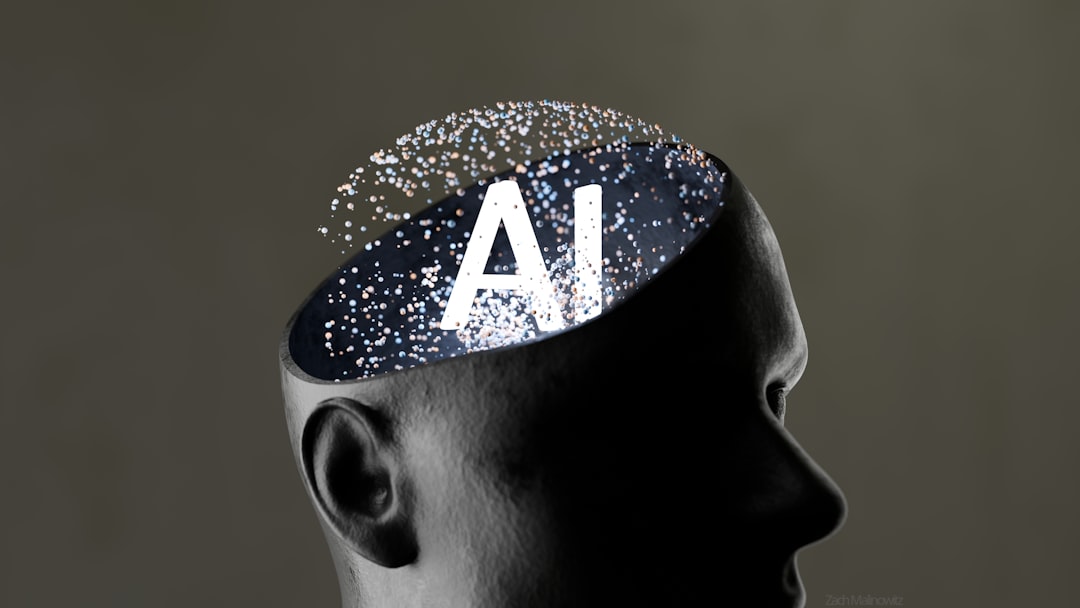
AI won't shrink the workforce, but will create new opportunities and roles by reshaping how organizations innovate, grow, and adapt.
If recent history has proven one thing about technology, it's that the future often unfolds differently than we expect. Artificial intelligence (AI) is no exception. While headlines may focus on automation's potential to eliminate jobs, the reality looks much more nuanced. As AI transforms industries, smart organizations are finding that automation doesn't lead to workforce reduction — it leads to new opportunities. Jevons Paradox: Lessons from history apply to AI A key concept to unpack AI's paradoxical impact on the workforce is Jevons Paradox, a principle derived from energy economics. In 1865, William Stanley Jevons observed that improvements in steam engine efficiency reduced coal consumption per task, yet total coal demand increased. Why? Reduced costs and increased efficiency made coal a practical energy source for entirely new applications, driving up overall consumption. Fast-forward to today, and the same principle applies to technologies like AI. By making tasks faster and cheaper, AI doesn't eliminate work; it changes the economics of what's possible. New demands emerge, and novel opportunities arise. What AI-enabled growth means for industries To illustrate, consider the early days of spreadsheet software. Automation simplified basic arithmetic-heavy accounting, leading some to fear widespread job losses among accountants. Yet what unfolded was quite different: demand for financial analysis surged, and accountants moved from number-crunching to higher-value strategic roles. The software transformed their output, expanding the scope of financial services and creating new demands for expertise. Organizations leveraging AI can expect similar transformations, where the technology acts as a catalyst for new work rather than a replacement. By reducing the labor required for repetitive tasks, AI enables innovation across sectors. Custom legal analysis, personalized healthcare plans, and targeted educational tools — once cost-prohibitive — are now becoming feasible. As expectations for speed, quality, and availability rise, businesses will find themselves addressing an entirely new set of priorities. How organizations can navigate the AI-driven future The takeaway for businesses is clear: investing in AI is not only about efficiency — it’s about creating the foundation for innovation and growth. Companies adopting a "cut-to-grow" approach risk missing the real value AI offers: augmenting human capabilities to drive entirely new opportunities. Winning organizations will focus on equipping their workforce with "AI-era" skills that support creativity, adaptability, and complex problem-solving. Roles such as AI product managers, governance experts, and integration specialists are just the tip of the iceberg. Employees need the adaptability to work alongside new tools, the critical thinking to supervise AI processes, and the creativity to explore untouched opportunities AI presents. Why AI creates more (and smarter) jobs One of the prevailing fears surrounding AI is its association with job losses. Jeffrey Hinton's 2016 prediction that advances in deep learning would make training new radiologists obsolete showcased the kind of concerns often raised about automation. Yet over a decade later, radiologists are still being trained — and in larger numbers. Why hasn’t AI rendered this profession redundant? The answer lies in how the work itself has evolved. AI excels at tasks like detecting patterns in medical imaging, which lets human specialists focus on diagnosis, treatment strategies, and personalized care. Rather than replacing radiologists, AI enhances their capabilities. This aligns with what Jevons Paradox predicts: efficiency drives demand for more complex, higher-skilled work built around the initial automation gains. A roadmap for workforce evolution Smart organizations have realized that the future won't demand fewer employees, but different kinds of work. Emphasis will shift toward roles emphasizing critical thinking, adaptability, and emotional intelligence — qualities that, for now, remain squarely within the human domain. Here are a few trends these organizations are capitalizing on: - Expansion into long-tail services: AI enables organizations to offer bespoke solutions in areas like education, healthcare, and legal analysis. Niche markets previously inaccessible due to high costs are becoming viable. - Rise of new job categories: People skilled at overseeing AI systems — such as product managers, safety engineers, or compliance specialists — are already in demand. Supporting this growth will require proactive upskilling for current employees. - Human supervision and trust roles: Fields requiring customer interaction, trust-building, or ethical governance will thrive. These are places where human judgment still outperforms automation. - Creative, cross-functional work: As AI automates routine tasks, employees will find more opportunities for innovation, collaboration, and tackling uncharted challenges. The cost of playing small There's a caution for businesses too: undershooting AI's potential is as dangerous as overestimating it. Companies concentrating solely on ways to cut costs — reducing their workforce or narrowing the scope of their services — will find themselves behind the curve. They may save money in the short term but lose the larger benefits AI offers, like opening new markets or reshaping customer expectations. This mindset, fixated on getting smaller rather than smarter, clashes with the growing demand for organizations to be agile and innovative. Employees of tomorrow: adapting to AI's capabilities For individuals, thriving in an AI-enabled world means cultivating traits that machines cannot imitate. Learning agility will be indispensable as technology continues evolving. Employees skilled in critical thinking will help guide AI systems toward real-world applications, ensuring outcomes align with human goals. Creativity remains a cornerstone, as AI can automate menial tasks, freeing up more time to brainstorm and solve higher-value challenges. Critical soft skills, like adaptability and lifelong learning, are no longer optional — they are the standard for success in an era where the only constant is change. The bottom line: a human-plus-AI economy As AI expands what’s economically feasible, the equation doesn’t reduce human value — it amplifies it. We’re not looking at a future where people disappear from the workforce, but one where human roles become more specialized, impactful, and innovative. Smart organizations and smart employees already recognize this. Those who embrace AI’s potential — investing in the right tools and skills — will be positioned to thrive in the workplace of tomorrow. Those who overlook its transformative power may find themselves standing still while the competition races ahead.
Staff Writer
Maya writes about AI research, natural language processing, and the business of machine learning.
Comments
Loading comments…


