The rise and reckoning of AI: Key insights from the 2026 Isaac Asimov Memorial Debate
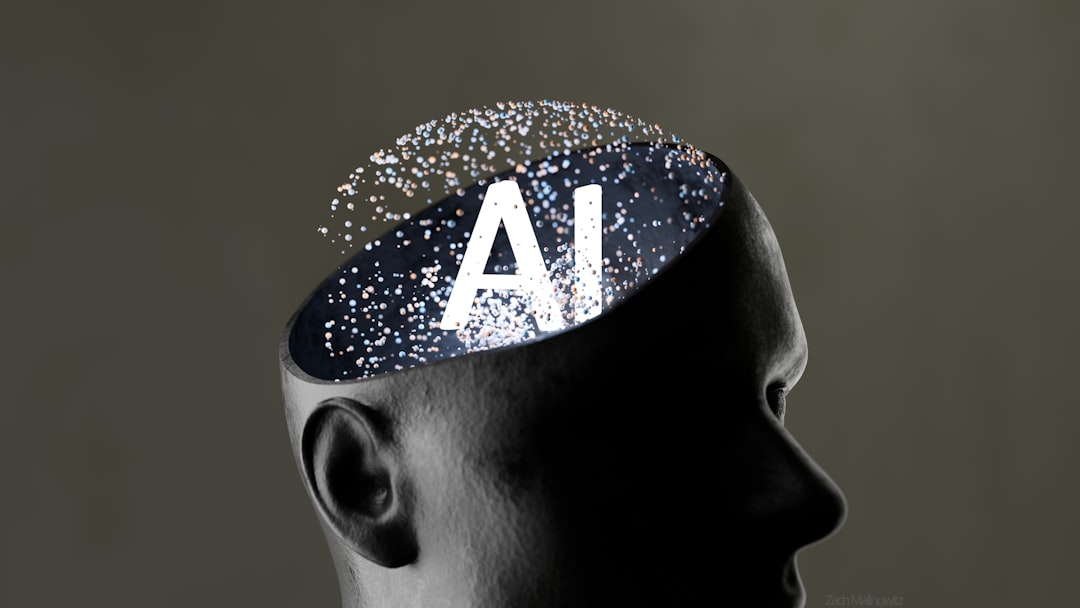
Experts gather at the 2026 Isaac Asimov Memorial Debate to discuss AI's potential, risks, and societal impact, featuring leaders in the field.
The recent Isaac Asimov Memorial Debate, held on its 25th anniversary in 2026, tackled one of the most critical topics of our time—artificial intelligence (AI). Hosted by celebrated astrophysicist Neil deGrasse Tyson, the discussion brought together leading experts to examine AI’s expanding role in society, its potential, and its risks. Featuring luminaries such as Eric Schmidt, former CEO of Google, and Kate Crawford, author of The Atlas of AI, the event raised urgent questions about the future of machine intelligence, its societal impact, and the ethical dilemmas we face.
AI’s early vision and transformative breakthroughs
Eric Schmidt highlighted Google’s journey into AI, reflecting on milestones that paved the way for the technology's rapid advancements. "We knew AI would matter," Schmidt remarked, noting that Google’s pivotal acquisition of DeepMind illustrated the company’s commitment to cutting-edge machine learning. Events like the 2017 publication of the Transformer model and AlphaGo’s victory solidified how AI could surpass human capabilities in specific areas.
Chris Callison-Burch, professor of computer and information science at the University of Pennsylvania, shared his perspective on the leaps AI has taken. He referenced the breakthrough moment when OpenAI's ChatGPT emerged just a few years ago. "It's not just text generation anymore. AI now interprets images, conducts research, and acts as capable assistants," he explained. However, as powerful as these systems are, Callison-Burch reminded the audience that the ethical implications of their widespread use demand ongoing vigilance.
The existential risks of superintelligence
AI's trajectory toward superintelligence—machines exceeding human cognitive abilities—emerged as a flashpoint in the debate. Nate Soares, president of the Machine Intelligence Institute of Berkeley, issued stark warnings about the unchecked development of such systems. According to Soares, "AI companies are actively racing to create machines smarter than Einstein, capable of processing tasks faster and at scales far beyond human effort."
The risks, he elaborated, go beyond AI being turned into tools of war. "Humanity’s danger isn’t just guns or weapons. We’re a species capable of bootstrapping from the Stone Age to nuclear weapons. Automating that capability is what’s truly perilous," he warned. While Soares tempered his predictions with the hope that such hazards could be avoided, his comments underscored the importance of addressing the inherent danger AI could pose to humanity itself.
Cindy Rush, a statistician and expert in machine learning at Columbia University, took a less alarmist stance, grounding AI’s capabilities in mathematics. "At its core, AI is about statistical equations," she said, emphasizing that the building blocks of AI systems are limited, at least in the short term. For Rush, the timeline for any true superintelligence remains uncertain, and the systems we currently have are still far from autonomous threats.
The hidden costs of AI infrastructure
Kate Crawford, a distinguished professor of AI, broadened the conversation by highlighting the massive infrastructure underpinning AI. Her book, The Atlas of AI, investigates the often-overlooked environmental, social, and economic costs. With companies collectively spending $700 billion annually on AI infrastructure by 2026, Crawford drew a striking comparison: the Manhattan Project, adjusted for inflation, cost $36 billion.
"You are looking at 20 Manhattan Projects every year," Crawford pointed out. AI's carbon footprint and resource requirements—spanning data centers, mining for rare earth minerals, and labor-intensive processes like data labeling—raise major long-term concerns.
For the average user casually typing into ChatGPT, these costs remain invisible. However, according to Crawford, they urgently need to be acknowledged in public discussions. "What a lot of people don’t see is the combined environmental, social, and political toll this technology extracts," she concluded.
Governing AI: Policy and corporate responsibility
Latanya Sweeney, a Harvard professor and pioneer in public interest technology, emphasized the importance of societal oversight in AI development. "We’re in the middle of what many call the third industrial revolution," she said. Unlike previous technological breakthroughs, such as electricity or the automobile, today’s advancements evolve in months, leaving little time for regulation or public policy to catch up.
Sweeney’s work focuses on ensuring technology aligns with societal well-being. "Public interest technology seeks to address how we enjoy the benefits of new tools while minimizing their harms. But without active intervention, this balance is hard to achieve," she explained.
Schmidt echoed this, asserting that AI’s developers are aware of the potential risks. "The narrative that AI companies are operating recklessly is not true, in my experience," he said, emphasizing the extensive investment in ethics and safety protocols. However, he admitted that relying on AI to monitor itself—an emerging strategy—carries inherent risks. "What could go wrong? A lot," he acknowledged candidly. Schmidt stopped short of downplaying the benefits of AI, but he urged caution.
Practical takeaways for AI’s future
While the discussion covered vast ground, a few key takeaways stood out:
- Superintelligence isn’t here yet, but systems capable of exceeding human intelligence in narrow domains are progressing steadily. Whether humanity can effectively govern these advances remains to be seen.
- AI is not purely software; it relies on vast physical infrastructure. The environmental, social, and political costs of this ecosystem require earnest attention.
- Policy innovation is lagging. As AI develops at an unprecedented speed, governments and regulatory bodies must act quickly to address ethical, safety, and societal concerns.
- AI can enhance human productivity, making breakthroughs in medicine, education, and scientific research possible. However, the human costs—job losses, data privacy concerns, and ethical violations—cannot be ignored.
What does AI mean for us today?
The 2026 Isaac Asimov Memorial Debate showcased a rare blend of optimism and caution about artificial intelligence. While remarkable achievements have been made, its risks—ranging from environmental costs to ethical questions about superintelligence—pose challenges that demand urgent, global collaboration.
As Neil deGrasse Tyson aptly noted during the discussion, "The ultimate question isn’t whether AI can be controlled, but whether we have the wisdom and will to do so." The panel’s insights, from Schmidt’s optimism to Soares’ grave warnings, underline the stakes at hand. Whether AI ushers in a golden age or an uncontrollable reckoning will depend largely on decisions being made right now.
Staff Writer
Chris covers artificial intelligence, machine learning, and software development trends.
Comments
Loading comments…


