Nvidia and Tesla: A Clash of Strategies in the Autonomous Vehicle Race
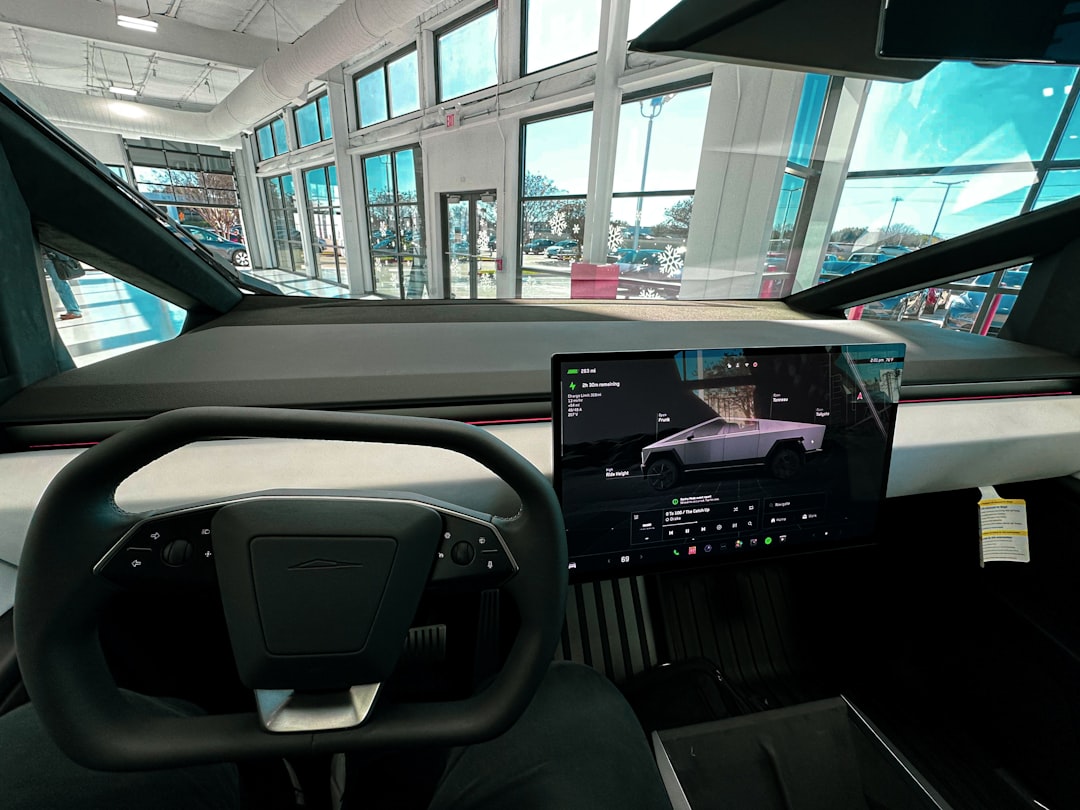
Nvidia builds tools and chips, while Tesla develops entire systems for autonomous vehicles. Here's what sets their approaches apart.
The race to dominate autonomous vehicle technology is becoming a fierce competition between industry giants Nvidia and Tesla. Both companies bring unique strengths to the table, but their approaches are fundamentally different. Nvidia is focusing on building tools, specifically chips and simulation platforms, while Tesla is developing end-to-end systems driven by an unprecedented scale of real-world driving data. These strategic differences could redefine the landscape of self-driving vehicles in the years ahead.
Nvidia's Focus on Tools and Partnerships
Nvidia's strategy centers around providing the hardware and software tools to enable autonomous driving. Their recent announcement highlighted partnerships with 19 automakers, including Mercedes-Benz, BYD, Hyundai, and Nissan. The company's Drive Hyperion platform and new "Thor" chips are being marketed as "robo-taxi ready," and Nvidia's simulation tools, such as Omniverse, aim to help train autonomous systems in virtual environments.
However, despite these partnerships, Nvidia's progress in real-world deployment remains limited. Few vehicles equipped with Nvidia's advanced chips, such as the Thor, are on the road today. Most of these automakers are targeting deployment dates around 2027, leaving Nvidia to focus on simulations and hardware design in the meantime. While AI-generated simulation data is valuable, it cannot replace the edge cases learned from billions of miles of actual driving experience.
The Role of Simulation vs Real-World Data
Nvidia's CEO Jensen Huang emphasizes the importance of simulation, stating that "real-world data will never be enough to train for every scenario." Simulations can generate AI data more efficiently, but critics argue that it lacks the fidelity and unpredictability of real-world driving data. This could be a critical limitation when companies try to develop Level 4 (highly autonomous) or Level 5 (fully autonomous) systems.
For instance, Nvidia's chips are currently being used for driver assistance systems in a few million vehicles. However, creating fully autonomous systems requires years of hardware integration, software refinement, and real-world training—an area where Tesla has a clear lead.
Tesla's System-Centric Approach
Tesla's strategy stands out because of its reliance on real-world data. The company has accumulated over 8.5 billion miles worth of autonomous miles driven by its fleet of nearly 9 million cars worldwide. This vast pool of driving data provides Tesla with a significant advantage in identifying and solving rare edge cases, which are crucial for building reliable autonomous systems.
Unlike Nvidia, Tesla controls every part of its ecosystem, from AI chips to software integration, giving it a higher degree of vertical integration. The company's Full-Self Driving (FSD) Beta system continuously learns from user inputs, disengagements, and real-world conditions—a feedback loop that Nvidia cannot replicate with its current simulation-heavy approach.
Hardware and Data: The Tesla Difference
While Nvidia primarily sells chips like the Thor to its partners, Tesla designs and produces its own AI chips, such as the custom-built FSD chip. This approach not only reduces Tesla's dependency on third-party suppliers but also allows for the seamless integration of hardware and software systems.
Tesla has already achieved significant milestones with its FSD solution. The company's autonomous vehicles are not confined to specific regions or routes—they operate globally, continuously gathering data from diverse driving environments. This expansive dataset is unmatched by competitors using Nvidia-based platforms, which have far fewer real-world miles in their databases.
| Feature | Nvidia | Tesla |
|---|---|---|
| Core Strategy | Building tools and chips | Full system integration |
| Deployment Timeline | Majority in pilot phase | Millions of cars worldwide |
| Real-World Data (miles) | Limited | 8.5 billion |
| Simulation Focus | High | Moderate |
| AI Chips | Thor, Drive Hyperion | FSD-specific AI chips |
The Bottleneck for Nvidia's Partners
One of the critical challenges Nvidia faces is the readiness of its automaker partners. Companies like BYD and Hyundai have announced ambitious plans to deploy autonomous vehicles using Nvidia's chips and simulation platforms. Yet, most are still developing or piloting their systems.
For example, BYD, one of Nvidia's partners, is only in the early stages of implementing these systems. Much of the work remains theoretical due to the time required to integrate Nvidia's technology into vehicles, produce hardware at scale, and deploy on real roads.
Meanwhile, leading autonomous players like Waymo, Baidu, and Tesla rely heavily on custom silicon chips and proprietary systems, bypassing Nvidia's solutions entirely. This trend suggests that Nvidia plays more of a supporting role for companies without in-house capabilities rather than directly competing for industry leadership.
The Future of Robo-Taxi Systems
Both companies aim to dominate the robo-taxi market but are far apart in readiness. Tesla is testing its unsupervised autonomous "Cybercabs," with plans to roll out in volume soon. Nvidia, on the other hand, is years away from seeing its partners deploy autonomous vehicles at scale.
Timing: A Defining Factor
Automakers using Nvidia's chips, like Mercedes-Benz, face multiple hurdles. Deploying high-level autonomous vehicles involves more than integrating hardware—it requires building data centers, gathering real-world data, and solving edge cases. Many of Nvidia's partners will begin scaling in 2027 at the earliest, a timeline that gives Tesla time to further consolidate its lead.
Practical Takeaways
- Data First: Real-world driving data remains the gold standard for developing reliable autonomous systems. Tesla's 8.5 billion miles offer a significant competitive advantage.
- Simulation vs Reality: While simulations can complement data, they cannot entirely replace the unpredictability of real-world driving scenarios.
- Vertical Integration Wins: Tesla's all-in-one approach, from chip design to deployment, allows for greater system optimization than Nvidia's hardware-centric model.
- Time Lag: Nvidia's partnerships may yield results down the road, but Tesla is already deploying at scale, giving it a head start in the robo-taxi market.
Conclusion: A Clash of Strengths
In the battle between Nvidia and Tesla, the difference lies in what each company is prioritizing. Nvidia is a leader in AI hardware, working to empower automakers with tools and chips. Tesla, meanwhile, has positioned itself as a complete system builder, with unmatched real-world data fueling its autonomous vehicle program. While Nvidia's simulation-heavy approach shows long-term promise, Tesla's practical deployment today puts it ahead in the race for autonomous driving dominance.
Staff Writer
Mike covers electric vehicles, autonomous driving, and the automotive industry.
Comments
Loading comments…


