Renault 4 E-Tech Electric: The French automaker proves electric cars can have personality
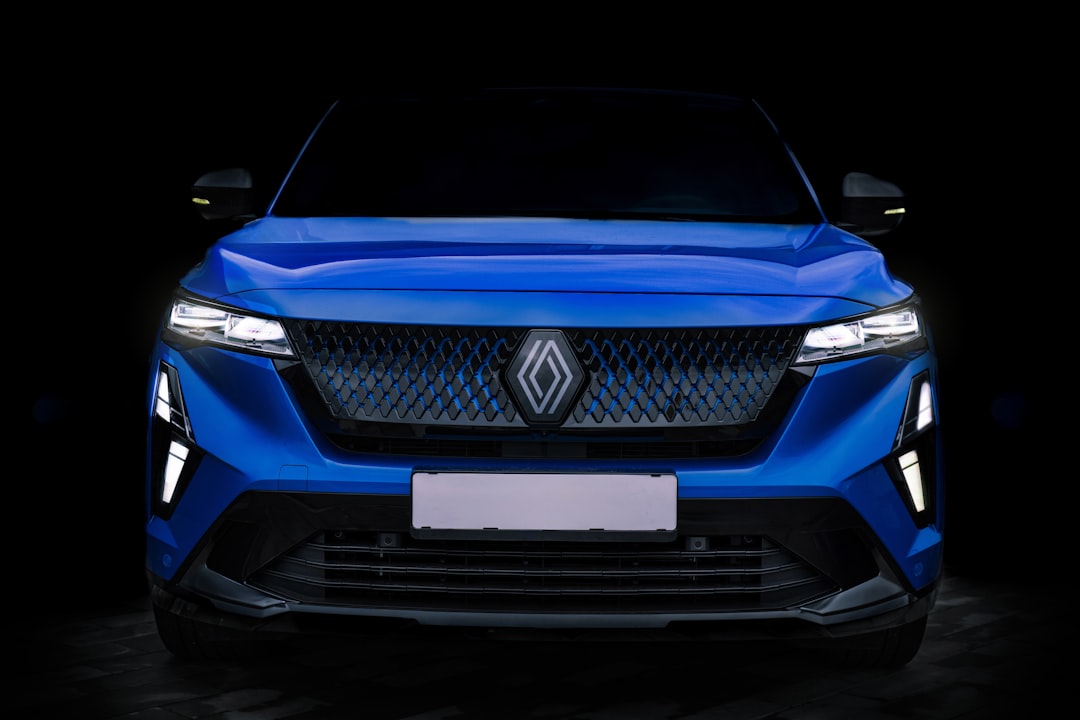
Renault's retro-styled R4 E-Tech Electric brings charm and practicality to the compact EV segment, proving that not all electric cars need to be boring.
The Renault 4 E-Tech Electric is not a car that jumps off the spec sheet. With 110 kilowatts (150 hp), a 52 kilowatt-hour battery, and a range of 409 kilometers, it sits comfortably in the middle of the compact EV class. It does not break any records for acceleration, charging speed, or efficiency. Yet Renault claims it does something no other manufacturer can: build an electric car with its own identity.
That claim came from an analysis by GO! Auto journalist Cyndie, who spent time with the new R4. She argued that while other automakers churn out electric vehicles that all look alike, Renault has found a way to make people care about a car before they even ask about its range or charging time. The secret is not a new battery chemistry or a revolutionary motor. It is a design philosophy that borrows heavily from the past, but does so without slipping into kitsch.
The cover version of an iconic song
Renault describes the R4 as a modern cover of an old song. The original Renault 4, produced from 1961 to 1992, was a practical, boxy, no-frills car that sold millions across Europe. The new one shares almost no mechanical parts with the original, but it deliberately echoes the proportions and styling of its ancestor.
The front end, the most recognizable part, pairs two headlights in a frame that mimics the old model's face, albeit with a sharper, more aggressive edge. The straight window line, the small third rear window, and the square wheel arches all carry over. Even the basic silhouette a long hood, a high, straight roofline to maximize rear headroom is a direct nod.
This kind of retro design can backfire. The PT Cruiser and the New Beetle proved that nostalgia alone does not sell cars. The difference, Cyndie argued, is that the R4 does not try to be a cartoon of the original. It updates the proportions for modern safety and aerodynamics, adds LED lighting, and keeps the design clean. The result is a car that looks familiar but not dated.
Practicality built in, not tacked on
The original R4 was famous for being small on the outside and big on the inside. The new version holds that promise. At just over four meters long, the R4 offers 420 liters of cargo space with the rear seats up and 1,405 liters with them folded down. That is more than many hatchbacks in the segment above. Rear legroom is decent for a compact car, though like most EVs, the raised floor angles the legs slightly.
Renault also offers a fabric folding roof on some trims, a feature that adds to the car's character and harks back to the open-air feeling of the original. It is a rare option in this segment and one that sets the R4 apart from more clinical rivals.
A family of emotional EVs
The R4 is not an isolated experiment. It follows the Renaulution design language first seen on the Renault 5, which won European Car of the Year in 2024. The R5 was the car that started drawing questions from people who never normally asked about electric cars, according to Cyndie. That emotional pull, she said, is what makes the R5 and now the R4 successful. They make people curious about driving, not just about charging.
Renault is building three compact electric models: the R5, the R4, and a new Twingo. All three lean into retro styling but each targets a different buyer. The R4 is the practical sibling, the one that can haul luggage or a stroller while still fitting into tight European city streets.
The company is also making a statement with the R5 Turbo 3E, an electric reinterpretation of the 1980s rally car. With 555 hp and rear-wheel drive, it is a ridiculous, joyous machine. Renault says it will be sold and road-legal, not just a concept. That kind of creative risk signals that the brand is having fun with electrification, not treating it as a regulatory burden.
The numbers that matter
For buyers who do care about specs, the numbers are competitive. The R4's 52 kWh battery delivers 409 kilometers on the WLTP cycle. A smaller 40 kWh version drops the range to roughly 300 km but brings the starting price under 30,000 Swiss francs. In Switzerland, the fully loaded version Cyndie drove costs just over 39,000 francs. That price puts it in direct competition with the Jeep Avenger, the Fiat 600e, and the upcoming Volvo EX30.
Power output of 110 kW is adequate for city driving and highway cruising. The car is not quick off the line, but that is not its purpose. The R4 is designed to be pleasant to drive in dense urban environments, where its small footprint and nimble handling matter more than acceleration figures.
What Renault understands that others miss
Cyndie made a point that resonates beyond this one car: electric cars do not all have to be big, heavy, and look the same. Many manufacturers, especially legacy automakers, have rushed to market with generic crossovers that prioritize aerodynamics over identity. The result is a sea of similar shapes and a customer base that struggles to feel excited.
Renault has done the opposite. By looking to its own history, the company found a design language that evokes emotion without sacrificing practicality. The R5 and R4 prove that you can build a modern, efficient EV and still make people smile. That emotional connection, Cyndie argued, is harder to achieve than any range target.
Should you buy one?
If you want the absolute longest range or the fastest charging, the R4 is not the car for you. If you want something that stands out in a parking lot, that feels fun to drive even at low speeds, and that makes you remember the feeling of owning a car rather than just operating an appliance, the R4 deserves a look.
Renault is betting that enough buyers care about character to make the R4 a success. Given the R5's reception, that bet looks smart. The electric car bubble, as Cyndie called it, the bubble where only enthusiasts talk about battery chemistry and kilowatt-hours may be bursting. The R4 is the kind of car that could help pop it.
Where the R4 fits in the bigger picture
The R4 is also a statement about European car design. Cities in Europe are cramped, parking is tight, and many households cannot afford or accommodate a large SUV. Compact electric cars make sense. But until now, the segment was full of compromises: cramped rear seats, dreary interiors, or short ranges. The R4 avoids most of those pitfalls while adding a dose of charisma.
Renault has a longer history with compact EVs than almost anyone. The Zoe launched over 15 years ago and was a genuine effort to build a small, fun electric car, not just a compliance vehicle. The R4 and R5 are the heirs to that legacy, but they bring a level of polish the Zoe never had.
The bottom line
The Renault 4 E-Tech Electric proves that a car can be sensible and still have soul. It does not chase specs; it chases smiles. That is a risky strategy in a market obsessed with numbers, but it is one that could pay off. If you measure a car by its ability to make you want to drive it, the R4 is one of the best compact EVs on sale today.
Staff Writer
Nina writes about new car models, EV infrastructure, and transportation policy.
Comments
Loading comments…


