Tesla Expands Robotaxi Rollout Across Multiple U.S. Cities
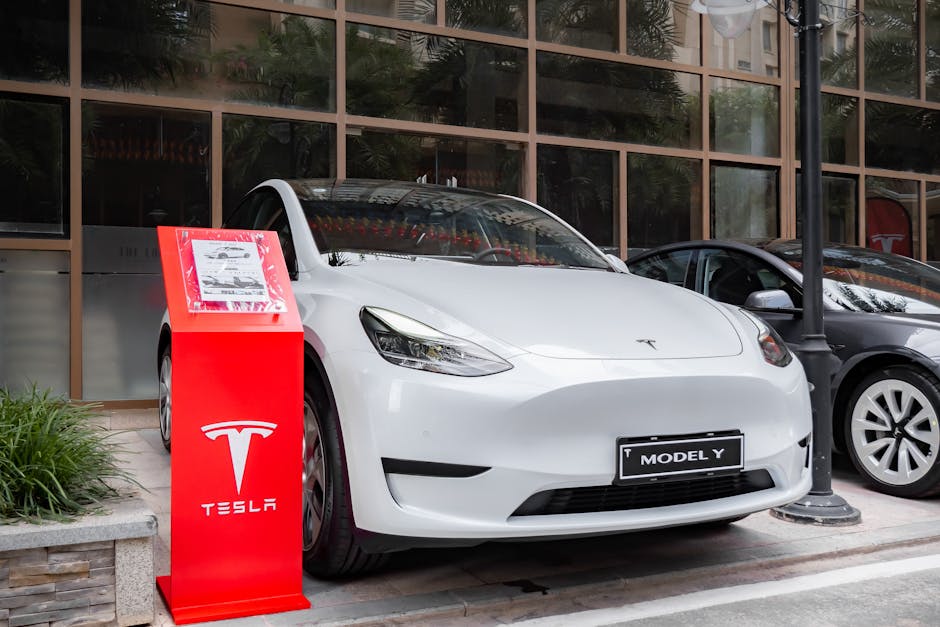
Tesla's robotaxi program accelerates with new sightings in Phoenix, Dallas, and more, pointing to a mass rollout strategy.
Tesla’s ambitious robotaxi program, long in development, appears to be approaching large-scale deployment. Recent events suggest that the rollout is no longer limited to a gradual city-by-city approach. Instead, Tesla seems poised for simultaneous launches in several major metropolitan areas, indicating a significant push to expand its fleet and operational capacity.
Rapid Expansion of Tesla Robotaxi Sightings
Four Cities Confirmed for Deployment
Over the last week, fleets of Tesla Model Ys equipped with rear camera washers were spotted in multiple cities, including Phoenix, Arizona; Dallas, Texas; Orlando, Florida; and Las Vegas, Nevada. These sightings come as part of Tesla’s strategy focused on seven metropolitan areas slated for upcoming robotaxi operations.
According to reports, these Tesla vehicles are sporting California manufacturing license plates, suggesting consistency in production quality and origin for the program. The additional hardware on the Model Ys, such as rear camera washers, further pinpoints their specific function within Tesla’s autonomous driving framework.
A Growing Fleet
In a key development, Tesla’s robotaxi fleet now includes 519 active vehicles, marking the largest weekly increase since the program’s creation. The current growth rate is approximately 8.2% week-over-week. Although numbers from third-party trackers may undercount due to manual reporting delays, the increase represents a pivotal moment for scaled deployment.
"This week marked the most significant growth of the robotaxi fleet," noted Tesla enthusiasts analyzing the data. With Tesla gaining traction in its home markets, the program seems primed for further expansion.
Why Tesla is Simultaneously Preparing Multiple Cities
Strategic Rollout vs Gradual Deployment
Tesla’s strategy deviates from the traditional approach of gradual, incremental city-by-city expansion. Instead, the company is preparing several cities simultaneously. Why this shift?
- Hardware Readiness in Austin: Austin acts as a manufacturing hub for Tesla’s autonomous hardware, including the Cybercab and Model Ys equipped for self-driving.
- Software Refinement in the Bay Area: Advanced software development and full self-driving (FSD) testing are centered in the Bay Area.
Once initial trials around Austin and the Bay Area achieve satisfactory benchmarks—including safety thresholds—Tesla appears ready to replicate its model in other cities. Cities with warmer, drier climates like Phoenix and Las Vegas have likely been prioritized to minimize operational hurdles such as adverse weather.
Balancing Supervised and Unsupervised Driving
Tesla’s robotaxi program integrates supervised and unsupervised driving. Initial deployments in new cities will include human supervisors as Tesla accumulates operational data. Over time, the ratio of supervised to unsupervised vehicles will shift as confidence in the system grows in real-world conditions.
Tesla plans to manage this transition gradually, negating a sudden leap to full autonomy across its fleet. This staggered approach ensures safety while building trust with regulators and the public.
The Mystery Vehicle at Giga Texas
Is the Model Y L the Next Key Model?
While much attention surrounds robotaxis, another interesting development involves a mystery vehicle spotted at Tesla’s Gigafactory in Texas. Delivered crated and partially veiled, the vehicle instantly sparked widespread speculation. Observers noted that its proportions appeared to be larger than a standard Model Y, with some pointing to a potential U.S.-specific Model Y L, possibly designed as a six- to seven-seater configuration.
The Model Y L, if confirmed, could bridge the gap between the popular Model X and the current Model Y. By extending the chassis and offering increased interior space, Tesla may be addressing market demand for an affordable, versatile family option, particularly as the Model X undergoes production changes. Analysts also speculate that this larger vehicle could play a role in Tesla’s robotaxi program due to its adaptable interior space.
Some indications suggest that the crated components might have originated from Tesla’s Shanghai factory, shipped to Giga Texas for evaluation and production setup. If true, the Model Y L could soon debut as part of Tesla’s expanding U.S. lineup.
Full Self-Driving Advances
Progression Toward Software Version 14.3
Ongoing software refinement remains critical to Tesla’s push for robotaxis. The much-anticipated rollout of FSD software version 14.3 appears to be a key milestone. Internal testing by Tesla aims to validate performance metrics and resolve remaining edge-case scenarios.
Production timing for robotaxi fleet additions, as well as the hiring of operators and safety monitors, aligns closely with these software updates. Once the software demonstrates improved incident rates and overall reliability, Tesla’s strategy calls for rapid scalability across its selected cities. According to insiders, the key decisions to deploy hardware and human resources stem from data benchmarks at critical system maturity stages—approximately three weeks before release.
Takeaways for Tesla and the Industry
A Controlled but Accelerated Rollout
Tesla’s approach emphasizes preparation and confidence in incremental performance gains rather than hastening to fully unsupervised driving. By spanning multiple cities at once, the company balances growth aspirations with operational caution. This method ensures lessons from one market can be quickly applied to others.
- Cities like Phoenix and Las Vegas fit perfectly into this strategy due to their favorable driving conditions.
- Scaling the robotaxi fleet is directly tied to the validation of Tesla’s FSD technologies.
A Glimpse of What’s Next
The simultaneous preparation of four cities aligns with Tesla’s long-stated ambition to streamline operations and leverage its existing platforms, like the Model Y. Alongside mysterious developments—like the potential introduction of a Model Y L—the coming months could mark significant transformation not just for Tesla but the transportation landscape as a whole.
FAQ
What features distinguish Tesla’s robotaxi Model Ys?
The robotaxi-specific Model Ys are equipped with unique hardware, including rear camera washers, to enhance automated driving functionality. These vehicles also prominently feature California manufacturing plates, linking them to Tesla’s Fremont production line.
Why is Tesla prioritizing cities like Phoenix and Dallas?
Cities with warm, dry climates reduce weather-related challenges, making them ideal for initial deployments. These regions also align with Tesla’s operational focus on seven key metro areas.
What is the Model Y L?
The Model Y L, speculated to be a larger version of the standard Model Y, could offer six- or seven-seater configurations. This variant appears tailored to the U.S. market, possibly filling the space left by Tesla’s reduced production of the Model X.
How fast is Tesla’s robotaxi fleet growing?
Recent data indicates that Tesla’s fleet grew by 8.2% in one week, making it the largest weekly growth recorded thus far. Tesla is scaling production and deployment rapidly to meet its strategic goals.
Staff Writer
Mike covers electric vehicles, autonomous driving, and the automotive industry.
Comments
Loading comments…


