Tesla FSD 14.3: A Major Step Towards Robotaxi Viability
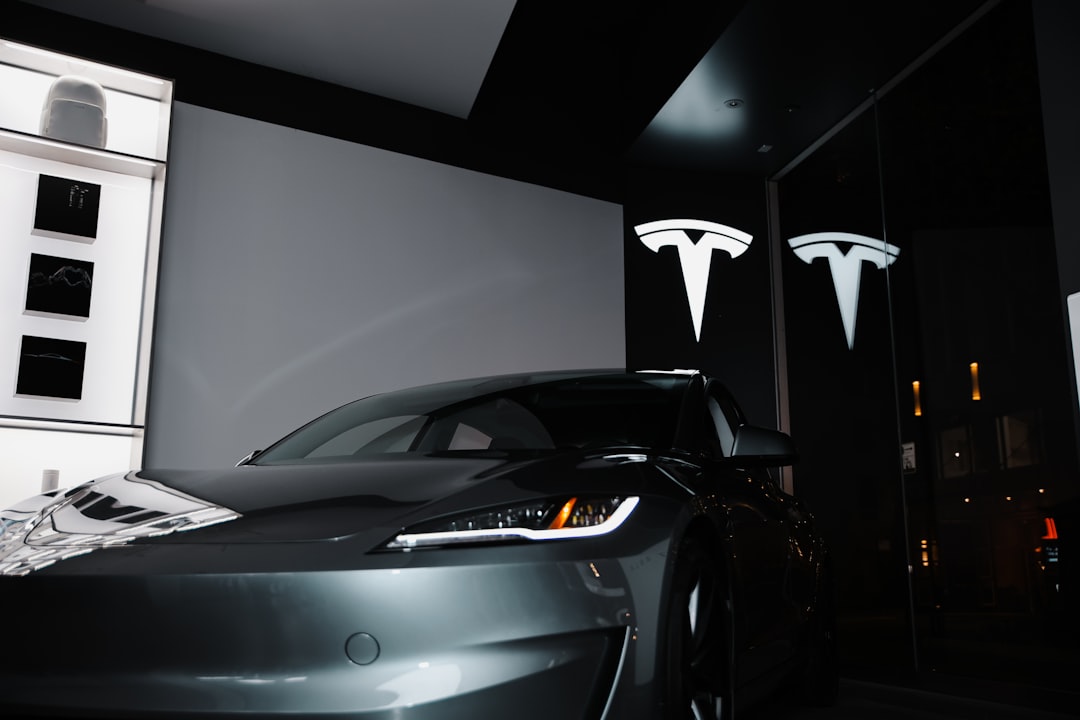
Tesla FSD 14.3 marks a significant turning point, integrating advanced reasoning and bridging AI from XAI toward full autonomy for robotaxi deployment.
FSD 14.3: What It Means for Tesla's Autonomy Goals
Tesla’s Full Self-Driving (FSD) Beta has always been a focal point for autonomous vehicle technology, and the upcoming FSD 14.3 update signifies a definitive iteration in this journey. Historically, FSD updates have introduced incremental features, but 14.3 aims to go beyond surface improvements to redefine the way Tesla vehicles handle complex reasoning. With Elon Musk confirming that FSD 14.3 is "in testing" and expected in the coming weeks, this release aligns with broader objectives like Tesla's robotaxi ambitions.
The core innovation in FSD 14.3 lies in a new "reasoning layer," a foundational improvement that integrates capabilities from Tesla's AI arm and Musk’s XAI initiative. This architectural update shifts away from a traditional vision-photon-response model toward systems that enable Tesla vehicles to "reason" and make sophisticated real-time decisions autonomously.
The Engineering Behind the FSD 14.3 Leap
Integration With XAI Technologies
Tesla’s alignment with Musk’s other enterprises, particularly XAI, is central to the development of FSD 14.3. Specifically, the FSD stack leverages reasoning tokens, first discussed by Tesla AI Vice President Pashak Elwamai. These tokens allow the AI to introspect and explain its decisions like why it chose to run a yellow light or take an unexpected route. Ultimately, this improves transparency and debugability.
More critically, discussions suggest an internal collaboration wherein Tesla could adopt smaller versions of XAI's large language models (LLMs) as a reasoning layer within the FSD system. These models extend beyond pattern recognition to enable contextual decision-making. For instance, if a Tesla needs to find an optimal pickup point or navigate around dynamic obstacles, the reasoning layer can approach these situations adaptively rather than following rigid rules.
Adaptive Planning and Problem-Solving
The capability to plan dynamically is one of FSD 14.3’s potential breakthroughs. The new version integrates holistic decision-making processes to improve upon past areas of struggle like nuanced urban navigation and pinpointing safe pickup/drop-off locations for Tesla’s future robotaxis. A centralized "planner" delegates tasks more efficiently, making the system smarter about recognizing complex scenarios, such as variable road layouts or crowded event drop zones.
These changes also reflect Tesla’s iterative approach discussed in their internal FSD roadmap. The roadmap evolves constantly based on development hurdles, emphasizing the consolidation of features in fewer, more impactful releases. While this increases development time, it ensures critical updates align with Tesla’s high safety and reliability standards.
Why the Transition Toward Reasoning Matters
Safer and Smarter Decisions
Car accidents—a present-day limitation of Tesla’s FSD—underscore why reasoning is essential for autonomy. Musk’s team is addressing scenarios where the system might perform well under ordinary conditions but fails to generalize well in uncommon or challenging situations. As of now, parking lot mishaps and low-speed collisions due to insufficient spatial reasoning highlight areas ripe for AI-first problem solving.
This concept of layered reasoning ties into Musk’s broader vision to make Tesla vehicles safer and more efficient than human drivers. By understanding why the system makes specific decisions, engineers can improve the software incrementally instead of relying on trial-and-error fixes.
Steps Toward Robotaxi Deployment
FSD 14.3 is also intentionally linked with Tesla’s anticipated robotaxi rollout, beginning potentially with Austin. The new update has been tailored to tackle service-level AI—a fleet capable of dynamic route planning, managing real-world users, and solving "last-mile" challenges, such as safe boarding and disembarking zones.
Unlike ride-hailing services like Uber, Tesla’s approach aims to embed problem-solving directly into the car’s logic. This reduces dependence on centralized dispatching systems, thereby offering a more autonomous and scalable solution.
The “Production Timing” Factor
With Tesla’s Cybertruck (or “cyber cab”) entering production in early 2024, Elon Musk appears to align this release with a larger strategic goal. Cybertruck prototypes rolling out from Texas GigaFactory represent a futuristic platform for Tesla’s intended robotaxi fleet, combining rugged design with cutting-edge software.
The simultaneous FSD 14.3 introduction and Cybertruck release suggest early deployment scenarios will focus on relatively controlled environments: likely urban centers such as Austin. These trial runs will test the critical features of reasoning-enabled driving in conditions Tesla cannot wholly control, ultimately ensuring that a finalized platform delivers on both performance and safety.
Challenges Ahead
Adopting reasoning layers adds computational complexity. Tesla must ensure that these systems run efficiently on the existing "AI4 chips" inside vehicles. Memory loading constraints, validation cycles, and other high-safety engineering magnitudes remain hurdles Tesla’s team cannot ignore.
Moreover, managing public perception poses a significant challenge. Delays or unrealized promises often lead to accusations of inconsistency. For many, Musk’s transparency about roadmap pivots is refreshing; for others, it raises questions about over-promising.
Practical Implications of FSD 14.3
If you are a Tesla owner, FSD 14.3 won’t just tweak lane-changing or parking. Here’s what users can look forward to directly:
- Improved confidence in urban navigation: Reasoning-focused updates address Tesla’s biggest failure points.
- Smoother autonomous pickups/drop-offs: Essential for future robotaxis.
- Adaptable behavior under unusual scenarios: Those tricky intersections may soon become less of an issue.
Final Thoughts on Tesla FSD 14.3
Tesla FSD 14.3 represents one of the most critical steps toward unlocking unsupervised autonomy. Blending XAI’s reasoning models into the Tesla AI stack sets the stage not just for safer rides but also for scalable, fully autonomous fleets. With its integration into Cybertruck-based robotaxis slated for rollout as early as April 2024, this update captures the spirit of Tesla’s autonomous future in a tangible form.
While hurdles remain—both in validation and public trust—the capacity for Tesla’s software to "reason" about its environment rather than simply responding to it may very well redefine the competitive landscape of autonomous driving.
Staff Writer
Nina writes about new car models, EV infrastructure, and transportation policy.
Comments
Loading comments…


