Tesla FSD 14.3: What To Expect From the Upcoming Update
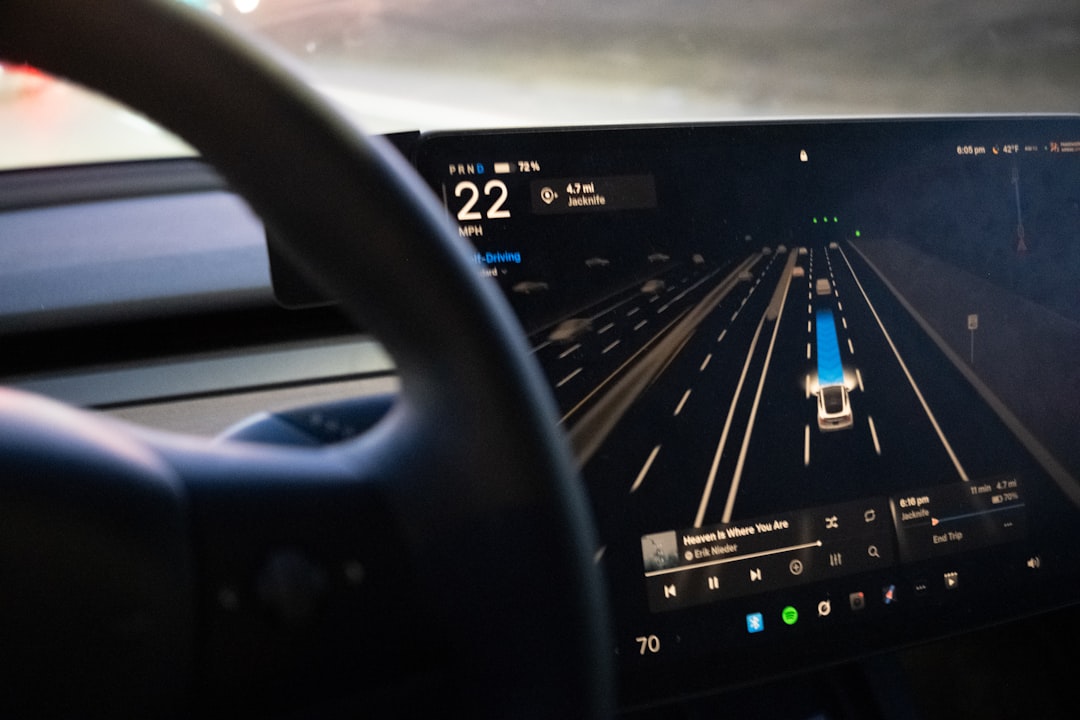
Tesla's FSD 14.3 update promises significant enhancements, including smarter navigation, improved reasoning, and the long-awaited 'Banish' feature.
Tesla FSD 14.3 Update: Smarter, Faster, and More Autonomous
Tesla is gearing up to release its latest Full Self-Driving (FSD) update, version 14.3, an upgrade Elon Musk has hinted at for months. While prior updates have brought enhanced capabilities to the automaker’s controversial FSD feature, 14.3 is expected to be a step closer to an autonomous-driving experience that feels almost "sentient," as Musk claims. Here's what Tesla drivers can expect from the forthcoming update, which could potentially address common user frustrations and introduce new tools to make FSD safer and more efficient.
The Long-Awaited 'Banish' Feature
One of the most anticipated aspects of this update is the potential inclusion of 'Banish.' This long-promised feature would allow a Tesla vehicle to drop the driver off near a store entrance, drive away to park itself, and return automatically when summoned. While Tesla vehicles currently do offer a Summon feature, drivers often complain that it is slow and prone to errors in busy or complex parking lots.
The goal of 'Banish' is to refine this process, eliminating the need for a driver to manually navigate parking scenarios, which can be extremely useful during inclement weather or in crowded lots. While promising on paper, Tesla’s Smart Summon has struggled to gain widespread trust, with users reporting hiccups such as random halts or awkward routing decisions. If implemented successfully, 'Banish' could be a game-changer for the FSD suite.
Smarter Navigation and Dynamic Reasoning
Tesla’s FSD system already incorporates real-time reasoning to make driving decisions, but navigation has continued to be a weak point. Tesla owners frequently report navigation errors ranging from incorrect turns to inexplicable routing decisions. For example, instances where the system turns right instead of left—without any visible obstacle or road change to justify the deviation—have raised concerns about the reliability of the current mapping system.
The 14.3 update aims to make significant strides in navigation by improving real-time reasoning capabilities rather than relying heavily on rigid map data. This promises better handling of construction zones, roadblocks, and other unexpected scenarios. In testing, some drivers have reported smoother transitions and fewer delays at intersections, showcasing improvements in the system's decision-making speed. Whether this update will resolve long-standing issues with mapping errors remains to be seen.
Enhancing Interactions with Edge Cases
One of the major hurdles of self-driving systems is their ability to handle edge cases—rare or nuanced driving scenarios that require split-second judgment. Tesla has made strides in recent updates, as demonstrated in practical situations like road construction areas or interactions with hand-held stop signs. The FSD system’s ability to recognize and respond to dynamic changes in its environment, such as a person switching a stop sign from ‘Stop’ to ‘Slow,’ has improved noticeably.
Tesla aims to refine these edge-case decisions further with FSD 14.3, which could play a vital role in increasing user confidence in the system. However, it is critical to monitor how well these updates translate to real-world conditions where infinite variability exists.
Improved Parking Features and User Customization
Another key focus for FSD 14.3 is enhanced parking functionality. Currently, Tesla vehicles can park themselves in marked spots, but the process is limited. For example, cars may choose random spots or fail to consider user preferences, such as proximity to a store entrance versus a quieter area further away.
Drivers have voiced their desire for greater customization in parking behaviors. Suggestions include the ability to instruct the car to avoid parking next to older, potentially overhauled vehicles or to dynamically adjust based on environmental factors such as the weather. The upcoming parking updates in 14.3 are expected to give users more control, offering flexibility for various parking scenarios.
Performance and Safety Upgrades
Elon Musk has touted the FSD 14.3 update as a significant milestone, with some speculating it will lay the groundwork for the eventual rollout of version 15. The latter is expected to reach Musk’s ambitious goal of being “10 times safer than human drivers,” although industry experts believe Tesla is still far from achieving this.
The incremental safety and performance improvements in version 14.3 could signal readiness for easing regulatory constraints. For example, Tesla’s cars have already softened the “nag” feature that prompts drivers to confirm their vigilance at the wheel. While safety regulations still govern such features, increased trust in FSD capabilities could lead to more liberal settings in time.
Faster Decision-Making and Refined Dynamics
Another area of improvement Tesla enthusiasts expect with FSD 14.3 is faster, more responsive decision-making during tasks like merging at intersections or resuming from a full stop. Recent iterations of FSD have shown progress in these areas, with the system demonstrating quicker reactions at stop signs and smoother acceleration. These seemingly minor tweaks contribute to a more natural and human-like driving experience.
FAQs on Tesla's FSD 14.3 Update
1. What is Tesla’s 'Banish' feature? Banish allows the car to drop off passengers near the entrance, park itself, and return when summoned. This feature has been in development for years and may finally arrive with FSD 14.3.
2. Will FSD 14.3 improve parking efficiency? Yes, the update is expected to include new parking features, such as enhanced customization for parking preferences and better handling of tight spaces.
3. How does FSD 14.3 handle mapping issues? The update shifts more focus to real-time reasoning, reducing dependence on outdated maps. This aims to improve dynamic navigation in environments where road construction or other temporary changes occur.
4. Is the FSD nag feature being removed? No, the nag feature will remain due to safety regulations, but it may be reduced further with 14.3 to offer a more relaxed driving experience while keeping the driver engaged.
5. What are the biggest challenges of FSD systems? Handling edge cases like unusual road situations, complex traffic scenarios, and rapidly changing conditions remains one of the biggest hurdles for FSD development.
What to Watch For in Tesla FSD 14.3
While Tesla has often teetered between ambitious promises and execution realities, there’s significant enthusiasm surrounding the improvements slated for FSD 14.3. If the update delivers, Tesla drivers could enjoy smarter navigation, better parking capabilities, and a more refined autonomous experience. As always, the true test will be how well these upgrades perform in real-world traffic—especially in less predictable conditions.
Tesla owners and prospective buyers alike will want to keep an eye on early user reports to gauge how transformative—or incremental—these advancements will be.
Staff Writer
Nina writes about new car models, EV infrastructure, and transportation policy.
Comments
Loading comments…


