Waymo Leads the Way in Transparency as Tesla Faces Full Self-Driving Investigation
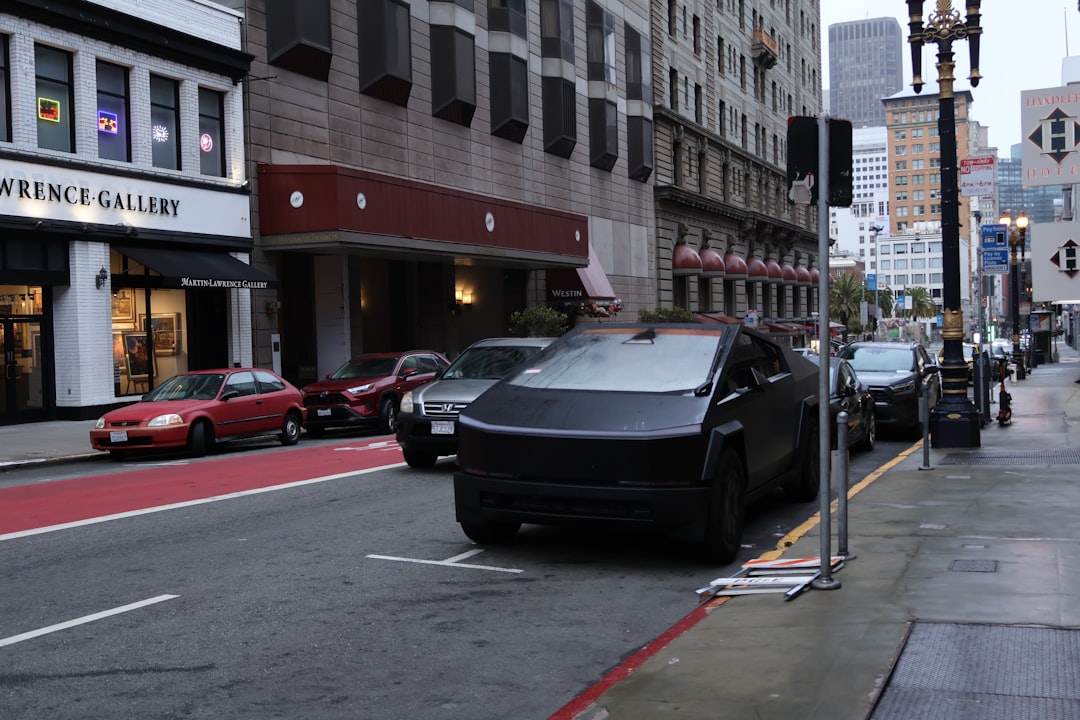
Waymo's new safety report highlights its strides in autonomous vehicle safety, while Tesla faces heightened scrutiny over its Full Self-Driving system.
As autonomous vehicle technology evolves, two major players in the industry, Waymo and Tesla, are taking very different approaches to safety and transparency. Waymo has released a detailed safety report showcasing significant reductions in accidents and injuries, signaling its commitment to public trust. Meanwhile, Tesla finds itself under an upgraded investigation by the National Highway Traffic Safety Administration (NHTSA) concerning its Full Self-Driving (FSD) system.
This sharp contrast highlights how data transparency and regulatory compliance could shape the future of self-driving technology.
Waymo’s Safety Report: A Lesson in Transparency
Waymo’s recently published safety report presents extensive data on its autonomous vehicles’ performance. The report emphasizes Waymo’s dedication to enhancing public trust by sharing rider-only miles driven, crash statistics, and comparisons with human drivers.
By the end of 2025, Waymo’s vehicles had autonomously driven 170.7 million miles without human drivers onboard. The breakdown of these miles is as follows:
- Phoenix: 68.5 million miles
- San Francisco: 53.1 million miles
- Los Angeles: 38 million miles
- Austin: 11 million miles
Significant Crash Reductions
Waymo’s safety report highlights major safety improvements over human drivers. Key statistics include:
- 92% fewer crashes resulting in serious injuries or worse.
- 82% fewer crashes causing injuries overall, totaling 544 fewer incidents.
- 85% reduction in cyclist injury-related crashes (39 fewer accidents).
- 92% reduction in pedestrian injury crashes (62 fewer cases).
Particularly striking are the statistics on vehicle-to-vehicle intersection crashes, which decreased by 96%. Intersections are among the most dangerous driving environments, making this data a notable achievement.
City-Specific Insights
Waymo’s report also dives into nuances by geography:
- San Francisco: The data reveals a high rate of crashes involving human drivers, especially serious injuries.
- Austin: Despite lower injury rates, Austin sees higher instances of airbag deployments, suggesting more severe collisions when accidents occur.
Waymo cars demonstrate incredible reliability under varying conditions, with nearly 43% of reported collisions being minimal-impact incidents (resulting in less than one mile per hour of velocity change).
Waymo’s release of detailed statistics is not just good optics—it’s a clear commitment to transparency. While no system is perfect, Waymo is providing the public and regulators alike with a considerable level of detail, bolstering trust in its technology.
Tesla Under Scrutiny: NHTSA Upgrades FSD Investigation
Tesla, on the other hand, faces mounting regulatory pressure as NHTSA upgraded its probe into 3.2 million vehicles equipped with its Full Self-Driving software. The investigation aims to pinpoint failures in Tesla’s camera-based FSD system, such as detecting poor visibility conditions caused by sunlight, rain, fog, or dust.
Tesla had previously combined cameras and radar for its driver assistance systems but transitioned to a camera-only approach known as Tesla Vision in mid-2021. NHTSA is now focusing on the efficacy of Tesla Vision, particularly in degraded visibility scenarios. The key issues identified include:
- FSD’s inability to detect lead vehicles in poor visibility.
- Delayed or inadequate warnings about deteriorating camera functionality.
- 15 verified incidents under review, including one fatality and two crashes causing injury.
Engineering Review: A Step Toward Recalls?
While the incidents being investigated are low in number relative to the millions of Tesla miles driven, the outcomes are critical. NHTSA’s escalation to an engineering analysis is a necessary step before pursuing recalls. The agency is also investigating wider behavioral issues within FSD systems, including reported traffic law violations.
Recent data suggests that Tesla’s software may have exhibited unsafe behaviors, like failure to comply with traffic regulations. Whether related to speeding with traffic flow or more serious issues like ignoring red lights, this raises concerns about Tesla’s readiness to roll out a fleet of autonomous vehicles.
Why Transparency Matters
Waymo’s decision to publish its safety report openly contrasts sharply with Tesla’s relative opacity in sharing FSD performance data publicly. Tesla’s quarterly reports contain minimal data, mainly offering a high-level comparison of crash rates for Tesla vehicles against national averages. This lack of depth makes it harder for regulators and the public to assess the real-world safety of Tesla’s systems.
Lessons from Waymo
Waymo’s safety report represents not just a statistical record but a public relations win. By illustrating improvements in crash reduction and vulnerability protection (such as for cyclists and pedestrians), Waymo builds public confidence. Tesla could benefit from adopting a similar approach, especially as scrutiny around its FSD software intensifies. Presenting detailed crash statistics and safety benchmarks would help Tesla reassure regulators and potential passengers that its technology is genuinely safe.
Practical Implications
For Tesla to stay competitive, transparent reporting could play a pivotal role in gaining both public trust and regulatory approval. Supplying clear, understandable crash data, such as benchmarks for reduction in injuries and airbag deployments, might also provide compelling evidence for the safety of its FSD features. Importantly, transparency would further align with regulators’ goals of ensuring safer roads.
The Road Ahead
While Waymo and Tesla take divergent paths, both face the same overarching question: how to convince the public and regulators that autonomous vehicles are safe. Waymo appears to be setting a strong standard in transparency, emphasizing measurable safety impacts and open dialogue. Tesla, on the other hand, has an opportunity to step up its own efforts before public skepticism or regulatory actions impact its ambitions for FSD and autonomous taxis.
Whether Tesla follows Waymo’s lead remains to be seen, but in an increasingly scrutinized industry, transparency could be the most valuable feature of all.
Staff Writer
Nina writes about new car models, EV infrastructure, and transportation policy.
Comments
Loading comments…


