Artemis II: NASA Prepares for Humanity's Return to the Moon
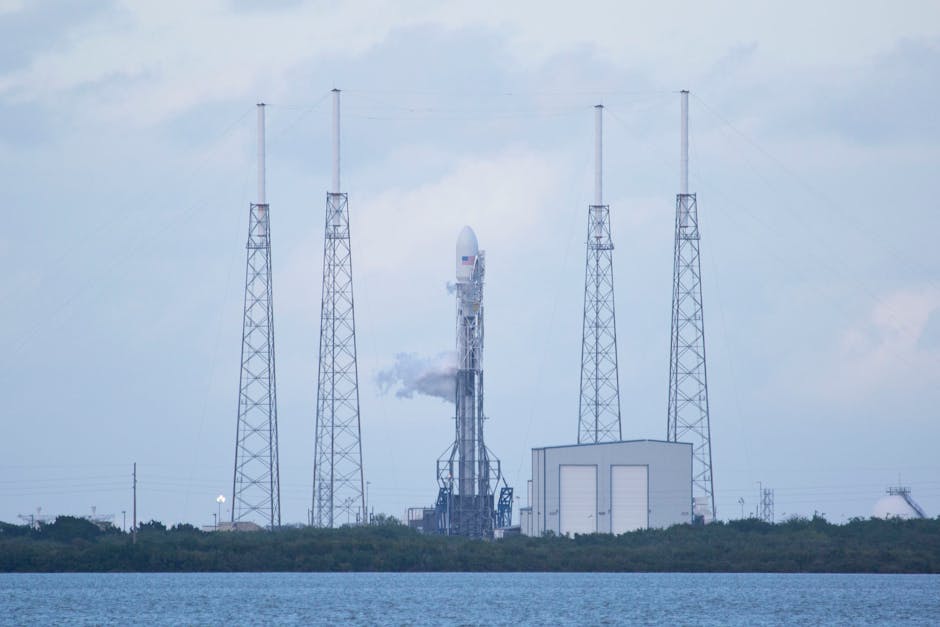
NASA's Artemis II mission sets the stage for a historic return to the Moon, with four astronauts testing systems for future lunar landings.
NASA's Artemis II mission, slated for 2026, represents the next major step in humanity’s space exploration journey. Following the uncrewed success of Artemis I, Artemis II will be the agency's first crewed mission to approach the Moon in over five decades. This landmark flight promises advancements in technology, international collaboration, and the groundwork for future lunar landings.
Major Objectives of Artemis II
Artemis II aims to be more than a simple orbital test. The mission will send a crew of four astronauts on a 10-day journey, slingshotting around the Moon before returning to Earth. This flight will test critical systems aboard the Orion crew spacecraft and the Space Launch System (SLS), ensuring their readiness for further lunar landings such as Artemis III, planned for later in the decade.
Key objectives include:
- Verifying Orion’s life-support systems
- Testing manual flight systems and controls
- Performing rigorous systems checks in lunar orbit
- Collecting data for spacecraft certification for future crewed missions
This mission serves as a prelude to establishing a sustainable human presence on the Moon.
Artemis II Crew Roster
The Artemis II team consists of three NASA astronauts and one Canadian astronaut, reflecting international partnership. Each has a unique background that contributes to the mission’s goals:
- Reed Wiseman (Commander): A former Navy fighter pilot and chief of the Astronaut Office, Wiseman spent 165 days on the International Space Station in 2014.
- Victor Glover (Pilot): A U.S. Navy veteran and flight engineer from the Crew-1 mission, Glover brings substantial experience in space operations.
- Christina Koch (Mission Specialist): Holder of the record for the longest single spaceflight by a woman (328 days), Koch also participated in the first all-female spacewalk.
- Jeremy Hansen (Mission Specialist): A Canadian astronaut and former fighter pilot, Hansen will become the first Canadian to fly to the Moon.
Upgraded Spacecraft and Systems
Orion Crew Capsule
The Orion spacecraft has undergone significant upgrades following the lessons learned from Artemis I. It is 33% larger than the Apollo capsules and is powered by solar energy rather than batteries. Inside, the capsule offers room for four astronauts, who will spend the entire mission within its compact confines—roughly the size of a minivan.
Key features include:
- Improved Heat Shield: Addressing challenges from Artemis I’s reentry, NASA updated the heat shield to better withstand atmospheric conditions.
- Solar Power System: Orion now relies on solar energy, aiding long-duration missions.
- Automation: While capable of autonomous flight, Orion allows manual control by the astronauts if necessary.
Space Launch System (SLS)
Artemis II’s SLS is the most powerful rocket NASA has ever built, generating 8.8 million pounds of thrust at launch. It is 15% more powerful than the Saturn V rockets used during the Apollo program. With its reusable core technologies, including solid rocket boosters adapted from the Space Shuttle Program, the SLS is designed to transport astronauts and heavy payloads into deep space.
Training for the Artemis II Astronauts
The Artemis II crew has undergone extensive training to prepare for the mission's challenges. Key aspects of their regimen include:
- Hours in the Orion simulator, rehearsing cockpit procedures
- Training in confined spaces to adapt to Orion’s limited interior
- Physical conditioning to prepare for the rigors of spaceflight
- Neutral-buoyancy lab sessions simulating extravehicular activities (EVAs)
The focus is not only on technical performance but also on teamwork, ensuring smooth collaboration in an environment with minimal personal space.
International Collaboration: Canada’s Contribution
Artemis II highlights NASA's growing international partnerships, with Canada playing a key role in the mission. Canadian astronaut Jeremy Hansen’s inclusion signifies Canada’s long-standing cooperation with NASA. Canada is also developing robotics for future Artemis missions, including contributions to the Lunar Gateway project.
Apollo Lessons and Lunar Advances
NASA has drawn heavily from the Apollo program to refine the Artemis missions. For example:
- Artemis rockets are more powerful than Apollo’s Saturn V.
- Orion’s systems are designed for sustainability, aiming for long-term lunar presence.
- Artemis focuses on international contributions and preparing for eventual missions to Mars.
A New Space Race?
The 21st-century lunar exploration effort is not occurring in a vacuum. China has announced plans to send astronauts to the Moon as early as 2030, increasing pressure on NASA to maintain its leadership in space exploration. The Artemis program, particularly with the involvement of private companies like SpaceX (developing the Starship lunar lander) and Blue Origin, is seen as critical in this new space race.
Practical Takeaways
For those tracking Artemis II, here are the mission's essentials at a glance:
| Factor | Details |
|---|---|
| Mission Timeline | 10 days |
| Crew Members | 4 astronauts |
| Distance Traveled | Over 460,000 miles |
| Spacecraft | Orion |
| Rocket | Space Launch System (SLS) |
| Key Systems Tested | Life-support, manual controls, heat shield |
Artemis II: Charting the Path Forward
The Artemis II mission brings renewed focus to ambitious planetary exploration goals. With a carefully chosen crew, enhanced technology, and extensive training, NASA is once again pushing the boundaries of possibility.
This mission doesn’t just pave the way for Artemis III and a lunar landing in 2028—it represents humanity’s commitment to exploring our solar system and beyond. Returning to the Moon is no longer just a dream; with Artemis, it’s becoming a reality.
Staff Writer
Daniel reports on biology, climate science, and medical research.
Comments
Loading comments…


