Inside NASA's Vehicle Assembly Building: Where Rockets Are Born
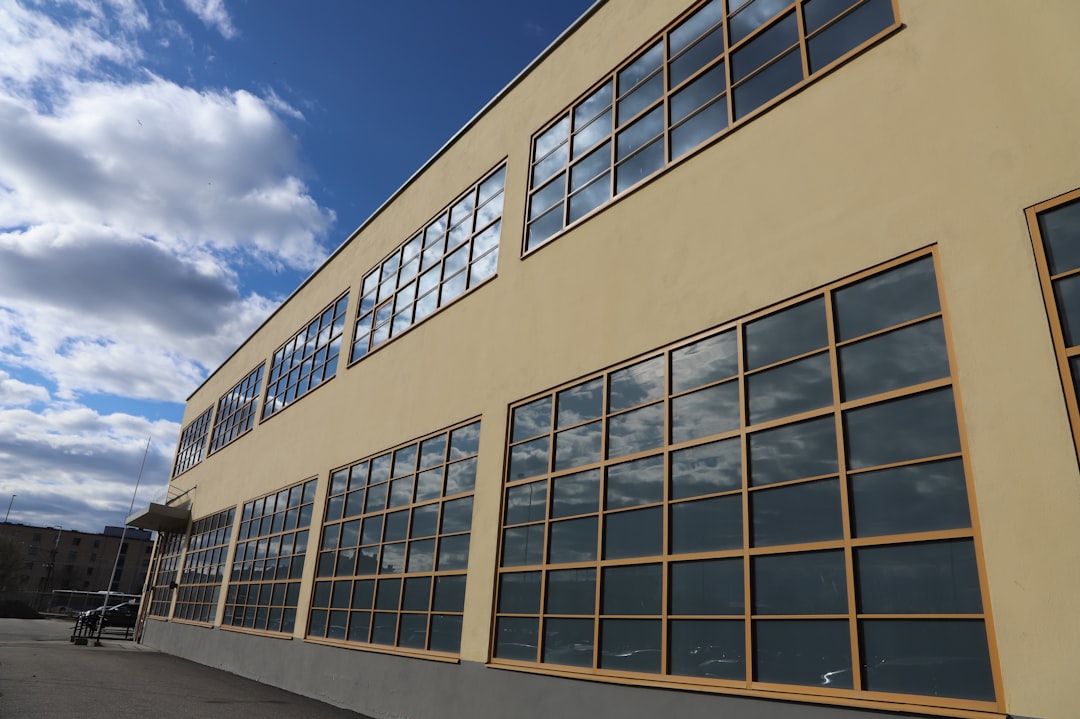
Explore NASA's iconic Vehicle Assembly Building, a hub for assembling rockets like Saturn V, Space Shuttle, and SLS for over 50 years.
NASA's Vehicle Assembly Building: A Marvel of Engineering
The Vehicle Assembly Building (VAB) at NASA’s Kennedy Space Center in Florida is one of the most extraordinary structures ever built for space exploration. Designed in the 1960s for the Apollo Program, this iconic facility has been used for half a century to assemble massive space vehicles, including the Saturn V rocket, the Space Shuttle, and now the Space Launch System (SLS). Today, it continues to serve as the hub for NASA’s Artemis program, promising a return to the moon.
A Brief History of the VAB
The need for a facility like the VAB arose during the Apollo Program in the 1960s, as engineers prepared to send humans to the moon. Rockets were initially assembled in parts and brought to the launch pad, but the sheer size of the Saturn V, standing over 110 meters tall, necessitated a new kind of workspace. Construction on the VAB began in 1963 and was completed in 1966, at a cost of $117 million—equivalent to over $1 billion today.
Standing 160 meters tall, the VAB is still one of the world’s largest buildings by volume. For size comparison, the Statue of Liberty and the Eiffel Tower could comfortably fit inside. The building is so massive that it even creates its own storm cloud-like condensation inside during Florida's humid summer days.
Key Features of the Vehicle Assembly Building
High Bays and Low Bays
The VAB is divided into sections designed for different stages of rocket assembly. It features four High Bays—designated 1, 2, 3, and 4—which are enormous open spaces capable of housing entire rockets. High Bays 1 and 3 are often used for assembly work, as they face directly toward the launch pads.
Smaller Low Bays, on the other hand, are located near the ground and were primarily used during earlier programs like Apollo for less complex tasks.
Massive Cranes
Handling rockets requires incredible precision. To achieve this, there are several cranes inside the VAB. A 159-metric-ton crane services the Transfer Aisle, while four additional cranes operate within the High Bays. The strongest of these can lift up to 295 metric tons. These cranes work in tandem to delicately lift and position rocket parts, from first-stage fuel tanks to the final payload sections.
Specialized Platforms
The High Bays are equipped with retractable work platforms that fit snugly around rockets, providing technicians with access points at various levels. Newer platforms, specifically designed for the SLS, are customizable and can move up and down to adapt to different assembly requirements.
Giant Doors
Each High Bay is fitted with enormous doors made up of four horizontal and multiple vertical panels. These need a full 45 minutes to open completely. When open, the draft from the doors provides a cooling breeze in this otherwise unair-conditioned space.
How the VAB Assembles Rockets
Saturn V: The Apollo Era
During the Apollo Program, the VAB played an essential role in assembling the Saturn V rockets that powered lunar landings. Each rocket was built in three major stages, beginning with its massive fuel-loaded first stage. Using two cranes, workers would carefully position the first stage onto a mobile launcher platform within a High Bay. The second and third stages were subsequently stacked on top, followed by the spacecraft at the very top. The entire assembly process was slow and meticulous, due to the enormous weights involved—some components exceeded 130 metric tons.
The assembled rocket was then moved from the VAB to the launch pad using a crawler-transporter at speeds no higher than 1 kilometer per hour. This painstaking process underscored just how delicate and advanced NASA’s operations were.
From Saturn V to Space Shuttle
After Apollo, the VAB was modified extensively for the Space Shuttle program. Unlike the vertically stacked Saturn V, the Shuttle featured a reusable orbiter attached to a central external tank and two solid rocket boosters (SRBs). Adjustments were made to High Bay platforms and entrance dimensions to accommodate these changes. For instance, the entrance doors to the Transfer Aisle were widened by 12 meters to allow the Shuttle’s wide wingspan to fit through.
Once assembled, the Shuttle was also transported to the launch pad by crawler-transporter. Over its 30-year lifespan, the Shuttle program completed 135 missions.
Space Launch System: The Artemis Era
Now, the VAB is being used to support the next phase of human space exploration: the Artemis Program. SLS, the new heavy-lift launch vehicle, is a massive rocket that includes large solid rocket boosters, a massive core stage, and NASA's newly designed Orion spacecraft. High Bay 3 has been outfitted with modern, adjustable platforms specifically for the SLS. The first Artemis test flight, Artemis 1, took place in November 2022, and marked the return of NASA’s moon-mission aspirations.
Transporting Rockets to the Launch Pad
Once a rocket is fully assembled, it takes a vital journey to either Launch Pad 39A or 39B, located 5 kilometers away. This process involves the crawlerway, a specially built transport road. Each crawler-transporter weighs 3,000 metric tons and moves at an average speed of just 1 kilometer per hour while carrying the rocket. It’s an awe-inspiring sight, signaling the culmination of years of preparation.
The Role of the VAB in Modern Space Exploration
While its design has remained largely unchanged, the VAB has been continuously updated to support the needs of modern space exploration. From the towering Saturn V to the versatile Space Shuttle and now the mammoth SLS, the building represents a bridge between NASA’s storied past and its bold future. Future Artemis missions aim to establish a long-term human presence on the moon, with the VAB serving as an integral part of that vision.
Key Takeaways About the VAB
- Location: Kennedy Space Center, Florida
- Height: 160 meters
- Function: Rocket assembly for NASA programs, currently for Artemis missions
- Key Features: High Bays for assembly, massive cranes, retractable platforms, and giant bay doors
- Historical Use: Saturn V (Apollo Program), Space Shuttle, and now the Space Launch System (SLS)
Conclusion
The Vehicle Assembly Building at NASA’s Kennedy Space Center is more than just an iconic part of space exploration history; it is a living, functioning cornerstone of humanity’s efforts to push the boundaries of what’s possible. From its early days assembling the towering Saturn V to its current duties preparing the Space Launch System, the VAB continues to play a central role in reaching for the stars.
Staff Writer
Daniel reports on biology, climate science, and medical research.
Comments
Loading comments…


