Mercury: Exploring the Mysteries of the Solar System's Smallest Planet
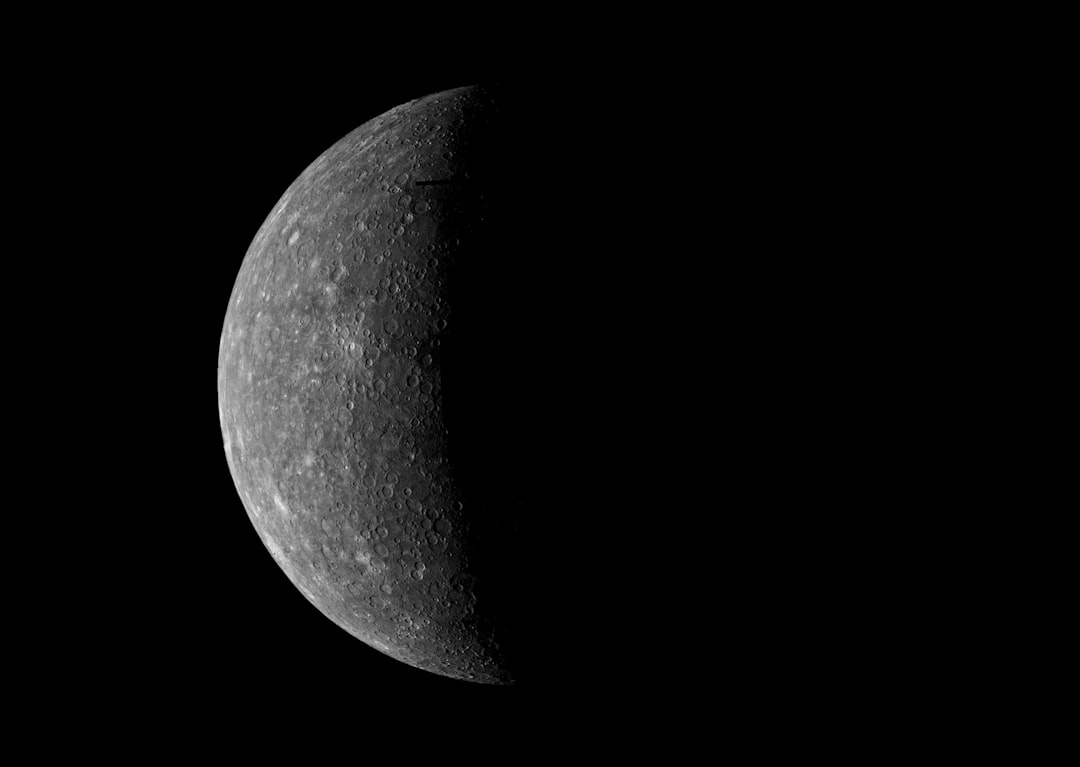
Mercury, the closest planet to the sun, offers extreme temperature swings, polar ice, a massive metal core, and a mysterious magnetic field.
Mercury: The Extreme Limits of Nature
Mercury, the closest planet to the Sun, is a natural laboratory where the extreme boundaries of physics and planetary science are put to the test. Despite its small size and harsh environment, Mercury offers scientists a treasure trove of mysteries, from its massive core to its strange magnetic field. As missions like NASA's Messenger and the European-Japanese BepiColombo spacecraft uncover its secrets, we are gaining insights into a world marked by violent contrasts and unexpected phenomena.
A Planet of Extreme Temperatures
One of the most striking aspects of Mercury is its temperature swings. During the day, when the Sun shines directly on the surface, temperatures soar to 430°C—hot enough to melt lead. However, at night, without an atmosphere to retain that heat, the temperature plummets to a freezing -173°C. This dramatic 600-degree Celsius fluctuation is the most extreme in the solar system.
So why does Mercury experience such staggering temperature changes? The answer lies in its almost non-existent atmosphere. Unlike Earth, which has a thick atmosphere to trap heat, Mercury’s thin exosphere cannot hold onto solar energy. It radiates any absorbed heat back into space almost immediately.
Ice in a World of Fire
Paradoxically, Mercury, a planet that can melt metal, also contains water ice. It's a discovery that defies intuition but was confirmed through radar studies conducted by the Arecibo Observatory. This ice is found in permanently shadowed craters near the planet's poles, where sunlight never reaches. Temperatures in these craters remain low enough to preserve ice for possibly billions of years.
Scientists hypothesize that this ice originated from comets or meteorites that collided with Mercury long ago. These celestial impacts may have deposited water in these shadowed areas, where it remains frozen to this day. Such discoveries raise important questions about the origins of water, a critical ingredient for life as we know it, in the solar system.
The Mystery of Mercury’s Massive Core
A surprising fact about Mercury is that its metallic core makes up 85% of its radius, making it the second densest planet in the solar system after Earth. Data from missions like BepiColombo and Messenger suggest that this core is not solid but still partially molten.
How did Mercury develop such an oversized core? One leading explanation involves a giant impact. Early in the solar system’s history, scientists believe a collision stripped away most of Mercury’s outer layers, leaving behind the dense metal core. Another theory proposes that intense solar radiation blew lighter materials off the planet early in its formation, leaving the heavier metals behind.
Mercury’s core also plays a key role in shaping the planet's future. As the core continues to cool, Mercury is shrinking. Evidence includes massive fault lines, known as lobate scarps, where the surface seems to have buckled by about 14 kilometers over billions of years.
A Weak Yet Puzzling Magnetic Field
Mercury’s magnetic field is another anomaly. It is faint—only about 1.1% as strong as Earth’s—but puzzlingly asymmetrical, with its magnetic center offset by 20% from the planet’s axis. Typically, small planets like Mercury aren't expected to sustain a magnetic field given their limited energy. However, the planet’s still-molten metal core and its elliptical orbit contribute to the dynamo effect that generates this field.
The Sun’s tidal forces may also play a role, creating internal movements in the molten core that help maintain the magnetic field. Understanding Mercury’s magnetic anomalies could unlock insights about other planetary magnetic fields, especially in worlds closer to their stars.
The Challenge of Reaching Mercury
Despite Mercury's proximity to Earth, getting there is anything but straightforward. The Sun's immense gravitational pull presents a major challenge for space missions. A spacecraft traveling directly toward Mercury risks speeding uncontrollably into the Sun.
To counter this, the BepiColombo mission takes a long, winding path involving 18 orbits and nine flybys of Earth, Venus, and Mercury to decelerate effectively. Equipped with cutting-edge ion engines, BepiColombo uses continuous thrust to counteract the Sun’s gravity while slowly inching toward Mercury’s orbit. Its sophisticated ceramic thermal shielding protects the spacecraft from both the Sun's intense heat and Mercury's temperature extremes.
A Metallic Tail in Space
Mercury has a fascinating "tail," a glowing sodium trail that extends up to 2.5 million kilometers behind the planet. Unlike a comet's tail formed by ice, Mercury’s tail comes from solar wind and photon pressure. Sunlight pushes sodium atoms off the planet’s surface, creating this unique visual phenomenon. Observing this "metallic comet" offers clues about the interactions between the Sun and Mercury’s exosphere.
Evidence of Past Volcanic Activity
Mercury’s surface tells a story of volcanic power. One of its most remarkable features is the Caloris Basin, a massive 1,550 km-wide impact crater. New research reveals that this basin isn't just an impact site; it's also a fossilized sea of lava. Shockwaves from the original impact likely fractured Mercury’s crust, allowing magma to surge up, smoothing the plains.
Other regions also point to relatively recent volcanic activity. Smooth plains with few craters suggest that lava flows covered older geological structures. Some volcanic features, like Nevado Montes, occurred when volatile compounds inside Mercury were ejected forcefully, forming pits on the surface.
The Significance of Mercury
Mercury is more than a rocky, barren world. Its geological and chemical traces tell us about the early solar system, offering keys to understanding planetary formation. From its wandering magnetic field to its paradoxical polar ice, Mercury continues to challenge assumptions about what a planet so close to the Sun can be.
With BepiColombo expected to provide detailed maps of the magnetic field and exosphere by 2030, our understanding of Mercury’s mysteries is only beginning to deepen. The insights gained here could offer broader implications for understanding rocky planets both within our system and beyond.
Comments
Loading comments…


